
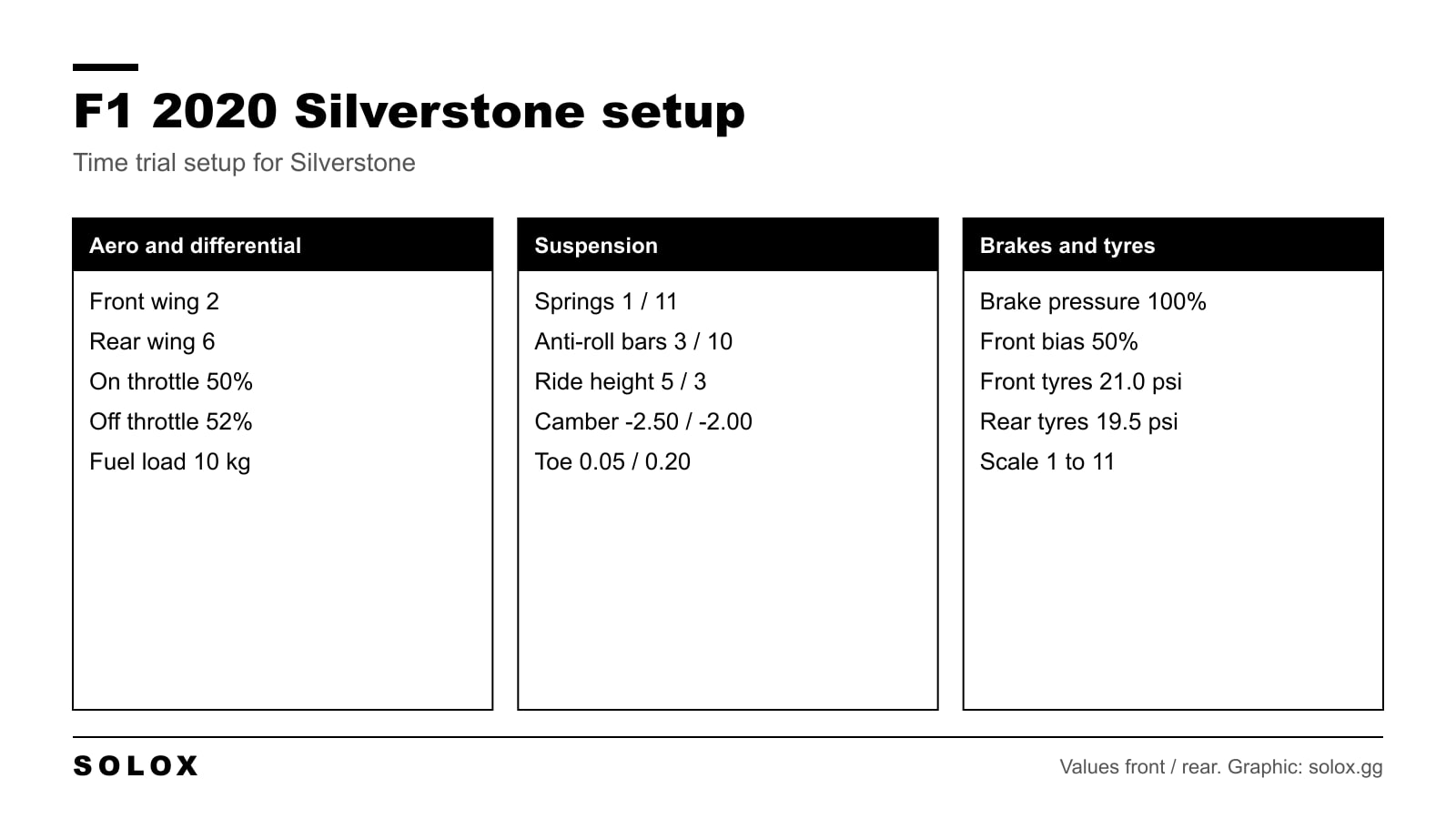
Silverstone is the fast one. Copse, Maggotts, Becketts, Stowe: you take them at speeds where the car works on downforce alone, and any correction on the wheel costs you speed. Between them there are long straights, so you cannot just put wing on and forget about it.
So this F1 2020 Silverstone setup runs low wings and gets its direction change from a very stiff rear. It is a time trial setup, saved with 10 kg of fuel.
F1 2020 Silverstone setup
| Setting | Front | Rear |
|---|---|---|
| Wing | 2 | 6 |
| Camber | -2.50 | -2.00 |
| Toe | 0.05 | 0.20 |
| Suspension | 1 | 11 |
| Anti-roll bar | 3 | 10 |
| Ride height | 5 | 3 |
| Tyre pressure | 21.0 psi | 19.5 psi |
| Setting | Value |
|---|---|
| Fuel load | 10 kg |
| Differential on throttle | 50% |
| Differential off throttle | 52% |
| Brake pressure | 100% |
| Front brake bias | 50% |
In F1 2020 the wings, suspension, anti-roll bars and ride height all use a scale from 1 to 11. The differential goes from 50%, fully open, to 100%, locked.
This setup was collected for the site in 2022 from a fast time trial lap, like the rest of my F1 2020 setups. Use it as a base and adjust it with the table further down.

The lap on board
Why this setup works at Silverstone
The wings. 2 and 6. The same level as my Austria setup, and only Russia has less rear wing in my list. It looks low for a track with this many fast corners. But at Silverstone the car is going so fast that even a small wing makes a lot of downforce, and Wellington straight and Hangar straight are long. If you are not comfortable in Copse, the table below tells you what to add first.
The differential. 50% on throttle, 52% off. Almost fully open. In Luffield and in Club you are on the throttle for a long time with the steering turned. An open differential lets the car keep turning while you add power.
The tyre pressures. 21.0 psi front and 19.5 psi rear, the lowest the menu allows. The biggest contact patch you can get.
The camber. -2.50 front, the least the game allows, and -2.00 rear. The rear camber helps the outside rear tyre in the fast corners, where it carries the car.
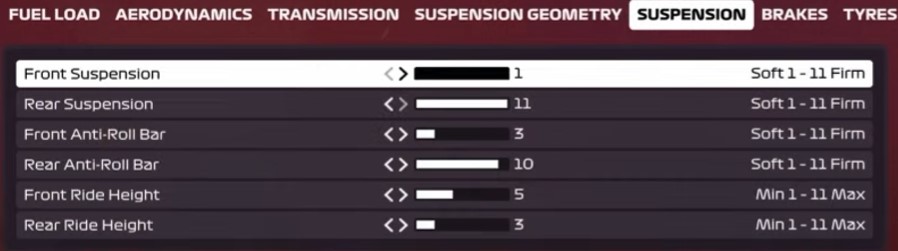
Stiff rear, high nose
Rear springs 11 and rear anti-roll bar 10. That is about as stiff as the rear of this car gets. Nine of my 22 setups use rear springs at 11, and only four have a stiffer rear bar than this one.
A stiff rear does not lean, so it answers at once when you change direction. In Maggotts and Becketts you go left, right, left, right in a few seconds. A soft rear would still be settling from one corner when you are already asking for the next.
The front is the opposite. Springs at 1, the softest, and the bar at 3. The front tyres keep their grip and the rear follows.
The odd number is the ride height: 5 at the front and 3 at the rear. Most of my setups have the rear higher than the front. Only three have the front higher: this one, the USA and Brazil. A higher front makes the nose a little calmer on turn in, and at these speeds that is what you want. If the car feels lazy in the slow corners, Village and The Loop, take the front down to 4.
The brakes
Brake pressure 100%, front bias 50%. Every setup in my F1 2020 database runs 100% pressure.
You do not brake much at Silverstone. The hard stops are Village, Brooklands and Vale. At Brooklands you brake while you turn, and that is where the inside front locks. If it does, brake a touch earlier first. If it keeps locking, go to 95%.
What to change
One change at a time, three laps, then decide.
| Problem | Change | Why |
|---|---|---|
| The rear moves in Copse or Stowe | Rear wing 6 to 7 | More rear grip at high speed |
| Understeer in Maggotts and Becketts | Front wing 2 to 3 | More front grip in the fast changes of direction |
| The rear snaps when you change direction | Rear anti-roll bar 10 to 8 | A softer rear bar is slower but kinder |
| The car is lazy in Village and The Loop | Front ride height 5 to 4 | A lower nose turns in faster |
| Wheelspin out of The Loop or Luffield | On throttle differential 50% to 60% | A little lock makes both rear wheels push |
| The rear slides on the way into Vale | Off throttle differential 52% to 56% | A little lock steadies the rear on entry |
| Front tyres lock at Brooklands | Brake pressure 100% to 95% | Less peak pressure, easier to hold at the limit |
For a race
Silverstone is hard on the tyres, and most of all on the front left. The fast right handers load it lap after lap. Before a 25% or 50% race I would change this:
- Rear wing 6 to 7, front wing 2 to 3. A car that slides less in the fast corners keeps its tyres longer.
- On throttle differential 50% to 60%. Less wheelspin out of the slow corners with a heavy car.
- Rear anti-roll bar 10 to 8. Easier on the rear tyres over a stint.
- Fuel. The 10 kg is a time trial number. In a race the game sets the load for the distance.
On a pad, I would go to 60% on throttle and take the brake pressure down to around 90%. I would also soften the rear bar to 8. A stick is less precise than a wheel in Becketts, and the stiff rear does not forgive a late input.
F1 2020 manages the ERS for you and gives you an overtake button. Use it on Wellington straight and on Hangar straight.
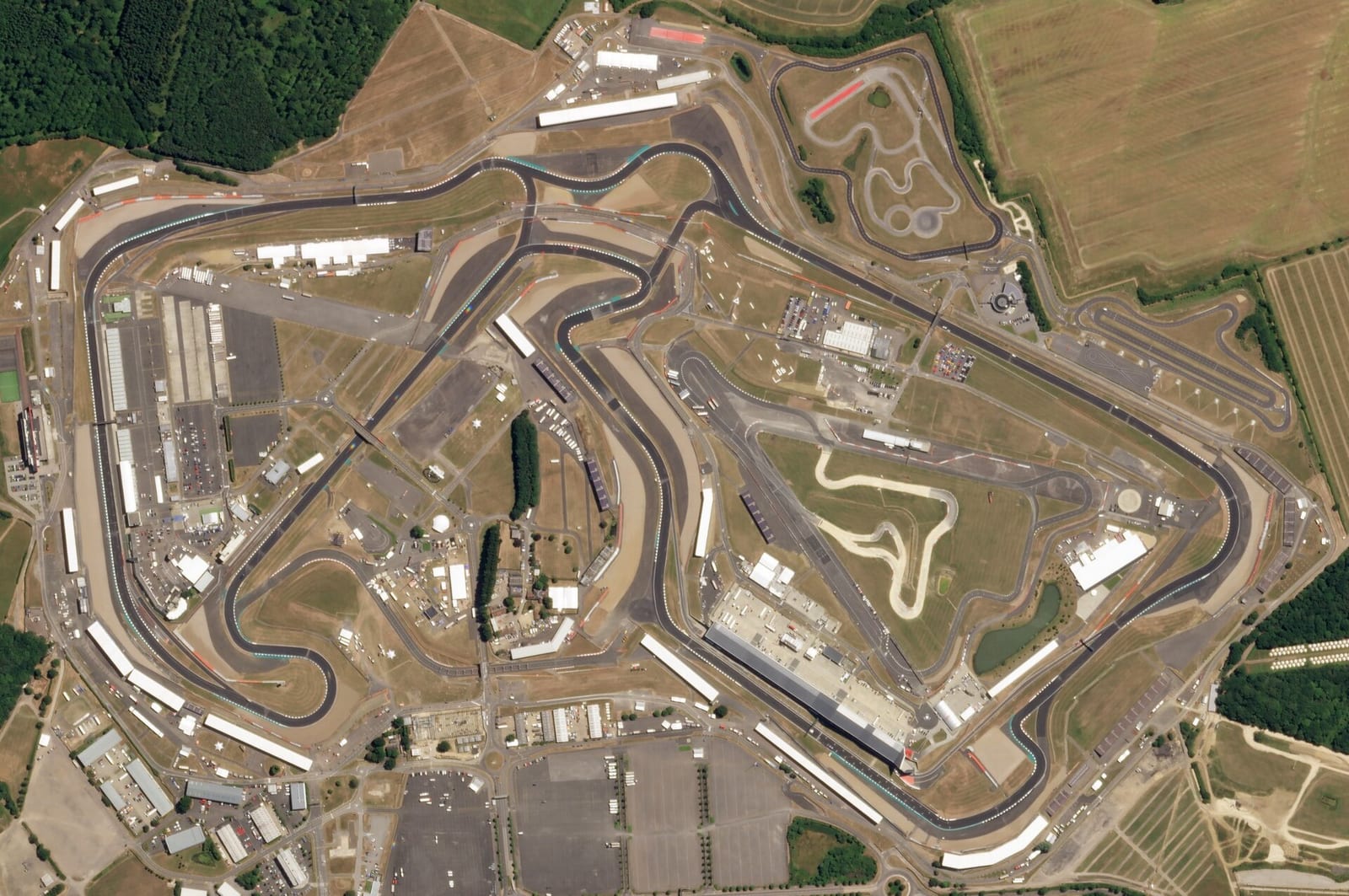
Where the lap time is at Silverstone
- Abbey and Farm. Flat on a time trial lap. Turn in smoothly and let the car run to the outside.
- Village and The Loop. The first real braking zone and then the slowest corner. Give away the exit of Village to be well placed for The Loop, because Wellington straight comes after it.
- Brooklands and Luffield. You brake while you turn into Brooklands. Then Luffield is long and the front wants to push. Wait, then feed the throttle in. The open differential helps you here.
- Copse. A small lift, turn in early and commit. With the rear wing at 6 you have to be clean. One input.
- Maggotts and Becketts. The first two are flat. After that every corner is slower than the one before. Lift, down one gear, down another. Stay tight on each apex so you are placed for the next.
- Stowe. A fast right at the end of Hangar straight. Brake very little, turn in early and use all the road on the exit.
- Vale and Club. A hard stop into the left at Vale, then the long right of Club. Open the steering as the corner opens.
If you take one thing from this page: keep your hands quiet in the fast corners. One input on the way in, hold it, release it. This car is stiff at the rear and it answers everything you do with the wheel, also the things you did not mean.
Silverstone in 2020
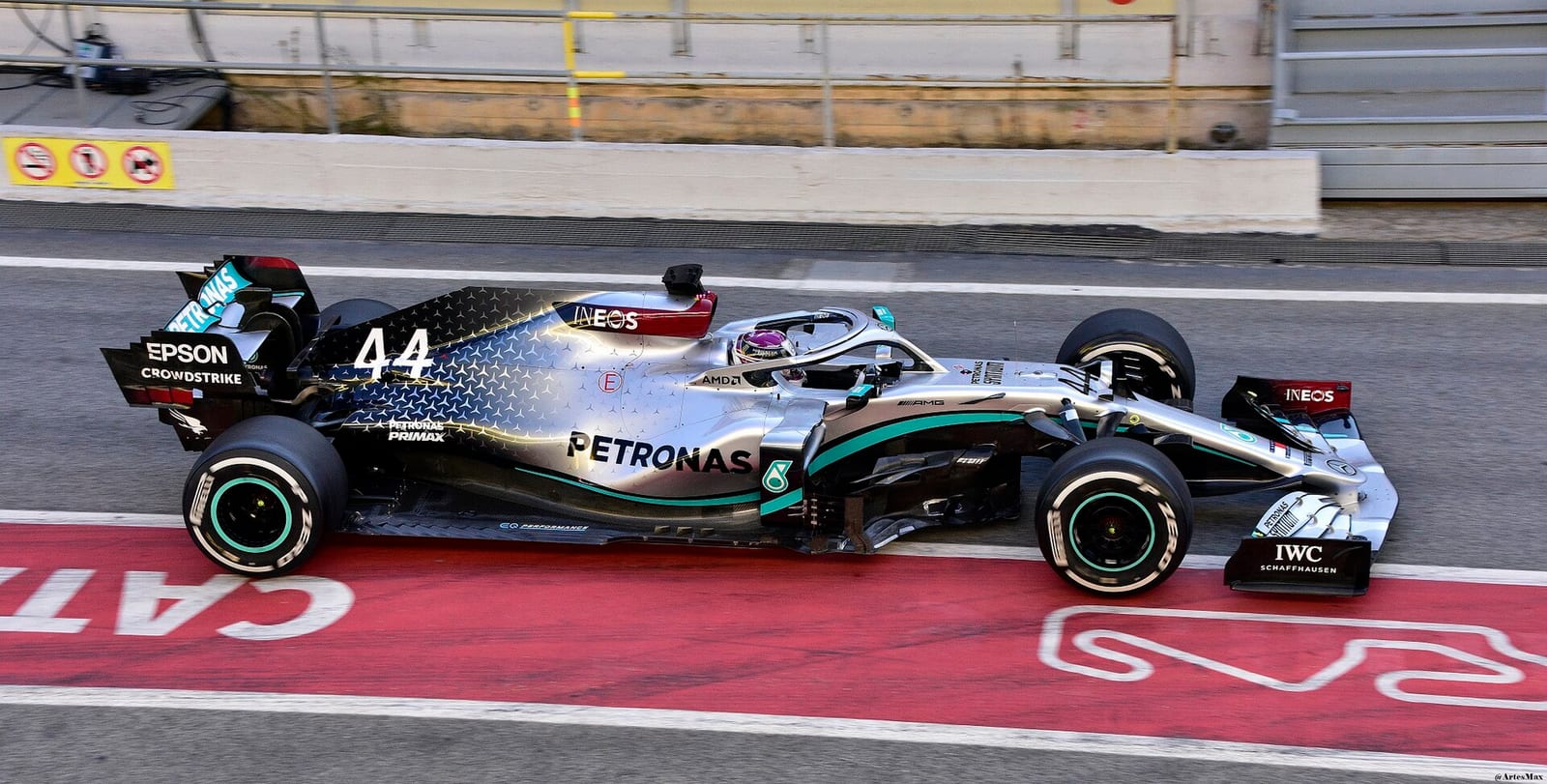
The real 2020 cars did race here, twice in eight days and with no spectators. The British Grand Prix was on 2 August, round 4 of 17, over 52 laps. A week later the same track held the 70th Anniversary Grand Prix.
Lewis Hamilton took pole in 1:24.303 and led from the start. The race was decided by the front left tyre in the last three laps. First it failed on Valtteri Bottas, who was second and came out of the pits in 12th. Then on Carlos Sainz, who was fourth. Then, on the last lap, on Hamilton himself. He had a lead of over 30 seconds, because Max Verstappen had made a late stop for fresh tyres, and he got the car to the line slowly to win. Verstappen was second and set the fastest lap, a 1:27.097. Charles Leclerc was third for Ferrari.
Sergio Perez missed the race after a positive COVID-19 test. Nico Hulkenberg took his seat at Racing Point.
That is the same front left tyre I told you to look after in the race notes. The lap is 5.891 km.
More F1 2020 setups
All 22 tracks are on the F1 2020 setups page. The track before Silverstone in the game's calendar is the Red Bull Ring, with my F1 2020 Austria setup, and the next one is the Hungaroring, with my F1 2020 Hungary setup.
For the same track in other games, here are my F1 2019 Silverstone setup, my F1 2021 Silverstone setup, my F1 23 Silverstone setup and my F1 25 Silverstone setup. The values do not carry over from one game to the next.
FAQ
What is the best F1 2020 setup for Silverstone?
Front wing 2, rear wing 6, differential 50% on throttle and 52% off, suspension 1 and 11, anti-roll bars 3 and 10, ride height 5 and 3, brake pressure 100% with 50% front bias, and tyres at 21.0 and 19.5 psi.
What wing levels should I run at Silverstone in F1 2020?
2 at the front and 6 at the rear for a time trial lap. If the rear moves in Copse or Stowe, go to 7 at the rear.
Why is the front ride height higher than the rear?
It makes the nose calmer on turn in at high speed. If the car feels lazy in the slow corners, take the front down from 5 to 4.
Can I use this Silverstone setup in a race?
Yes. I would add one click of wing at both ends, raise the on throttle differential to 60% and soften the rear anti-roll bar to 8 to save the tyres.
Does this setup work with a controller?
Yes. I would run 60% on throttle, around 90% brake pressure and the rear anti-roll bar at 8.
Who won the 2020 British Grand Prix?
Lewis Hamilton, from pole, for Mercedes. His front left tyre failed on the last lap and he still got to the line first. Max Verstappen was second and Charles Leclerc third.
How long is the Silverstone circuit?
5.891 km. The Grand Prix distance is 52 laps.