
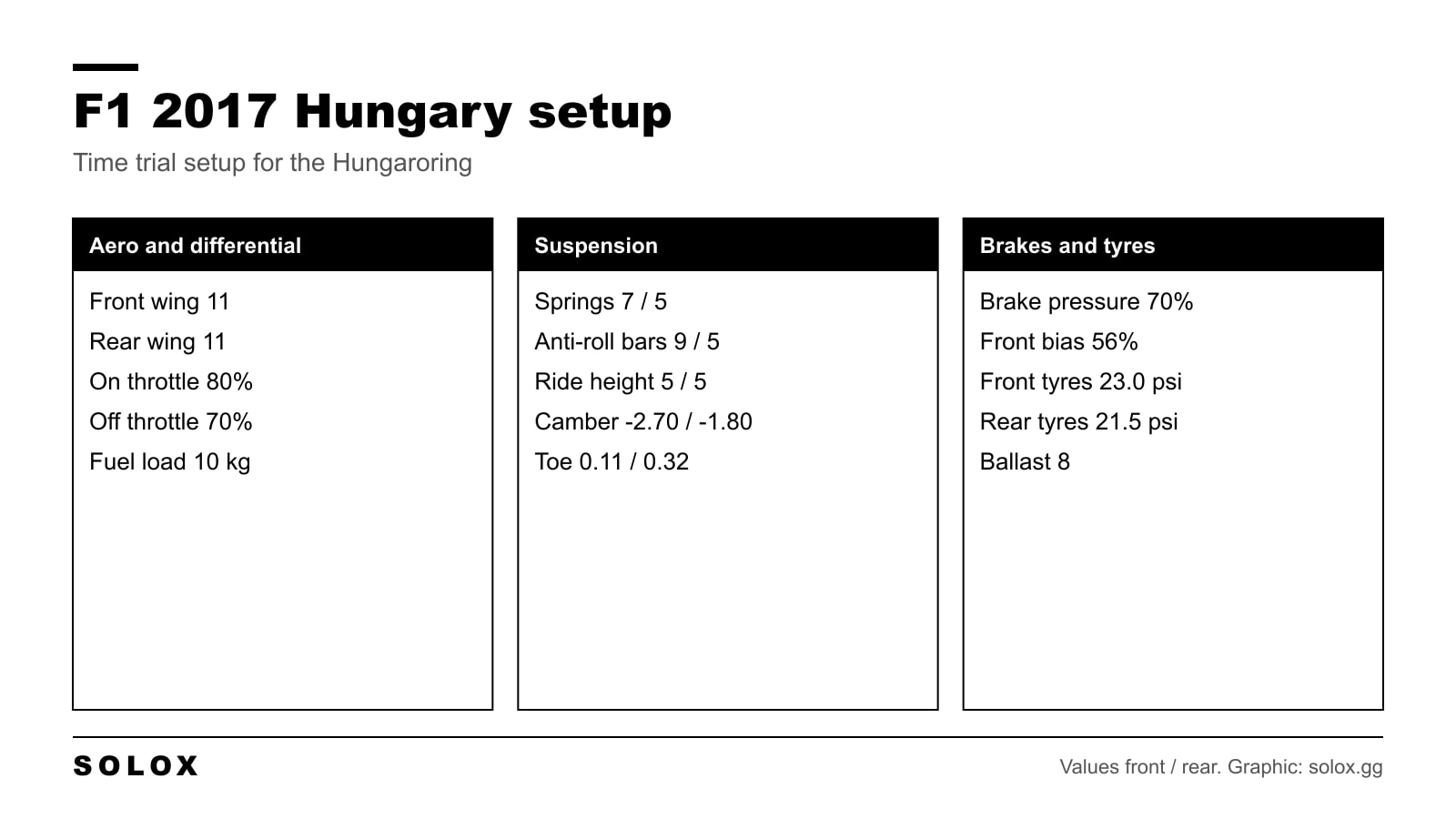
This is the F1 2017 setup for Hungary on this site: both wings at 11, the differential at 80% on throttle and 70% off, and a front anti-roll bar at 9 against 5 at the rear. It is a time trial setup, saved with 10 kg of fuel. The full menu is in the table below, then I explain why it works at the Hungaroring and what I would change for a race or for a pad.
It was collected in 2022 from a fast time trial lap, like the rest of my F1 2017 setups. Use it as a starting point.
F1 2017 Hungary setup
| Setting | Value |
|---|---|
| Fuel load | 10 kg |
| Front wing | 11 |
| Rear wing | 11 |
| Differential on throttle | 80% |
| Differential off throttle | 70% |
| Front camber | -2.70 |
| Rear camber | -1.80 |
| Front toe | 0.11 |
| Rear toe | 0.32 |
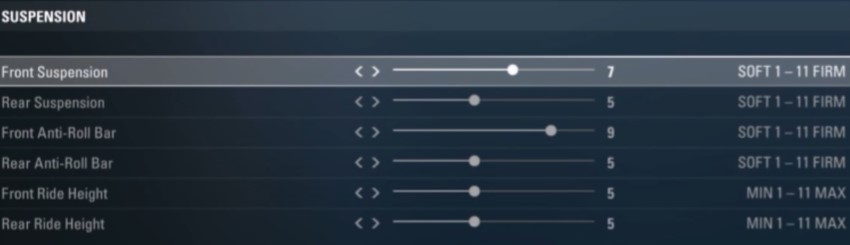
| Front suspension | 7 |
| Rear suspension | 5 |
| Front anti-roll bar | 9 |
| Rear anti-roll bar | 5 |
| Front ride height | 5 |
| Rear ride height | 5 |
| Brake pressure | 70% |
| Front brake bias | 56% |
| Front tyre pressure | 23.0 psi |
| Rear tyre pressure | 21.5 psi |
| Ballast | 8 |

Here is the lap the setup comes from:
Why this setup works at the Hungaroring
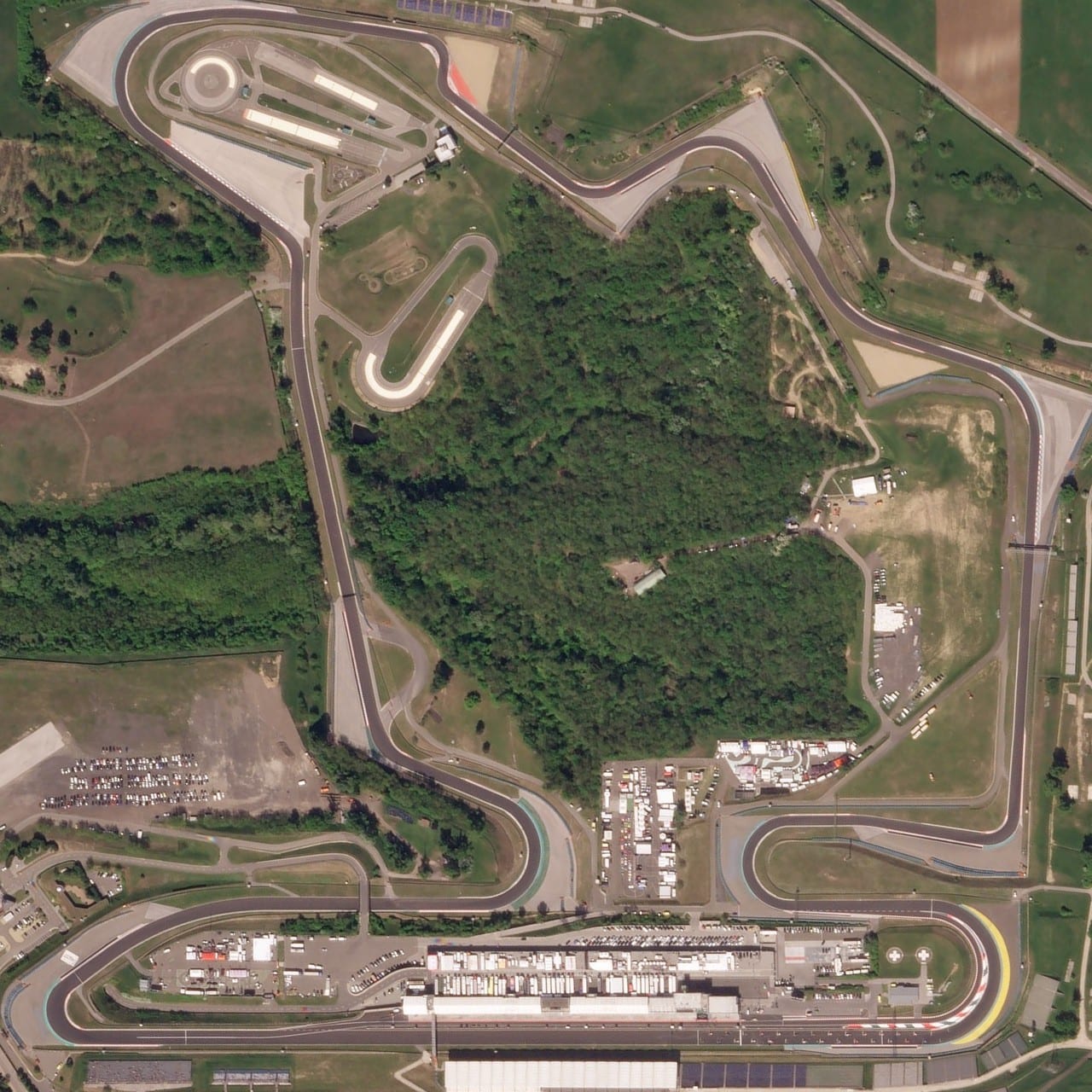
The Hungaroring is 4.381 km long with 14 corners and one straight that deserves the name. Drivers have compared it to a kart track for years, and they are right. You finish one corner and you are already turning into the next.
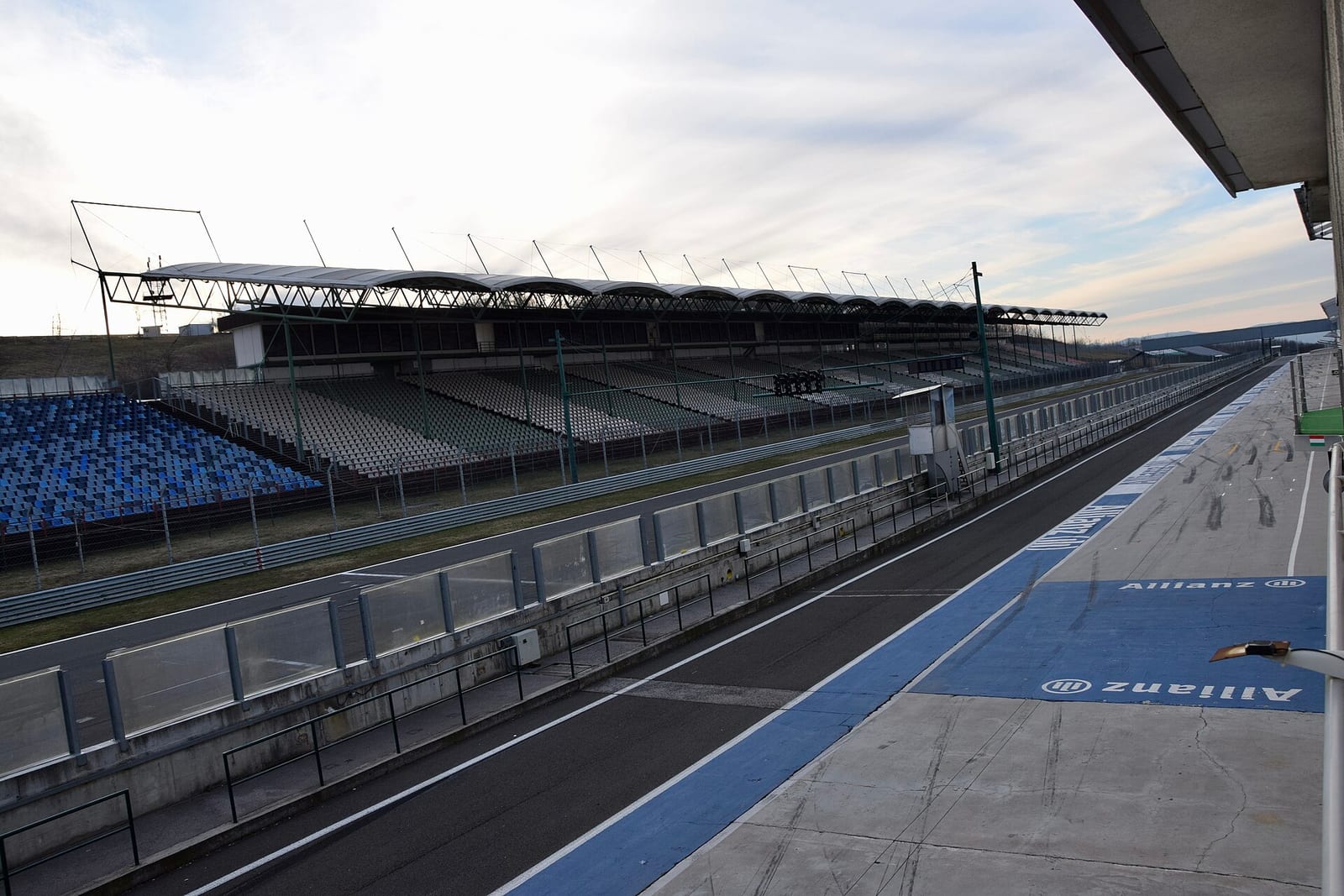
That is why both wings are at 11. On most tracks you trade grip in the corners against speed on the straights. Here there is almost nothing to trade. The pit straight is short, and the time you lose on it with full wing is small next to what you gain in 14 corners. Monaco is the only other track in my 2017 list that runs 11 and 11.
Equal wings also keep the balance neutral. With 11 at the front the nose bites in the long corners like Turn 2, Turn 5 and Turn 13, where a car with understeer loses time for three or four seconds in a row.
The differential and the rear of the car
The differential is at 80% on throttle and 70% off. Compare that with Silverstone, where it is fully locked at 100%.
The difference is the type of corner. At the Hungaroring you spend a lot of time in long corners at medium and low speed, waiting to go back to the throttle. A more open differential lets the rear wheels turn at different speeds, so the car rotates more easily and the inside rear does not spin up the moment you touch the pedal. 70% off throttle helps the car turn on the way in.
The suspension follows the same idea. Springs are 7 at the front and 5 at the rear, anti-roll bars 9 and 5. The front is stiff so the car changes direction quickly in the chicane and in the fast section from Turn 8 to Turn 11. The rear is softer so the tyres stay on the road and you get traction out of Turn 1, Turn 2 and the last two corners.
Ballast is at 8, toward the rear. More weight over the rear wheels is more traction on exit.
More camber and toe than usual
Most of my F1 2017 setups run the geometry at the low end: -2.50 and -1.00 for camber, 0.05 and 0.20 for toe. This one does not. It runs -2.70 and -1.80, with 0.11 and 0.32.
More negative camber gives the outside tyre a bigger contact patch when the car is loaded in a corner. More toe makes the car react faster at the front and more stable at the rear. Both cost you a little on the straights and add heat to the tyres. At a track with one straight, that is a fair price.
In time trial the heat does not matter. In a race it does, and I come back to it below.
Brakes
Brake pressure is 70% with 56% at the front. That is low pressure next to the 82% at Silverstone.
There is only one big stop on the lap, into Turn 1. Most of the other corners need a short, light brake while you are already turning. Lower pressure makes it harder to lock a front wheel when you brake with steering on. If you run ABS, you can go up to 80% without a problem.
What to change
One change at a time, three laps, then decide.
| Problem | Change |
|---|---|
| The car pushes wide in Turn 2, Turn 5 or Turn 13 | Front anti-roll bar from 9 to 7 |
| The rear steps out in the middle of long corners | Front wing from 11 to 10 |
| Wheelspin out of Turn 1, Turn 2 or Turn 14 | On throttle differential from 80% to 70% |
| The car is lazy in the chicane | Front suspension from 7 to 8 |
| Front tyres lock into Turn 1 | Brake pressure from 70% to 66% |
| The rear moves under braking for Turn 1 or Turn 12 | Front brake bias from 56% to 58% |
| The car jumps on the kerbs in the chicane | Ride height from 5 to 6 at both ends |
For a race. Keep the wings. The problem in a race is the rear tyres: there is no straight long enough to cool them. Lower the on throttle differential to 70% and bring the camber back toward -2.50 and -1.50 so the tyres run cooler. Overtaking is hard here, so qualifying matters more than at almost any other track.
On a pad. Lower the on throttle differential to 65% and take the front wing down to 10. The car becomes calmer on the throttle in the long corners, where it is easy to add too much with a trigger.
Where the lap time is at the Hungaroring
Turn 1. The only big braking zone, downhill, into a long right hairpin. Brake in a straight line, turn in late and get the car to the inside kerb in the second half of the corner. The exit decides your speed down to Turn 2.
Turn 2 and Turn 3. A long left that goes downhill. It is easy to go in too fast and run wide. Take a late apex so you can be flat through the right kink of Turn 3 and up the hill.
Turn 4. A fast left over a crest. You cannot see the exit when you turn in. Small lift or a short brake, turn in early and trust that the track is there.
Turn 5. A long right. Be patient, hold the car in the middle of the road and go to the throttle once.
The chicane, Turn 6 and Turn 7. Use the kerbs, but not the tall one on the inside of the second part. Slow in, straight out.
Turn 8 to Turn 11. The best part of the lap. Left, right, left, right, each one faster than the one before. This is where full wing pays you back. Keep the steering smooth and use each exit kerb to set up the next entry. Turn 11 is close to flat with this setup.
Turn 12. A short stop for a 90 degree right. Brake late, it is flat road and the car is stable.
Turn 13 and Turn 14. Two long corners, a left and then a right onto the pit straight. Give up the entry of Turn 13 to stay tight for Turn 14. Then go to the throttle early and let the car run to the exit kerb. This exit is your speed for the whole straight.
Hungary in 2017
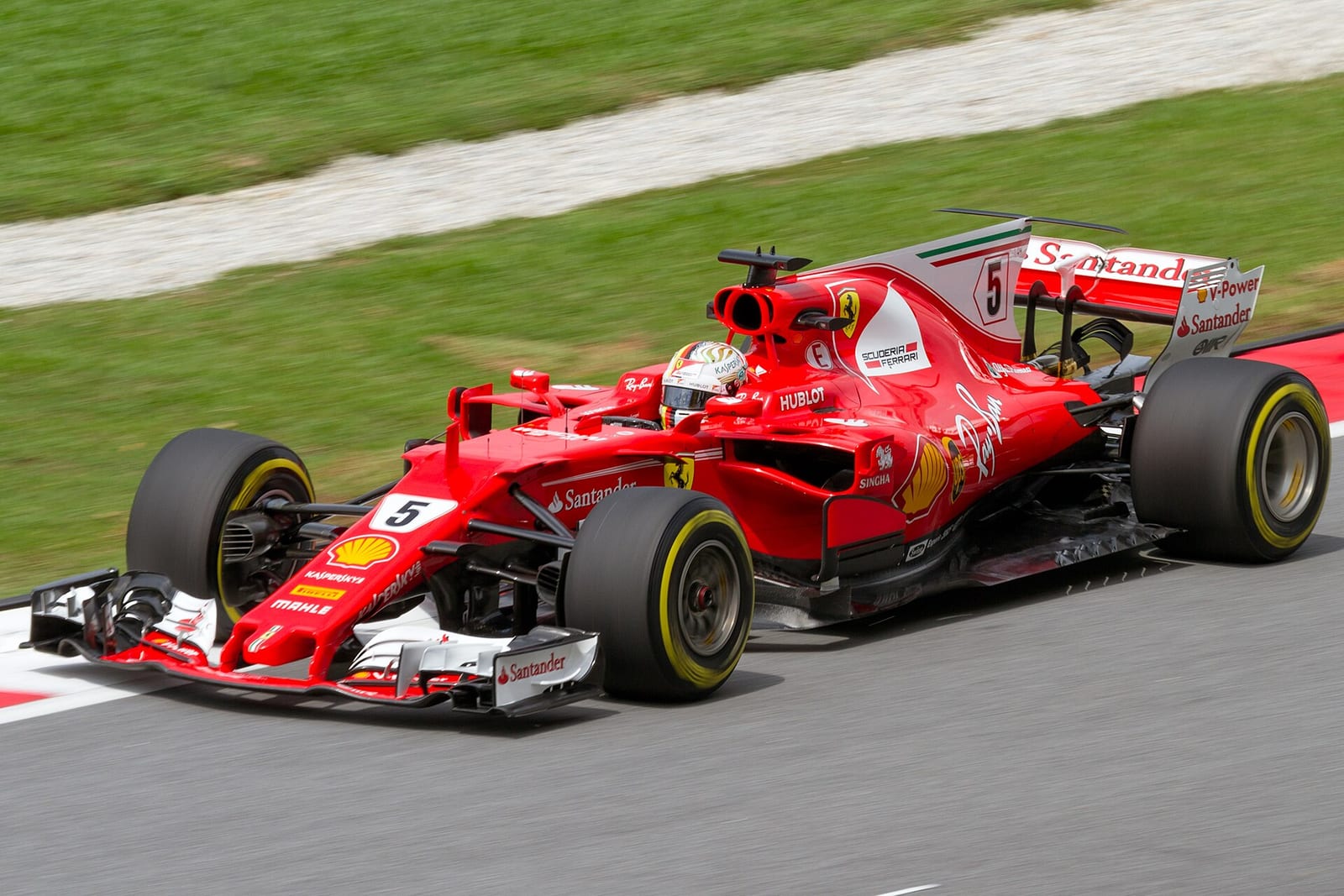
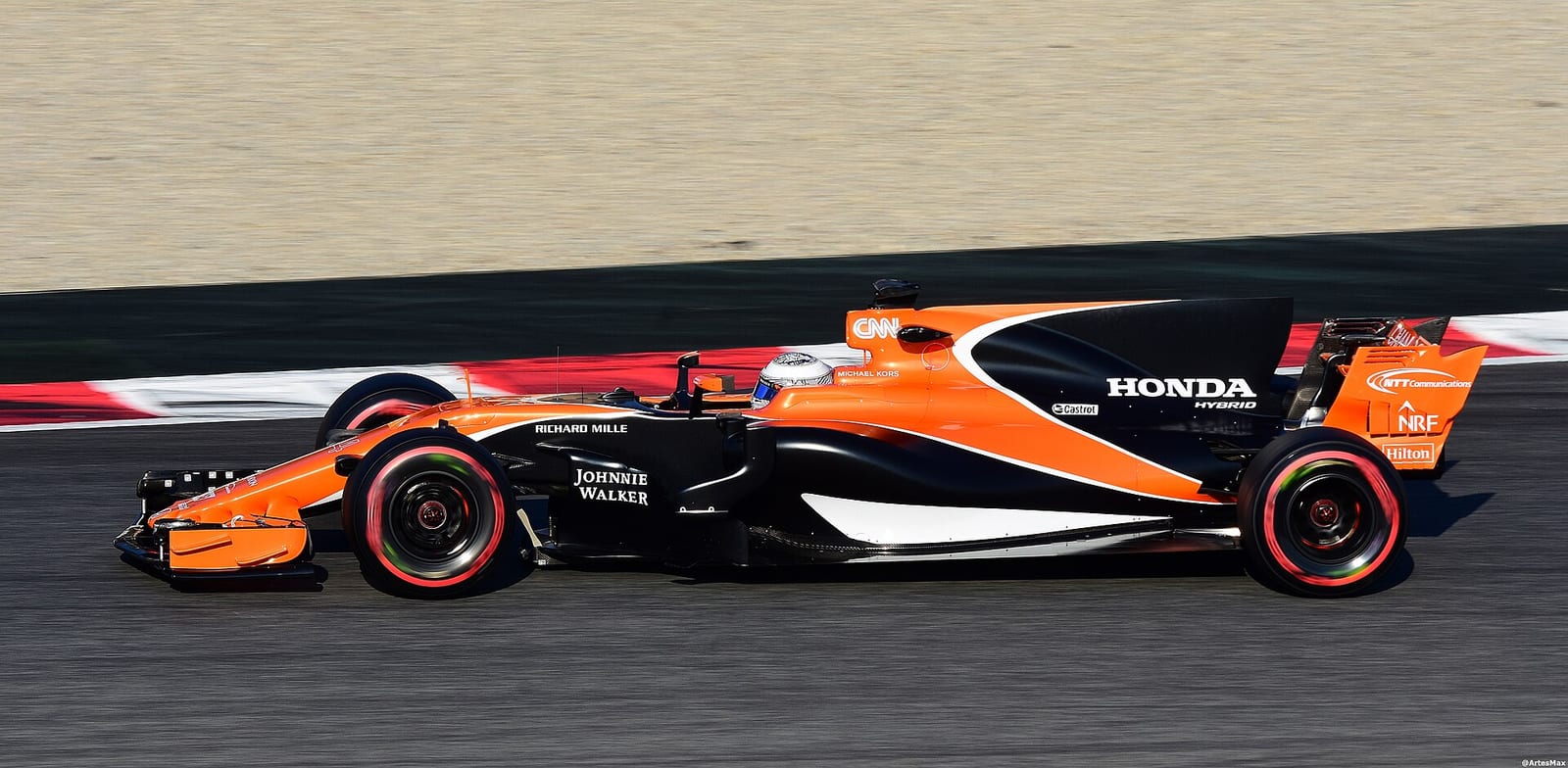
Sebastian Vettel took pole position for the 2017 Hungarian Grand Prix with a 1:16.276 and won the race, over 70 laps. Kimi Räikkönen finished second for a Ferrari one two, and Valtteri Bottas was third for Mercedes. Fernando Alonso set the fastest lap for McLaren, a 1:20.182 on lap 69.
More F1 2017 setups
Hungary sits between two fast tracks on the 2017 calendar. The Silverstone setup runs 2 and 6 on the wings, and the Spa setup is low drag too. The closest one to this page is the Monaco setup, the other 11 and 11 track. All 20 tracks are in one table on the F1 2017 setups page.
If you play the current game, the track is the same and the car is not: see my F1 25 Hungary setup.
FAQ
What is the best F1 2017 setup for Hungary?
Front wing 11, rear wing 11, differential 80% on throttle and 70% off, suspension 7 and 5, anti-roll bars 9 and 5, ride height 5 and 5, brake pressure 70% with 56% front bias, and tyres at 23.0 and 21.5 psi.
What wing levels should I run at the Hungaroring in F1 2017?
11 at the front and 11 at the rear, the maximum. The track has one straight, so the drag costs very little.
Can I use this Hungary setup in a race?
Yes, with a few changes. It is saved with 10 kg of fuel. Lower the on throttle differential to 70% and reduce the camber toward -2.50 and -1.50 to keep the rear tyres cooler.
Does this setup work with a controller?
It does. Run the on throttle differential at 65% and the front wing at 10, so the car is calmer on the throttle in the long corners.
Why is the brake pressure only 70%?
Most braking at the Hungaroring happens with some steering on, and that is when a front wheel locks. Lower pressure gives you more margin. With ABS on you can raise it.
Where do I lose the most time at the Hungaroring?
Usually in the last two corners, by going into Turn 13 too fast and missing the exit of Turn 14, and in Turn 2 by running wide.