
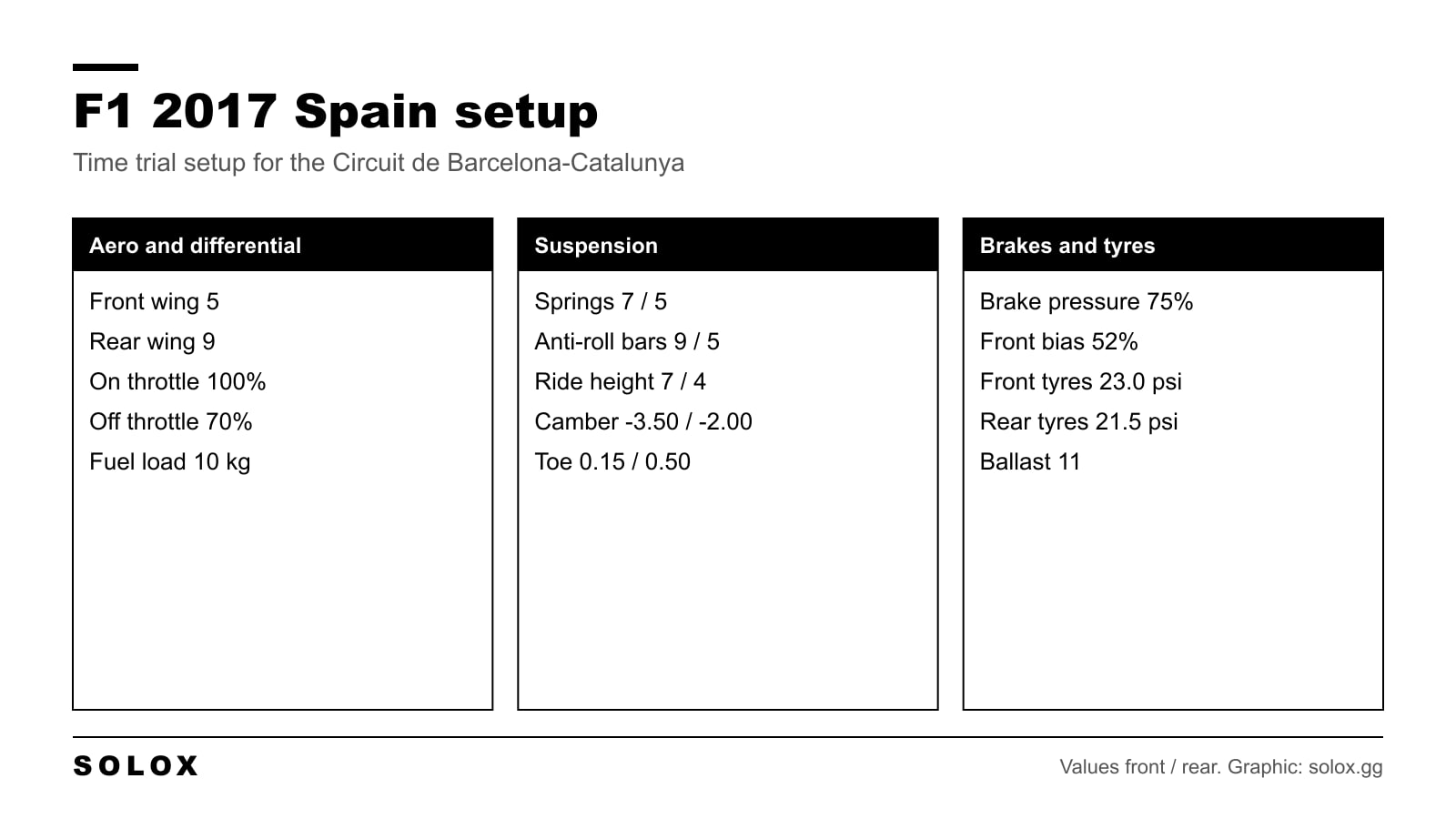
This is the F1 2017 setup for Spain on this site: front wing 5, rear wing 9, the differential at 100% on throttle and 70% off, and camber and toe set to the limit of the menu at both ends. It is a time trial setup, saved with 10 kg of fuel. The full menu is in the table below, then I explain why it works at the Circuit de Barcelona-Catalunya and what I would change for a race or for a pad.
It was collected in 2022 from a fast time trial lap, like the rest of my F1 2017 setups. Use it as a starting point.
F1 2017 Spain setup
| Setting | Value |
|---|---|
| Fuel load | 10 kg |
| Front wing | 5 |
| Rear wing | 9 |
| Differential on throttle | 100% |
| Differential off throttle | 70% |
| Front camber | -3.50 |
| Rear camber | -2.00 |
| Front toe | 0.15 |
| Rear toe | 0.50 |
| Front suspension | 7 |
| Rear suspension | 5 |
| Front anti-roll bar | 9 |
| Rear anti-roll bar | 5 |
| Front ride height | 7 |
| Rear ride height | 4 |
| Brake pressure | 75% |
| Front brake bias | 52% |
| Front tyre pressure | 23.0 psi |
| Rear tyre pressure | 21.5 psi |
| Ballast | 11 |

Why this setup works in Barcelona
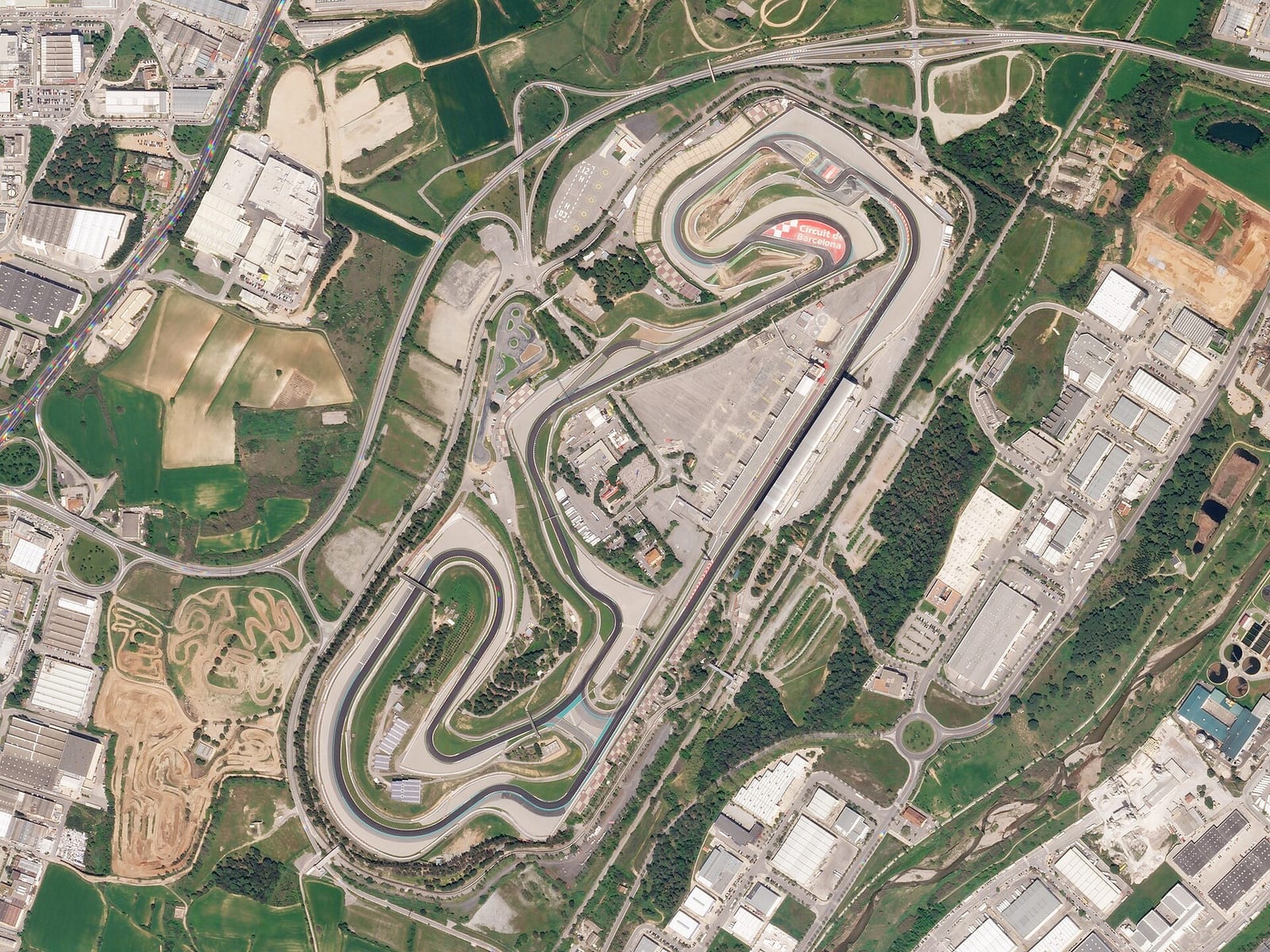
The 2017 layout is 4.655 km with 16 turns, and it includes the slow chicane before the last corner that F1 stopped using from 2023. So it is two tracks in one lap: long fast corners in the first two sectors, then a tight, slow last sector.
The wings are split, 5 at the front and 9 at the rear. The rear wing keeps the car planted through the fast right of Turn 3 and Turn 9, where a nervous rear costs you the whole corner. The lower front wing stops the car from becoming too pointy in those same corners, and it gives back some speed on the long pit straight.
For scale: Monaco and Hungary run 11 and 11 in my 2017 list, Silverstone runs 2 and 6. Barcelona sits in the middle, with more wing at the rear than any of the low drag tracks.
Camber and toe at the limit
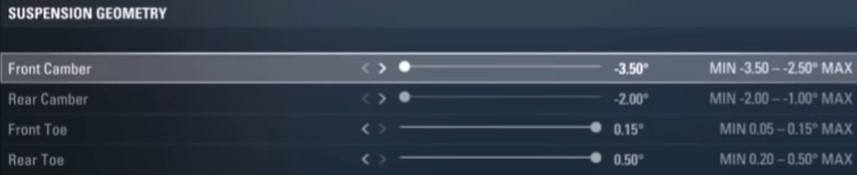
This is the part of the setup that stands out. The F1 2017 menu lets you set front camber from -3.50 to -2.50 and rear camber from -2.00 to -1.00. This setup runs -3.50 and -2.00, the most negative values the game allows. Toe is the same story: 0.15 at the front and 0.50 at the rear, both at the top of the range.
Compare that with my Hungary setup, which runs -2.70 and -1.80 with 0.11 and 0.32, and most of my other 2017 setups, which sit at the least camber and toe the menu allows.
Why here? Barcelona is a track where the car is loaded for a long time in one direction. Turn 3 and Turn 9 are long fast rights, and Turn 12 and Turn 13 are long too. More negative camber gives the outside tyre a bigger contact patch while the car leans on it. More toe makes the front react faster and the rear calmer.
The price is tyre heat and a little speed on the straight. In time trial, with a fresh set, it is worth paying.
Suspension, differential and ballast
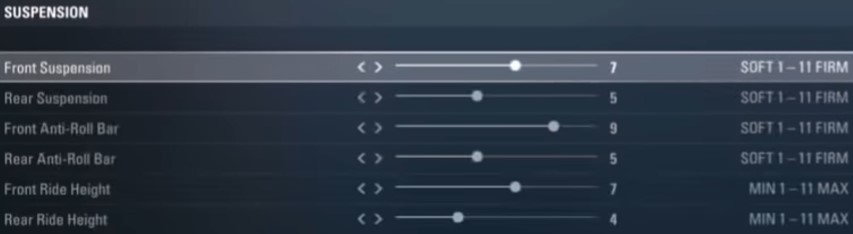
Springs are 7 at the front and 5 at the rear, anti-roll bars 9 and 5, the same split as Hungary. A stiff front for a quick change of direction, a softer rear so the rear tyres can put the power down.
Ride height is different: 7 at the front and 4 at the rear. The car sits with the nose up and the rear down. That keeps the front floor off the track over the kerbs and the crests, like the one in Turn 9, and the low rear works with the 9 on the rear wing to keep the rear stable at high speed.
The differential is fully locked on throttle at 100%, with 70% off throttle. A locked differential gives you the most traction in a straight line out of the slow corners of the last sector, Turn 10, the chicane and Turn 16. The 70% off throttle lets the car rotate on the way into those corners.
Ballast is at 11, as far back as the menu goes. That is more weight over the rear wheels for traction out of the slow corners.
Brakes and tyres
Brake pressure is 75% with 52% front bias. The F1 2017 menu runs the bias from 70% front down to 50%, so 52% is close to the rear end of the range.
That works here because of the ballast and the rear wing. With so much weight and downforce at the rear, the rear axle can take more of the braking without locking. If the rear steps out into Turn 1 or Turn 10, move the bias forward before anything else.
Tyre pressures are 23.0 psi front and 21.5 psi rear, the same as most of my 2017 setups.
What to change
One change at a time, three laps, then decide.
| Problem | Change |
|---|---|
| The rear moves in Turn 3 or Turn 9 | Front wing from 5 to 4 |
| The car pushes wide in Turn 3 or Turn 9 | Front anti-roll bar from 9 to 7 |
| Wheelspin out of Turn 10 or the chicane | On throttle differential from 100% to 85% |
| The rear locks into Turn 1 or Turn 10 | Front brake bias from 52% to 55% |
| Front tyres lock into Turn 1 | Brake pressure from 75% to 70% |
| The car bottoms out over the crest in Turn 9 | Rear ride height from 4 to 5 |
For a race. Bring the camber back first, to about -3.00 and -1.50, and the rear toe down to 0.35. Barcelona is hard on the tyres with this geometry, and in a race you pay for the heat every lap. Then lower the on throttle differential to 85% to protect the rear tyres out of the slow corners.
On a pad. Lower the on throttle differential to 80% and move the bias forward to 55%. A trigger makes it easy to give the locked differential too much throttle in the last sector, and the forward bias makes the car calmer under braking.
Where the lap time is in Barcelona
Turn 1 and Turn 2. The big stop at the end of the pit straight, a right then a left. Brake in a straight line and give up Turn 1 to be early on the throttle out of Turn 2.
Turn 3. The long fast right uphill. With this setup you carry speed all the way through. Keep the steering smooth and the car on the outside of the exit.
Turn 4 and Turn 5. A long right, then a downhill left. Take a late apex in Turn 5 to set up the short run to Turn 7.
Turn 7 and Turn 8. A left and right up the hill. Use the kerb in Turn 7, then run wide out of Turn 8 for the back straight.
Turn 9. The fast right over a crest at the end of the back straight. This is where the camber and the rear wing pay you back. Turn in early and trust the car.
Turn 10. A slow left hairpin after the back straight. Brake late and in a straight line.
Turn 12 and Turn 13. Two long rights. Patient on the throttle, the car is loaded for a long time.
The chicane and Turn 16. Slow in, straight out. The exit of Turn 16 is your speed down the whole pit straight, and the locked differential is there for this corner.
Spain in 2017
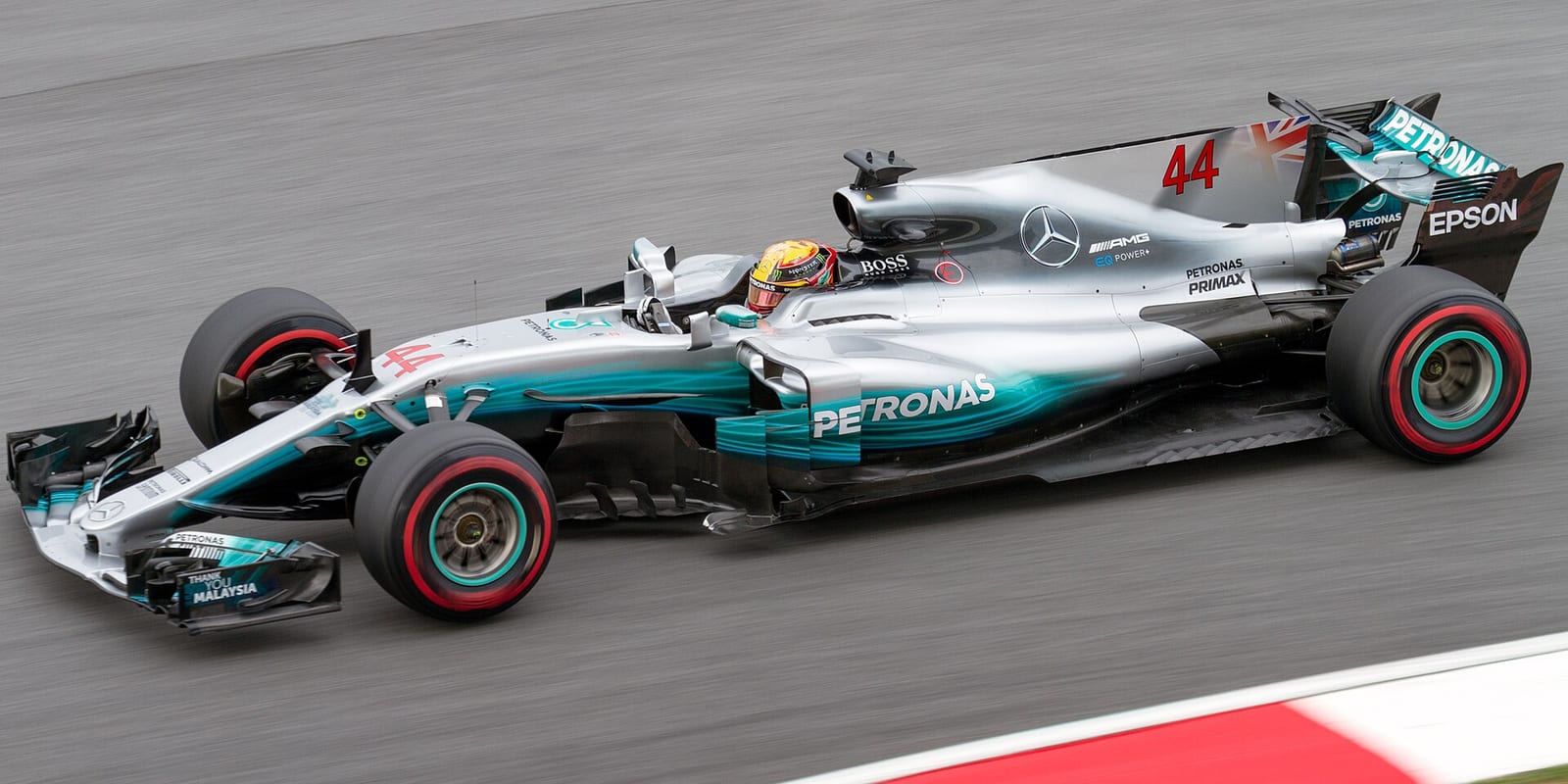
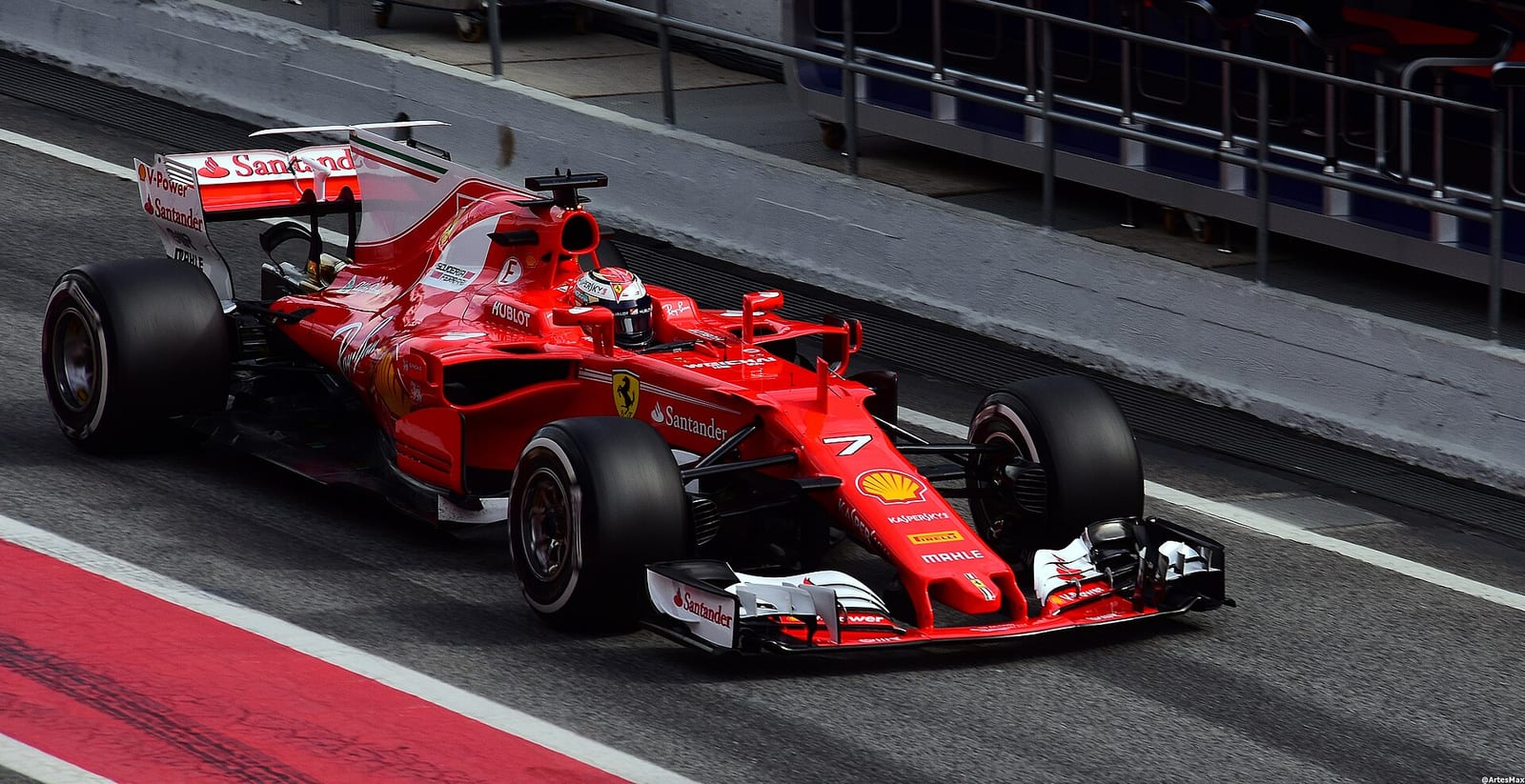
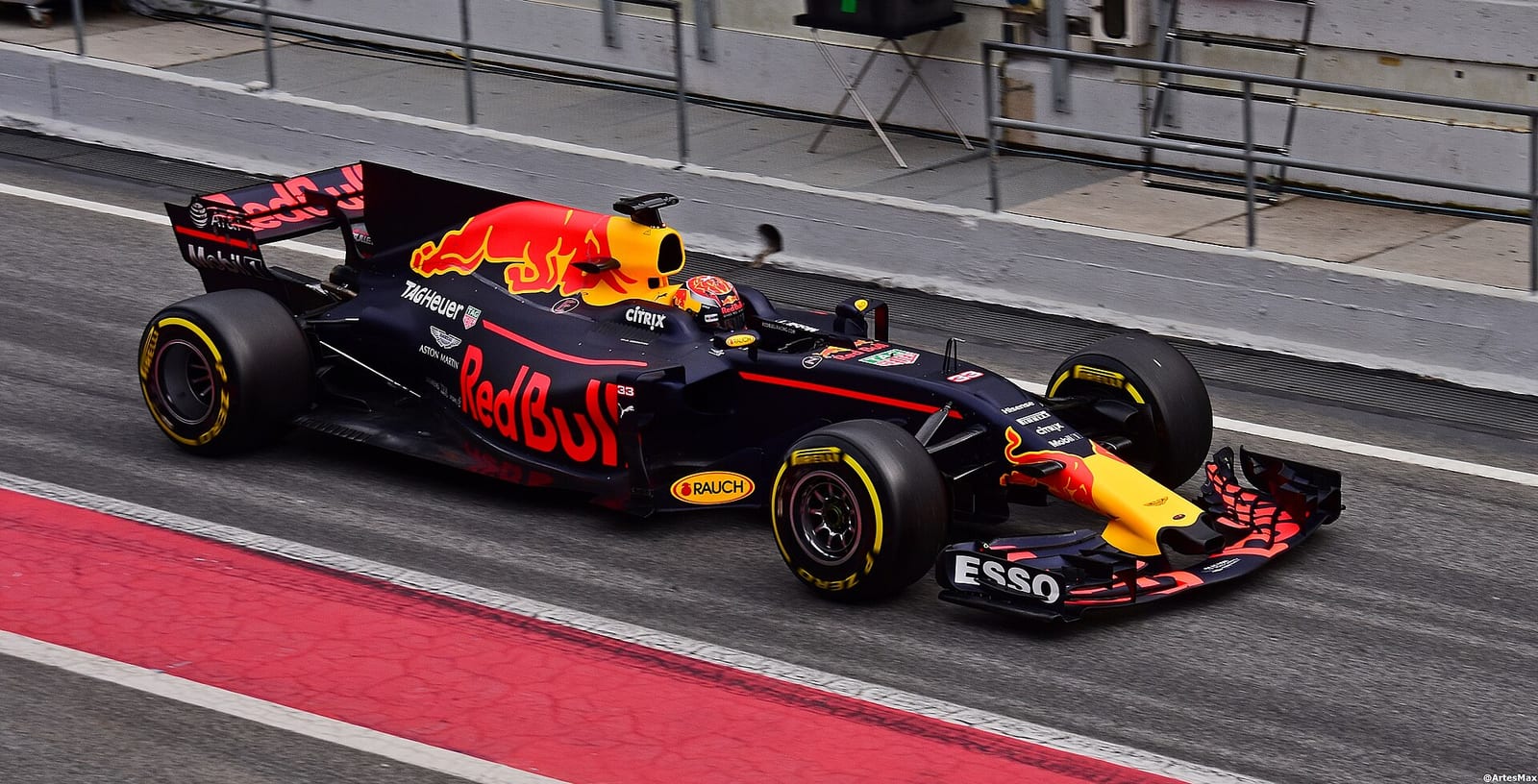
Lewis Hamilton took pole for the 2017 Spanish Grand Prix with a 1:19.149 and won the race on 14 May, over 66 laps. Sebastian Vettel finished second for Ferrari and Daniel Ricciardo third for Red Bull. Hamilton also set the fastest lap, a 1:23.593 on lap 64.
The race was a strategy fight. Ferrari pitted Vettel first, Mercedes kept Hamilton out longer and pitted him under the Virtual Safety Car, and Hamilton passed Vettel for the lead on lap 44. Kimi Räikkönen and Max Verstappen were out after contact at the start.
More F1 2017 setups
Spain comes after Russia on the 2017 calendar and before Monaco. The Monaco setup is the other extreme with 11 and 11 on the wings, and the Silverstone setup is the one to compare for fast corners with less wing. All 20 tracks are in one table on the F1 2017 setups page.
If you play the current game, the layout changed in 2023 and the car is different: see my F1 25 Spain setup.
FAQ
What is the best F1 2017 setup for Spain?
Front wing 5, rear wing 9, differential 100% on throttle and 70% off, camber -3.50 and -2.00, toe 0.15 and 0.50, suspension 7 and 5, anti-roll bars 9 and 5, ride height 7 and 4, brake pressure 75% with 52% front bias, tyres at 23.0 and 21.5 psi and ballast 11.
What wing levels should I run in Barcelona in F1 2017?
5 at the front and 9 at the rear. The rear wing keeps the car stable in the fast corners, and the lower front wing stops it from becoming nervous.
Why is the camber so high in this setup?
Barcelona has long, fast corners where the car leans on the outside tyres for a long time. Maximum negative camber gives those tyres more grip. In a race, bring it back to save the tyres.
Can I use this Spain setup in a race?
Yes, with changes. It is saved with 10 kg of fuel. Take the camber back to about -3.00 and -1.50, the rear toe to 0.35, and the on throttle differential to 85%.
Does this setup work with a controller?
It does. Run the on throttle differential at 80% and the front brake bias at 55%.
Does the F1 2017 Barcelona track have the chicane?
Yes. The game uses the 2017 layout, 4.655 km with 16 turns, including the chicane before the last corner. F1 stopped using that chicane from 2023.