
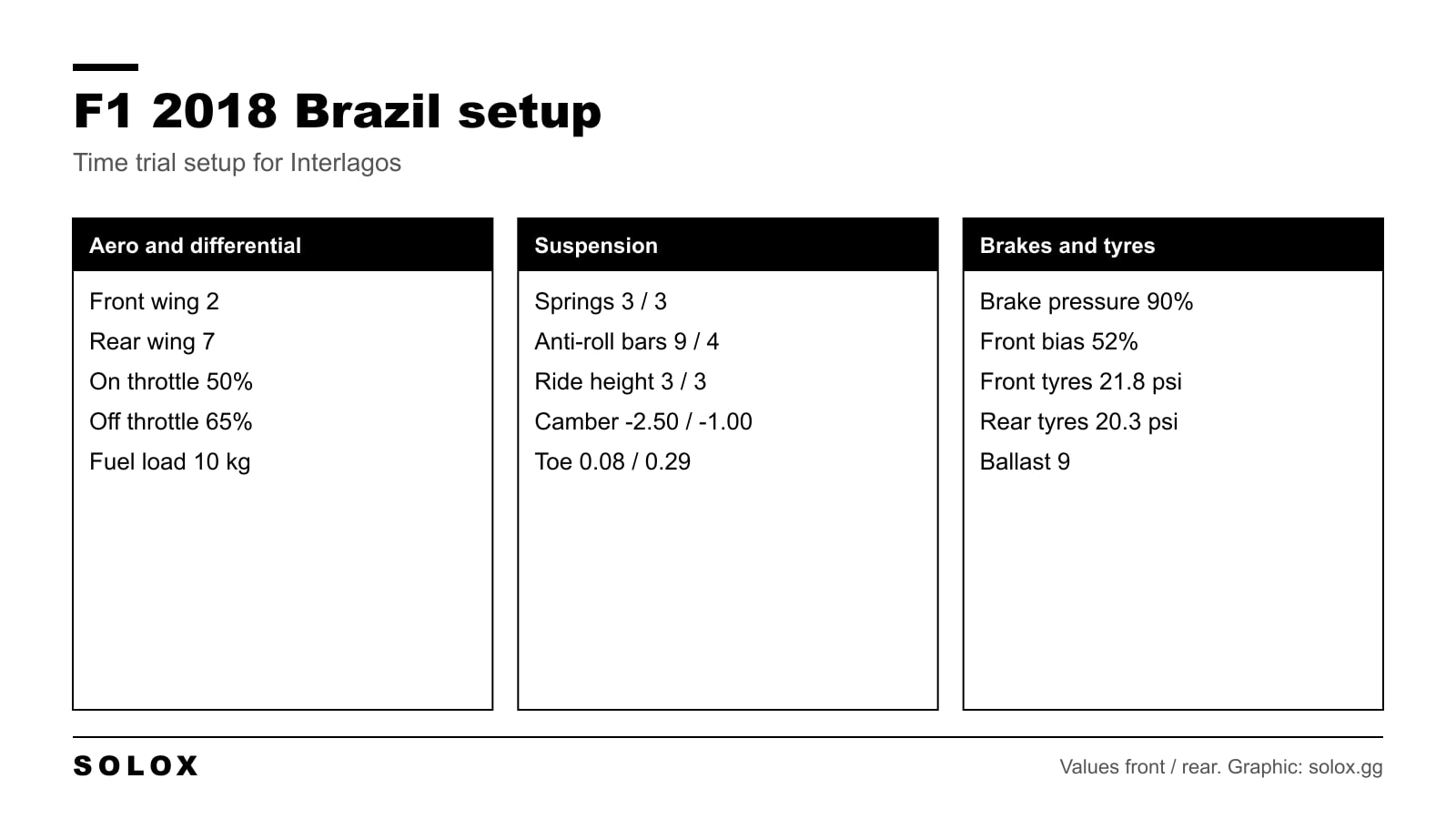
Interlagos is short, hilly and runs the wrong way round. The lap is barely over a minute, so every mistake is a big slice of it. The middle sector is slow and twisty, and from the last real corner you are flat out, uphill, all the way to Turn 1.
This F1 2018 Brazil setup runs wings at 2 and 7, the differential fully open on throttle, a stiff front bar and a little extra rear toe. It is a time trial setup, saved with 10 kg of fuel.
F1 2018 Brazil setup
| Setting | Front | Rear |
|---|---|---|
| Wing | 2 | 7 |
| Camber | -2.50 | -1.00 |
| Toe | 0.08 | 0.29 |
| Suspension | 3 | 3 |
| Anti-roll bar | 9 | 4 |
| Ride height | 3 | 3 |
| Tyre pressure | 21.8 psi | 20.3 psi |
| Setting | Value |
|---|---|
| Fuel load | 10 kg |
| Differential on throttle | 50% |
| Differential off throttle | 65% |
| Brake pressure | 90% |
| Front brake bias | 52% |
| Ballast | 9 |

Here is the lap the setup comes from:
Why this setup works at Interlagos
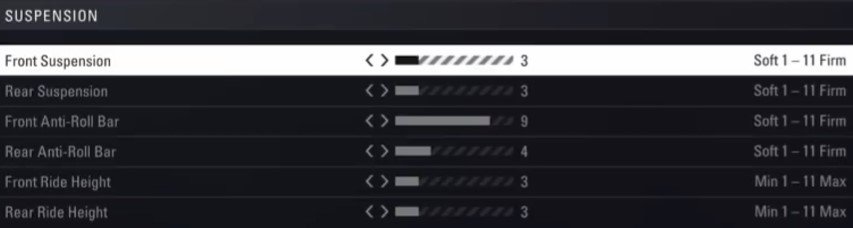
The lap is 4.309 km with 15 corners, and it runs anti-clockwise. It is built on a hillside, so almost nothing is flat. You drop through the Senna S, run down the back straight to the Descida do Lago, climb, wind through a slow kart style section, and then go flat from Juncao up the hill to the line.
The wings. Front 2, rear 7. The middle sector is all slow and medium corners, and that is where the rear wing earns its place. The climb from Juncao to Turn 1 is one of the longest full throttle stretches of the year, so you cannot go much higher than 7 without paying for it.
The differential. 50% on throttle, the minimum. At Interlagos you rarely exit a corner with the car straight. Out of Turn 3, out of the Ferradura and above all out of Juncao, you are on the power with steering still on. An open differential lets the rear wheels turn at different speeds, so the car follows the curve and does not push wide or snap. Off throttle it is 65%, also on the open side, for turn in.
The geometry. Camber is at the least angle, -2.50 and -1.00. Toe is 0.08 front and 0.29 rear, both above the minimum. The rear toe is the one to notice. Toe in at the rear makes the car more stable under braking and on the throttle. It costs a bit of straight line speed and a bit of tyre temperature.
Suspension
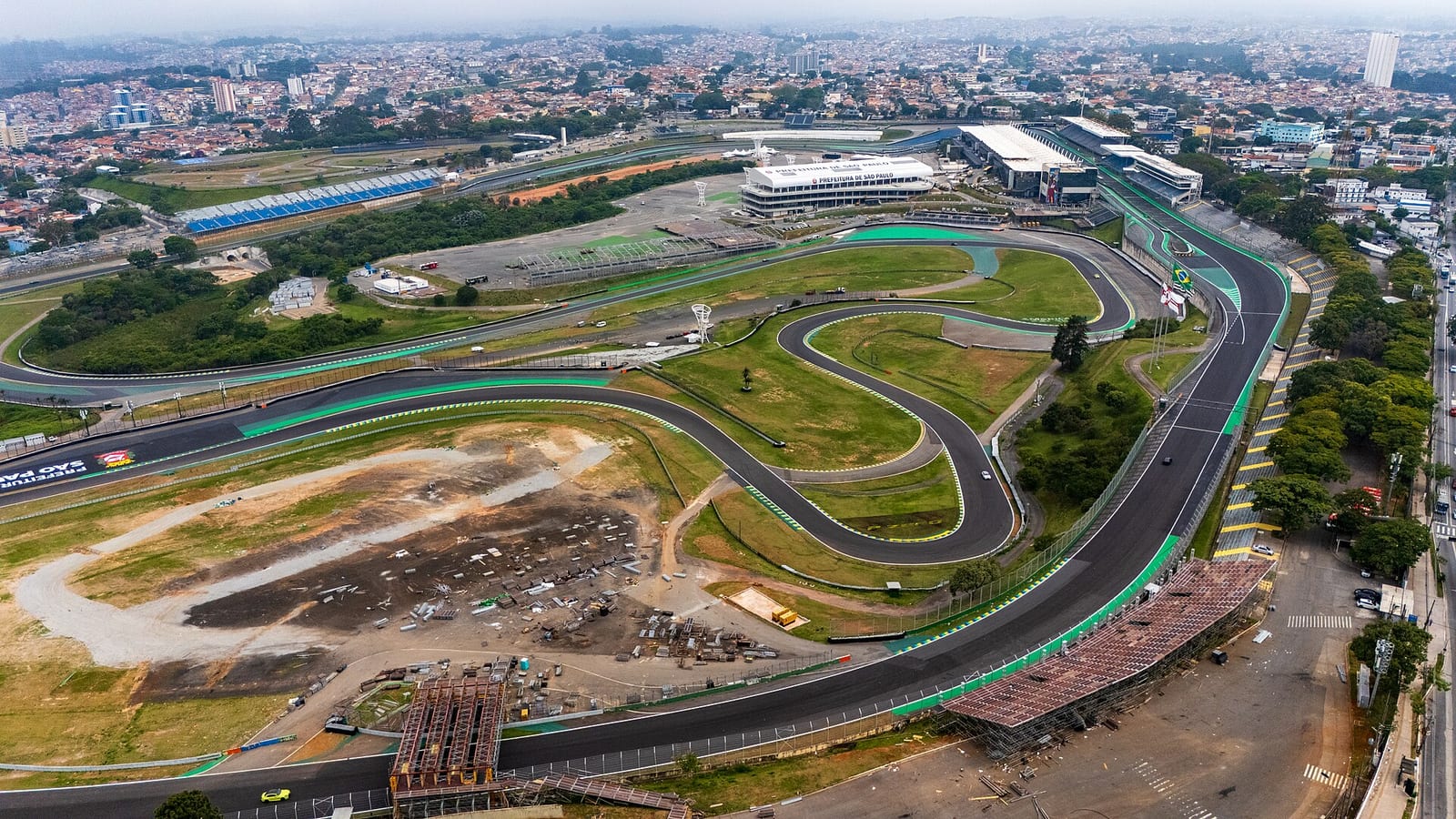
Springs are at 3 and 3, on the soft side. Anti-roll bars are 9 at the front and 4 at the rear. Ride height is 3 and 3.
The stiff front bar makes the front answer quickly. You need that in the Senna S, where the car goes left then right while the road falls away. The soft rear bar lets the rear tyres grip on the way out of the slow corners. Stiff front and soft rear is also a stable combination, and that works well with an open differential.
Soft springs help on the kerbs of the middle sector. A ride height of 3 at both ends is low without being on the limit.
Tyres are at 21.8 psi front and 20.3 rear. Both are low, for mechanical grip in a lap that is mostly slow corners.
My F1 2018 Mexico setup is for a track of nearly the same length and uses a softer front bar with a lot more rake.
Brakes
Brake pressure is 90% with 52% at the front. The bias is further back than on most of my F1 2018 setups.
The reason is the Senna S and the Descida do Lago. In both you brake downhill and start turning before you are off the pedal. The inside front tyre has very little load on it at that moment and it locks first. Moving the bias back takes work away from it. The rear toe keeps the rear in line while you do it.
What to change
One change at a time, three laps, then decide.
| Problem | Change | Why |
|---|---|---|
| The inside front locks into Turn 1 | Brake pressure 90% to 85% | Less peak pressure where the tyre is unloaded |
| The rear moves under braking | Front brake bias 52% to 54% | Takes braking work off the rear |
| The car pushes wide in the middle sector | Front wing 2 to 4 | More front grip in the medium speed corners |
| The car is nervous on turn in | Front anti-roll bar 9 to 7 | A softer front bar calms the front |
| Wheelspin out of the slow corners | Rear anti-roll bar 4 to 2 | A softer rear bar gives more traction |
| The inside rear spins up out of Juncao | On throttle differential 50% to 60% | More locking shares the drive between the rear wheels |
| Too slow up the hill | Rear wing 7 to 6 | Less drag, with a looser middle sector |
For a race
The setup is already gentle on the rear tyres. Before a 25% or 50% race I would change this:
- Front wing 2 to 3. With fuel the car understeers in the middle sector, and that wears the front right.
- Brake pressure 90% to 85%. Seventy laps of downhill braking is a lot of chances to flat spot a tyre.
- Rear toe 0.29 to 0.25. A little less drag and heat in the rear tyres over a stint.
- Fuel. The 10 kg is a time trial number. In a race the game sets the load for the distance.
On a pad, this setup works almost as it is. The open differential is the friendly choice for a trigger. I would only lower the brake pressure to 85%.
In F1 2018 you manage the ERS yourself. Use the battery from Juncao all the way to Turn 1, which is where the passing happens, and out of Turn 3 for the back straight. Recover in the middle sector.
Where the lap time is at Interlagos
- The Senna S. Left then right, downhill. Brake a touch earlier than you think and get the first apex right. If you miss it, you are wide for the second part and slow all the way down the back straight.
- Curva do Sol. A long, open left that leads onto the back straight. Full throttle as early as the car allows.
- Descida do Lago. Two downhill lefts after the back straight. The first one is the braking zone, and it is a passing place. The second one is quick. Do not run wide on the exit.
- Ferradura. A fast double right, downhill on the way in. Carry speed and let the car drift to the outside.
- Laranjinha and Pinheirinho. The slowest part of the lap. A right, then a left. Be patient and keep the car tight to the inside.
- Bico de Pato. A tight right, close to a hairpin. Late apex.
- Mergulho. A fast downhill left. It feels like it will not stick, and it does.
- Juncao. The most important corner of the lap. A third gear left that leads onto the long climb. Sacrifice the entry, get the car pointed up the hill and be early on the throttle. With the differential open you can do that with steering still on.
Interlagos in 2018
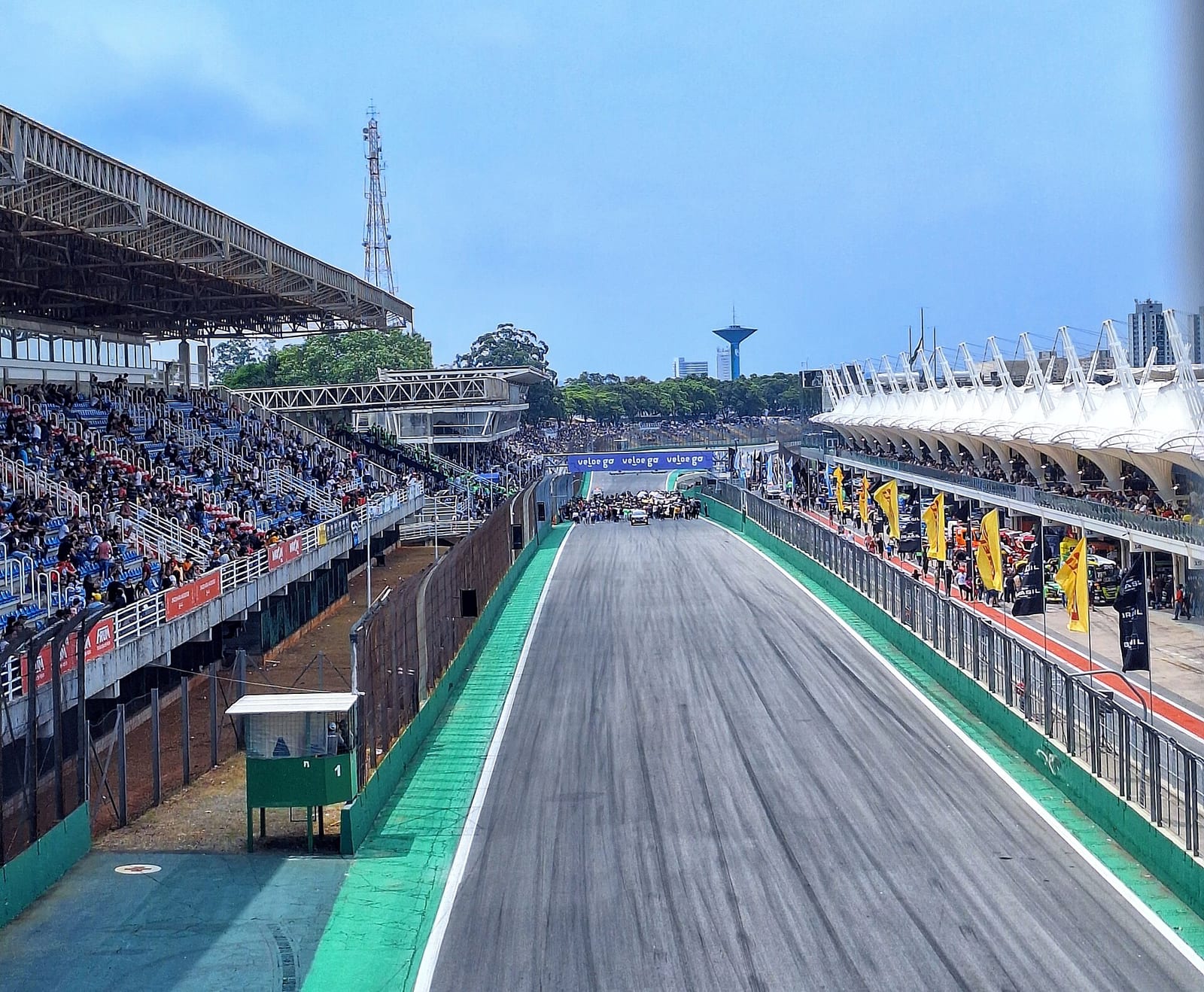
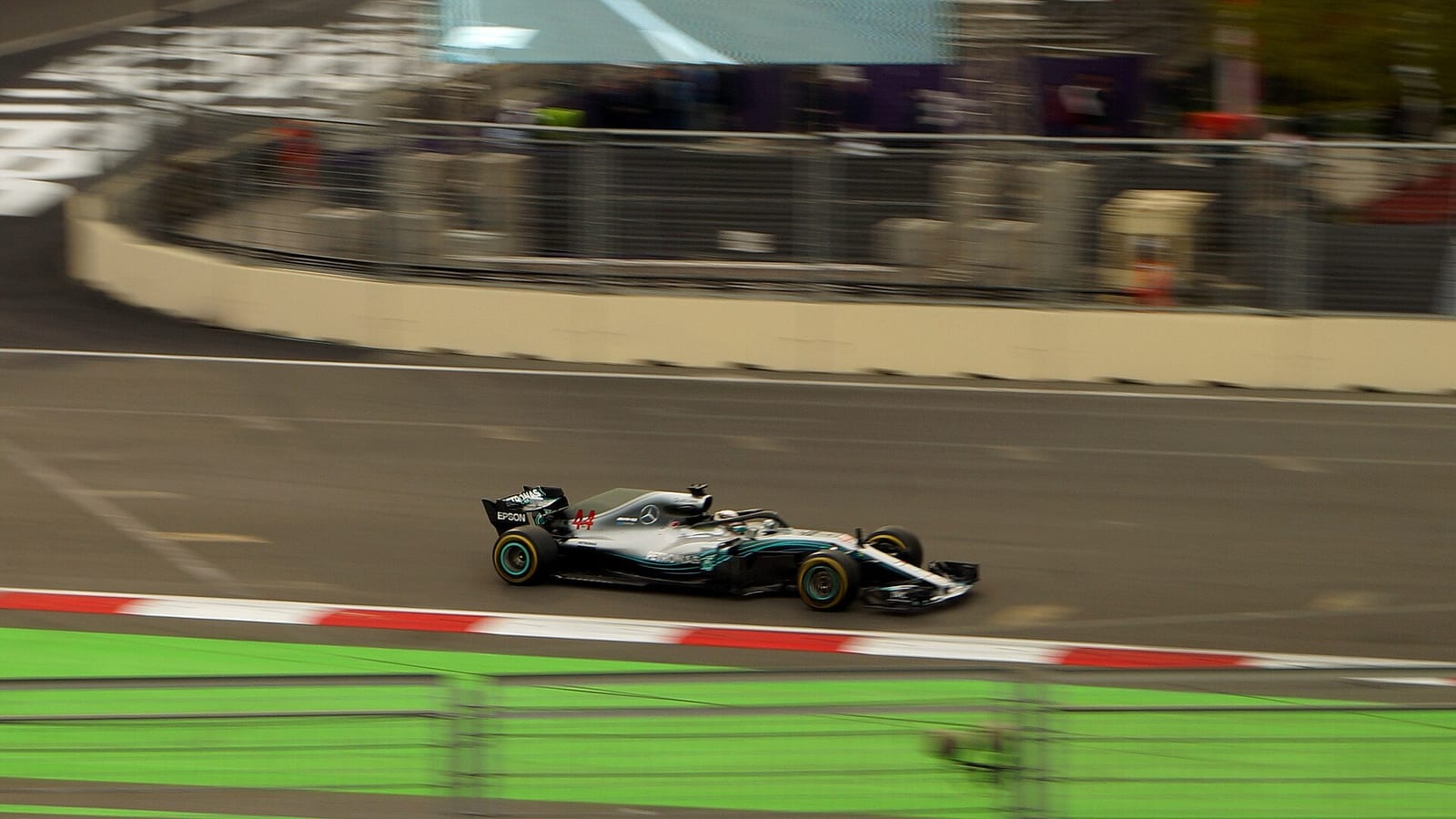
The 2018 Brazilian Grand Prix was round 20 of 21, on 11 November. Lewis Hamilton took pole position for Mercedes with a 1:07.281 and won the race over 71 laps. Max Verstappen was leading for Red Bull when he collided with Esteban Ocon, who was a lap down, on lap 44. Verstappen finished second and Kimi Raikkonen was third for Ferrari. Valtteri Bottas set the fastest lap, a 1:10.540 on lap 65.
The result gave Mercedes the constructors' title for the fifth year in a row.
More F1 2018 setups
All the tracks are on the F1 2018 setups page. The round before Brazil is the F1 2018 Mexico setup and the last round of the season is the F1 2018 Abu Dhabi setup.
For the same track in other games, here are my F1 2017 Brazil setup, my F1 2019 Brazil setup and my F1 25 Brazil setup. The values do not carry over from one game to the next.
FAQ
What is the best F1 2018 setup for Brazil?
For time trial: front wing 2, rear wing 7, differential 50% on throttle and 65% off, toe 0.08 and 0.29, suspension 3 and 3, anti-roll bars 9 and 4, ride height 3 and 3, brake pressure 90% with 52% front bias, tyres at 21.8 and 20.3 psi, ballast 9.
What wing levels should I run at Interlagos in F1 2018?
2 at the front and 7 at the rear for one lap. For a race, 3 and 7 take away understeer in the middle sector.
Can I use this Interlagos setup in a race?
Yes, with small changes. Front wing to 3, brake pressure to 85% and rear toe to 0.25.
Does this setup work with a controller?
It does. The open differential makes it easy on the throttle. Lower the brake pressure to 85% and leave the rest.
Why is the brake bias at 52%?
Because you brake downhill and turn at the same time in the Senna S and the Descida do Lago. A rearward bias stops the inside front tyre from locking.
How long is Interlagos in F1 2018?
4.309 km with 15 corners, run anti-clockwise. The real 2018 race was 71 laps, and the pole lap was a 1:07.281.