
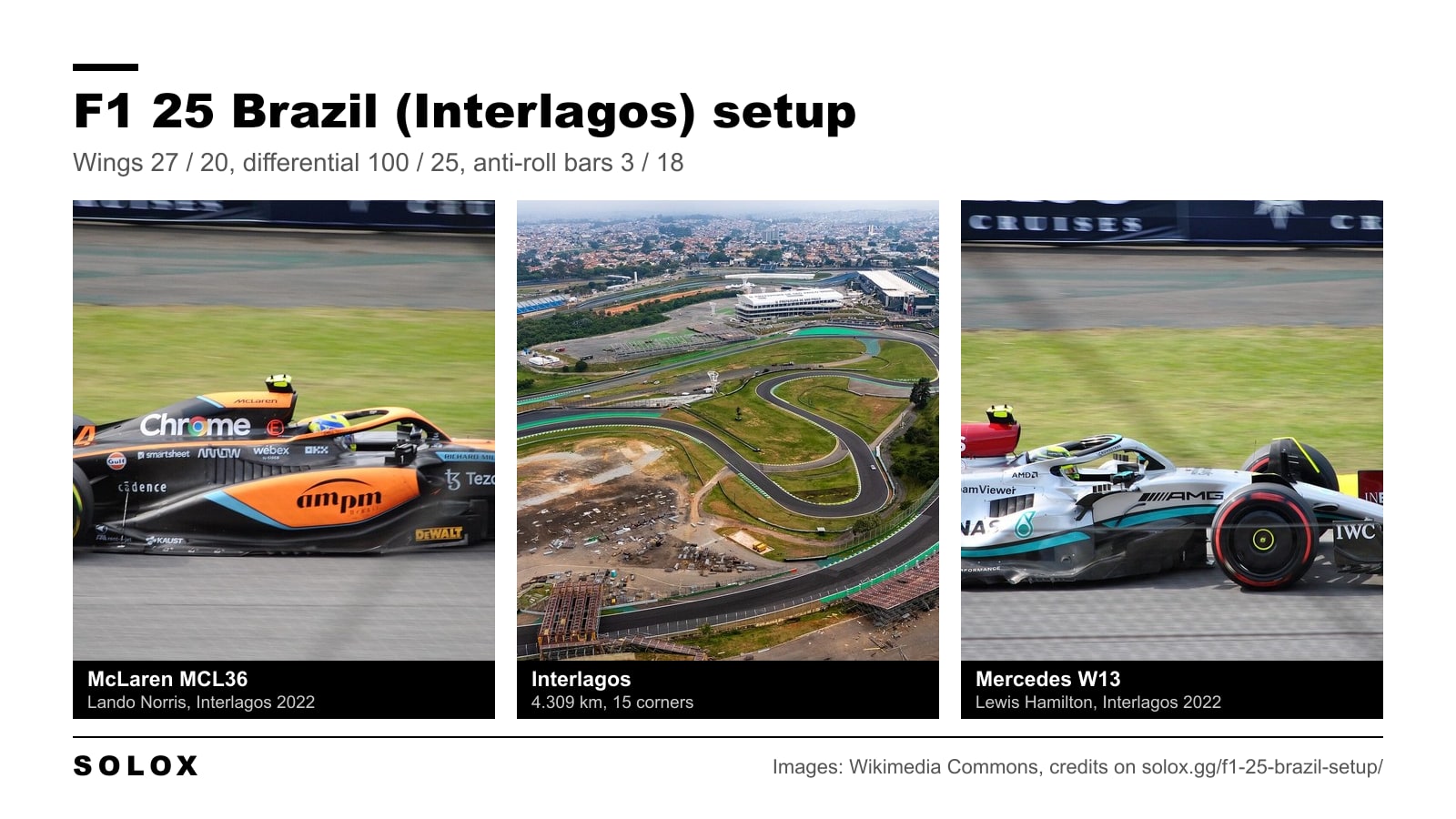
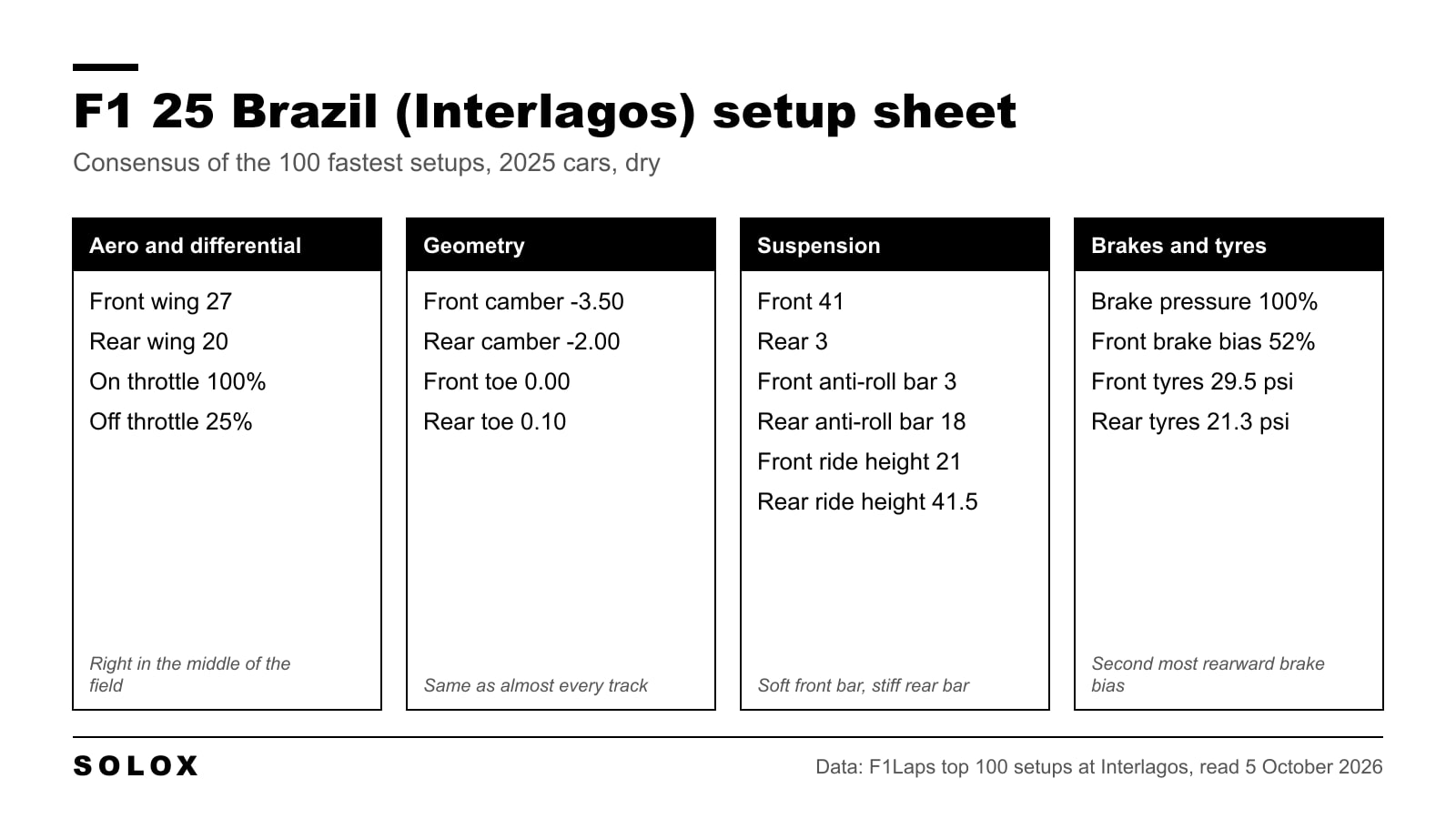
The best F1 25 Brazil setup for Interlagos runs wings at 27 and 20, the differential at 100% on throttle and 25% off, suspension at 41 and 3, anti-roll bars at 3 and 18, ride height at 21 and 41.5 and front brake bias at 52%. It is a medium downforce setup with a soft front end and a low rear.
The numbers come from F1Laps, which reports what the 100 fastest setups at this track have in common. I read them on 5 October 2026. I have not tested this exact setup in the game, so take it as community data. The reading of it is mine.
F1 25 Brazil setup: dry and wet
These values are for the 2025 cars in the base game.
| Setting | Dry | Wet |
|---|---|---|
| Front wing | 27 | 28 |
| Rear wing | 20 | 23 |
| Differential on throttle | 100% | 90% |
| Differential off throttle | 25% | 25% |
| Front camber | -3.50 | -3.50 |
| Rear camber | -2.00 | -2.00 |
| Front toe | 0.00 | 0.00 |
| Rear toe | 0.10 | 0.10 |
| Front suspension | 41 | 41 |
| Rear suspension | 3 | 1.5 |
| Front anti-roll bar | 3 | 4 |
| Rear anti-roll bar | 18 | 15 |
| Front ride height | 21 | 21 |
| Rear ride height | 41.5 | 44 |
| Brake pressure | 100% | 100% |
| Front brake bias | 52% | 53% |
| Front tyre pressures | 29.5 psi | 29 psi |
| Rear tyre pressures | 21.3 psi | 21.3 psi |
Why this setup works at Interlagos
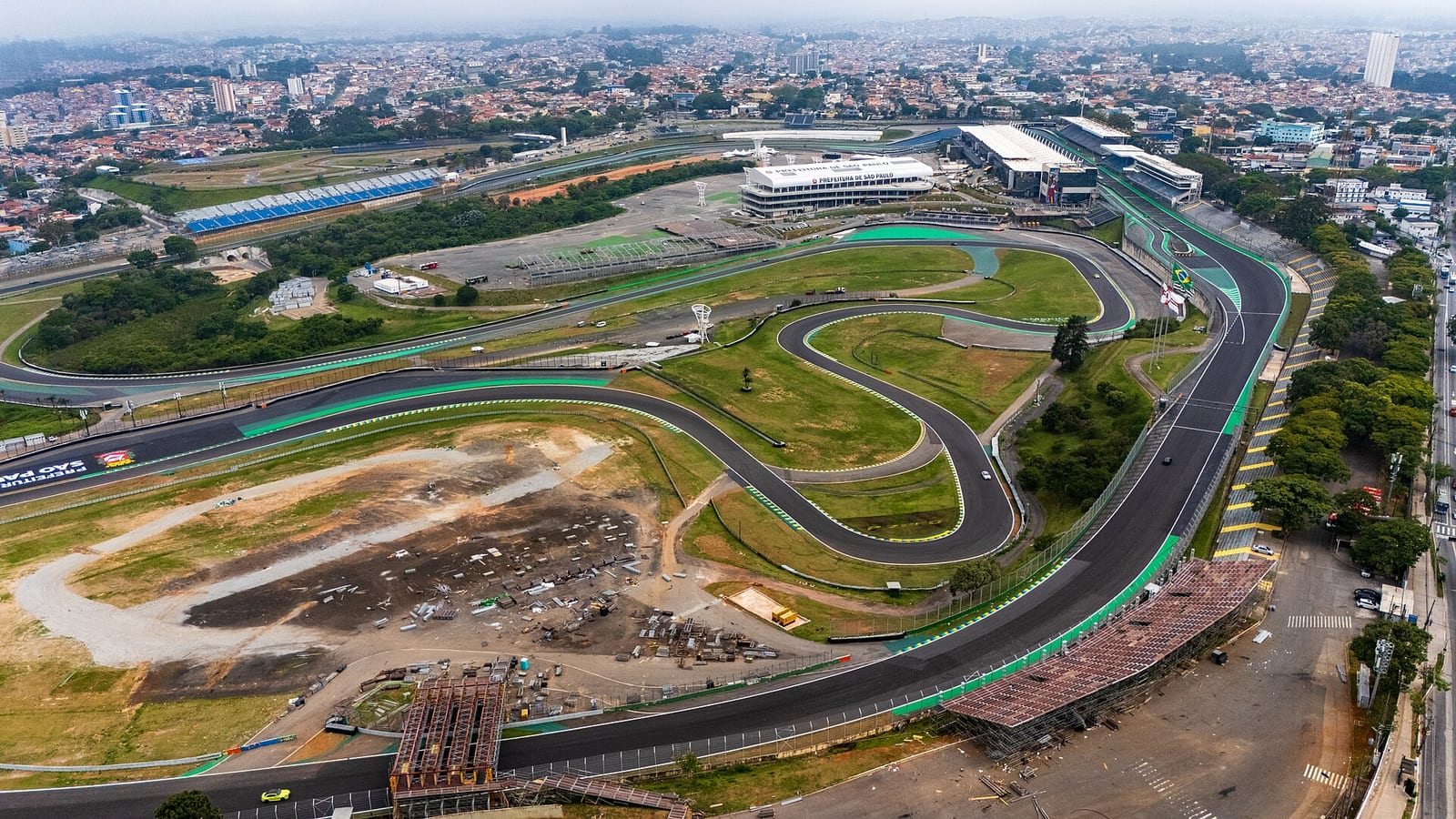
Interlagos is 4.309 km long and has 15 corners. It is one of the shortest laps on the calendar and it runs anticlockwise. The lap has three parts: the Senna S and the run down the back straight, a twisty infield that keeps changing direction and gradient, and a long flat out climb from the last real corner back to the start line.
That climb is why you cannot run high wings here, even with a middle sector that would like them. The setup is a compromise, and the community has landed right in the middle.
Wings at 27 and 20. The front matches Bahrain. Eleven tracks run less and eleven run more. The rear at 20 is a value no other track uses, with eleven below and twelve above. You can compare it with every other track in my F1 25 setups for every track.
Differential at 100% and 25%. Fully locked on throttle, like 19 of the 24 tracks, for the exit of the last corner and the climb that follows. Off throttle, 25% is on the open side. Only Suzuka, Zandvoort and Jeddah run less, seven tracks run the same and fourteen run more. An open differential off throttle helps the car rotate in the infield.
Camber and toe. Camber is -3.50 and -2.00 and toe is 0.00 and 0.10, the values almost every track uses.
Suspension at 41 and 3. The stiffest front any track runs, shared by fourteen of them. The rear at 3 is soft, the same as Imola, Silverstone and Austin.
Anti-roll bars at 3 and 18. This is what makes the Interlagos setup different. The front bar at 3 is very soft. Only Shanghai and Suzuka run less and 21 tracks run more. The rear at 18 is stiff. It matches Hungary, fifteen tracks run less and seven run more. A soft front with a stiff rear gives front grip and rotation in the long infield corners, where understeer is the enemy.
Ride height at 21 and 41.5. The front is one click above the lowest value in the game. The rear at 41.5 is low. Only Suzuka and Spa run less and 21 tracks run more. A low rear cuts drag for the climb to the line.
Brake bias at 52%. The second most rearward value in the game. Only Zandvoort runs less and the other 22 tracks run more. Brake pressure is 100%.
Tyres at 29.5 and 21.3 psi. The fronts are at the highest pressure any track uses, shared with about ten others. The rears match Melbourne, Imola, Miami and Abu Dhabi, with seven tracks lower and twelve higher.
How to drive it
Do not overdrive Turn 1. The Senna S drops downhill to the left and then switches right. With 52% brake bias the rear helps the car turn, so brake in a straight line first and release the pedal gently. A slow, tidy Turn 1 gives a better Turn 2, and Turn 2 leads onto the back straight through Curva do Sol.
Turn 4 is the second place to pass. Descida do Lago comes at the end of the back straight. Brake late, but leave room on the exit, because the kerb on the outside is easy to run over.
Be patient in the infield. From Ferradura to Bico de Pato the corners are long and the car wants to push wide. The soft front bar is there to help. Turn in once, wait, and go back to the throttle only when you can see the exit. Adding steering does not work here.
Use the kerbs with care. The soft rear suspension takes the inside kerbs well in the slow corners. In the fast downhill left at Mergulho, stay off them.
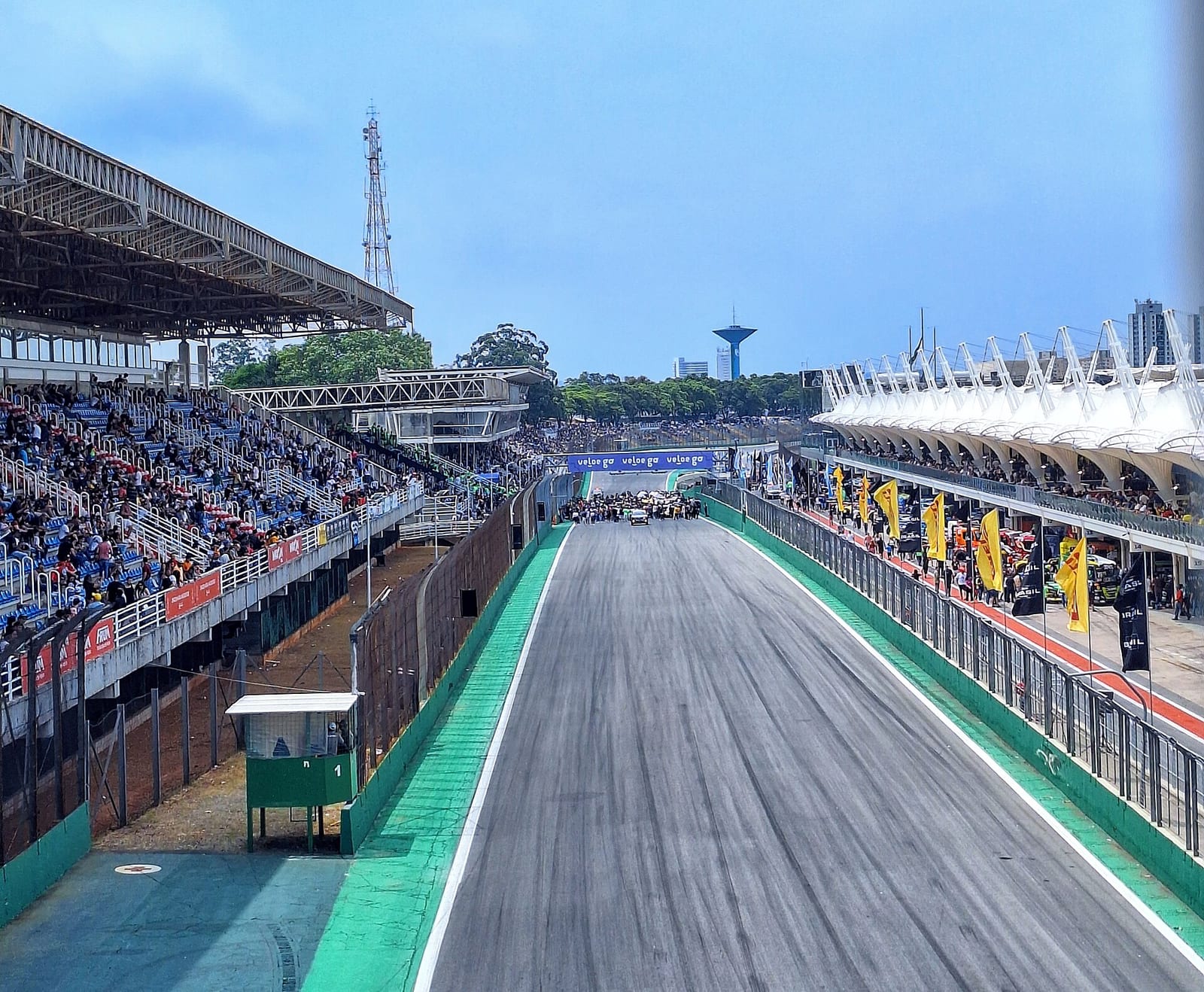
Junção decides the lap. Turn 12 is the last real corner, a medium speed left. Everything after it is flat out and uphill to the line and then down to Turn 1. Take a late apex and get to full throttle early. A bad exit costs you for about fifteen seconds.
How to adjust it to your driving
Change one thing at a time and drive three clean laps before you judge it.
- The rear steps out on corner entry. Move the brake bias forward from 52% to 54%, the value most tracks use.
- The rear slides in the long corners. Soften the rear anti-roll bar from 18 to 15.
- The rear slides on corner exit. Lower the on throttle differential from 100% to 90%.
- The car still understeers in the infield. Add one click of front wing, to 28.
- The floor hits the ground at the bottom of the Senna S. Raise the rear ride height from 41.5 to 44, the value the wet set uses.
- You get passed on the climb to the line. Take one click off the rear wing, to 19.
- You are on a controller. Start with the brake bias at 54%, the on throttle differential at 85% and the rear anti-roll bar at 14. My F1 25 controller settings cover the calibration side.
Wet setup for Interlagos
Interlagos is famous for rain, so this one is worth saving. Compared with the dry setup:
- Wings go up from 27 and 20 to 28 and 23.
- The on throttle differential drops from 100% to 90%.
- The rear suspension softens from 3 to 1.5.
- The front anti-roll bar goes up from 3 to 4 and the rear comes down from 18 to 15.
- Rear ride height goes up from 41.5 to 44. The front stays at 21.
- Brake bias moves forward from 52% to 53%.
- The front tyres drop from 29.5 to 29 psi.
Off throttle differential, camber, toe, front suspension, brake pressure and rear tyre pressures all stay the same.
The pattern is clear. Everything that made the dry car turn, the stiff rear bar and the rearward brake bias, gets wound back so the rear stays behind you. Three more clicks of rear wing do the same job in the fast corners.
Interlagos setup for the 2026 Season Pack car
The 2026 cars arrived in F1 25 with the 2026 Season Pack. They have their own setups, and a 2025 setup does not carry over. F1Laps files these cars under F1 26. These are the sets for Interlagos as I read them on 5 October 2026.
| Setting | 2026 car, dry | 2026 car, wet |
|---|---|---|
| Front wing | 48 | 35 |
| Rear wing | 25 | 25 |
| Differential on throttle | 85% | 80% |
| Differential off throttle | 35% | 35% |
| Engine braking | 50% | 50% |
| Front camber | -3.50 | -3.50 |
| Rear camber | -2.00 | -2.00 |
| Front toe | 0.00 | 0.00 |
| Rear toe | 0.10 | 0.10 |
| Front suspension | 40 | 37 |
| Rear suspension | 16 | 16 |
| Front anti-roll bar | 3 | 5 |
| Rear anti-roll bar | 7 | 6 |
| Front ride height | 22 | 22 |
| Rear ride height | 46 | 48 |
| Brake pressure | 100% | 98% |
| Front brake bias | 56% | 56% |
| Front tyre pressures | 28 psi | 28 psi |
| Rear tyre pressures | 21 psi | 21.7 psi |
The 2026 car runs much more front wing, 48, with the rear at 25. The differential is 85% on throttle and 35% off. The front suspension is 40 and the rear stiffens a lot, to 16. The front anti-roll bar stays at 3 and the rear drops to 7. Ride height is 22 and 46, brake bias is 56%, and the tyres run 28 and 21 psi.
The 2026 data on F1Laps still moves from one day to the next. Treat it as a starting point and check the source before a league race.
Other tracks and older games
For the track with the same front wing, see my F1 25 Bahrain setup. For the other track with the rear anti-roll bar at 18, see my F1 25 Hungary setup. For another anticlockwise lap with the same rear suspension and rear tyre pressures, see my F1 25 Imola setup. If you are on an older game, I have a Brazil setup for F1 23.
FAQ
What is the best setup for Brazil in F1 25?
Wings 27 and 20, differential 100% on throttle and 25% off, camber -3.50 and -2.00, toe 0.00 and 0.10, suspension 41 and 3, anti-roll bars 3 and 18, ride height 21 and 41.5, brake pressure 100%, front brake bias 52%, front tyres 29.5 psi and rear tyres 21.3 psi.
What wing level should I run at Interlagos in F1 25?
27 at the front and 20 at the rear in the dry. In the wet, the consensus is 28 and 23.
Is Interlagos a high downforce track in F1 25?
No. It is a medium downforce track. Eleven tracks run less front wing and eleven run more. The infield wants grip, but the long climb to the start line punishes drag.
What is the best wet setup for Interlagos in F1 25?
Wings 28 and 23, differential 90% and 25%, suspension 41 and 1.5, anti-roll bars 4 and 15, ride height 21 and 44 and brake bias 53%. Front tyres run 29 psi and rear tyres 21.3.
Does the F1 25 Brazil setup work on the 2026 cars?
No. The 2026 Season Pack car runs wings at 48 and 25, the differential at 85% and 35%, suspension at 40 and 16, anti-roll bars at 3 and 7 and brake bias at 56%. Use the 2026 table on this page.
Where does this setup come from?
From F1Laps, which analyses the 100 fastest setups its users have driven at Interlagos. I read the numbers on 5 October 2026. They can move when the game is patched.