
Marina Bay is one of the longest laps of the year in time, even though it is not a long track in distance. It is 23 corners, most of them slow, with walls on both sides and almost nowhere to rest. Top speed counts for very little. Grip and traction count for everything.
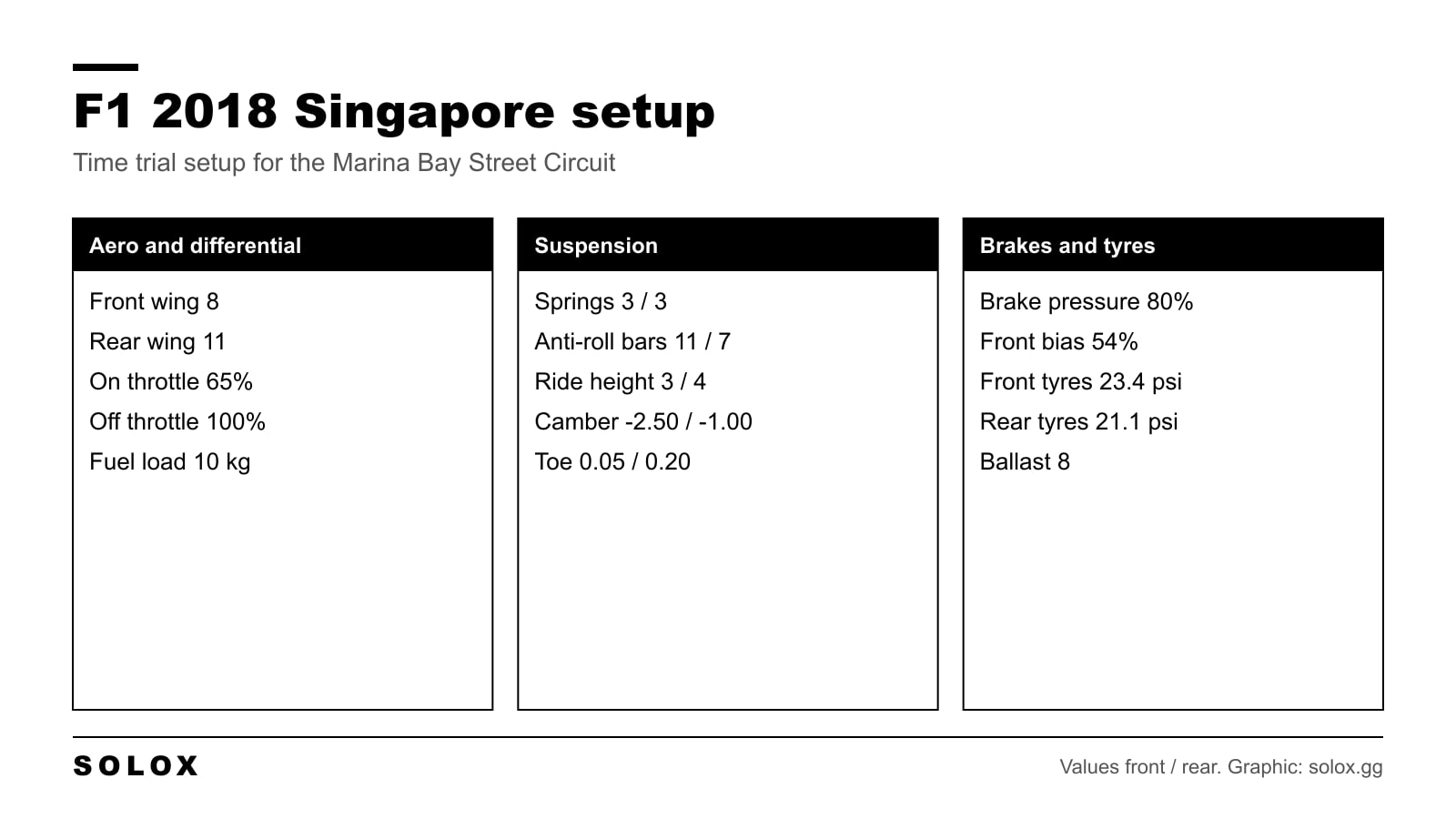
This is the F1 2018 Singapore setup on this site: front wing 8, rear wing 11, a differential that is open on throttle and locked off it, and the stiffest front anti-roll bar. It is a time trial setup, saved with 10 kg of fuel.
F1 2018 Singapore setup
| Setting | Front | Rear |
|---|---|---|
| Wing | 8 | 11 |
| Camber | -2.50 | -1.00 |
| Toe | 0.05 | 0.20 |
| Suspension | 3 | 3 |
| Anti-roll bar | 11 | 7 |
| Ride height | 3 | 4 |
| Tyre pressure | 23.4 psi | 21.1 psi |
| Setting | Value |
|---|---|
| Fuel load | 10 kg |
| Differential on throttle | 65% |
| Differential off throttle | 100% |
| Brake pressure | 80% |
| Front brake bias | 54% |
| Ballast | 8 |
In F1 2018 the wings, suspension, anti-roll bars, ride height and ballast all use a scale from 1 to 11.
This setup was collected for the site in 2022 from a fast time trial lap, like the rest of my F1 2018 setups. Use it as a base and adjust it with the table further down.

Why this setup works at Marina Bay
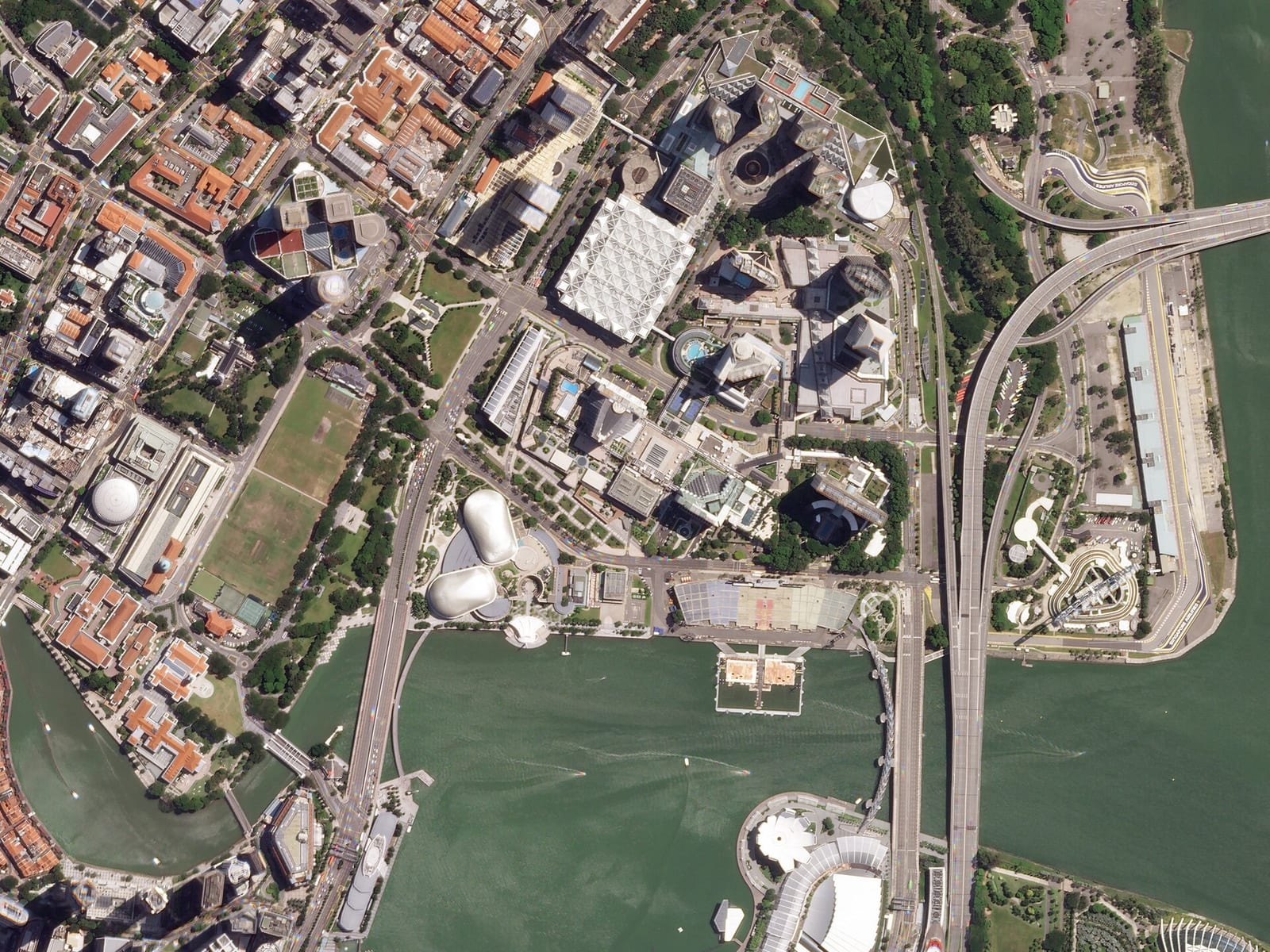
The Marina Bay Street Circuit was 5.063 km long with 23 corners in 2018. The longest full throttle run is the curved stretch along Raffles Boulevard between turn 5 and turn 7, and it is short. The rest of the lap is braking, turning and getting back on the power.
The wings. 8 and 11. With so little straight, drag costs you almost nothing and downforce pays in every corner and every braking zone. The rear is at the maximum because traction is the limit here. Most of the 23 corners are slow, and each one ends with you asking the rear tyres for grip. The front is three clicks lower, so the balance leans to the rear and the car stays calm when you turn in close to a wall.
The differential. 65% on throttle. That is fairly open, so the inside rear wheel can spin at its own speed and the car puts its power down without snapping. Off throttle it is 100%, fully locked. A locked differential off throttle holds the rear in line when you lift and brake into a corner. It also makes the car push a little on the way in, and the front end of this setup is built to cancel that.
The geometry. Camber is -2.50 and -1.00 and toe is 0.05 and 0.20, the lowest values in the menu. With low camber more of the tyre touches the road in a straight line, which is where you brake and accelerate. On a lap of slow corners that is worth more than cornering grip at speed.
A stiff front bar on soft springs
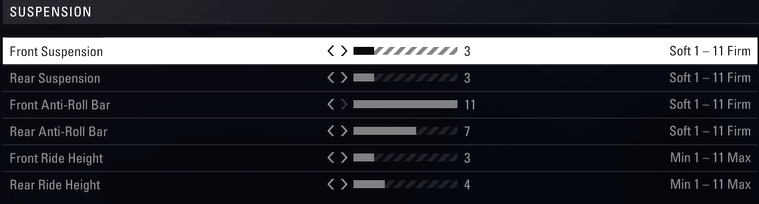
The front anti-roll bar is at 11, the maximum. The rear is at 7. The springs are soft, at 3 and 3.
It looks like a contradiction and it is not. The springs deal with bumps and kerbs, and a street track has plenty of both, so they stay soft. The anti-roll bars deal with how fast the car leans when you turn the wheel. A stiff front bar makes the nose react the moment you steer, which is what you want when one corner follows another with no pause, like turn 1 to turn 3 or the section under the grandstand.
The stiff front bar is also the answer to the locked differential off throttle. One makes the car push on entry, the other sharpens the entry. Together you get a car that is stable on the brakes and still turns.
Ride height is 3 and 4. That is low for a street track. It works with wings this high because the downforce is doing its job at low ride height, and the slightly higher rear adds a little more front grip.
What to change
One change at a time, three laps, then decide.
| Problem | Change | Why |
|---|---|---|
| The car pushes wide on corner entry | Off throttle differential from 100% to 85% | The rear axle lets the car rotate when you lift |
| Still understeer in the slow corners | Front wing from 8 to 9 | More load on the front tyres |
| The rear snaps when you change direction | Front anti-roll bar from 11 to 9 | The car leans more gently |
| Wheelspin out of the turn 13 hairpin | On throttle differential from 65% to 55% | The rear wheels work more on their own |
| Front tyres lock into turn 7 or turn 14 | Brake pressure from 80% to 76% | The pedal gets easier to modulate |
| The car jumps on the kerbs | Ride height from 3 and 4 to 4 and 5 | More room under the car |
| The rear moves under braking | Front brake bias from 54% to 56% | More of the braking moves to the front |
For a race
- The rear tyres are the limit in Singapore. Lower the on throttle differential to 55% or 60% and be gentle with the throttle on every exit.
- Keep the rear wing at 11. You will not miss the top speed.
- With race fuel the car is heavy for a long time on a lap this slow. Take the brake pressure down to about 76% and brake a few metres earlier.
- Raise the ride height one click at each end if the floor touches with a full tank.
- F1 2018 was the first game of the series with manual ERS modes. There is no long straight, so spend the battery on the exits of turn 5 and turn 13 and save it in the slow section at the end of the lap.
- On a pad, start with the front anti-roll bar at 8 and the off throttle differential at 85%. The car gets less sharp and easier to place next to a wall.
Where the lap time is at Marina Bay
- Turn 1 to turn 3. Left, right, left. Brake in a straight line for turn 1, hold a tight line through turn 2 and think about turn 3. The exit of turn 3 gives you the run to turn 5.
- Turn 5. A 90 degree right onto Raffles Boulevard, the fastest part of the lap. This is the exit that matters most. Late apex, early throttle.
- Turn 7. The hardest stop of the lap, a 90 degree left. Brake in a straight line and do not rush the turn in.
- Turn 10. A left with the wall very close on the exit. Leave a margin until you do the same lap every time.
- Turn 11 to turn 13. Over the Anderson Bridge and into the hairpin. Turn 13 is the slowest corner of the lap. Turn late and wait for the car to be straight before full throttle.
- Turn 14. A hard stop into a 90 degree right. It is easy to brake too late here after the run along the Esplanade.
- Turn 16 to turn 21. Slow, tight and one after another, including the part that goes under the grandstand. This is where the stiff front bar earns its place. Keep a rhythm and stay off the kerbs that unsettle the car.
- Turn 22 and turn 23. Two fast lefts onto the pit straight. Commit to the first one and let the car run out to the wall on the exit of the second.
Singapore in 2018
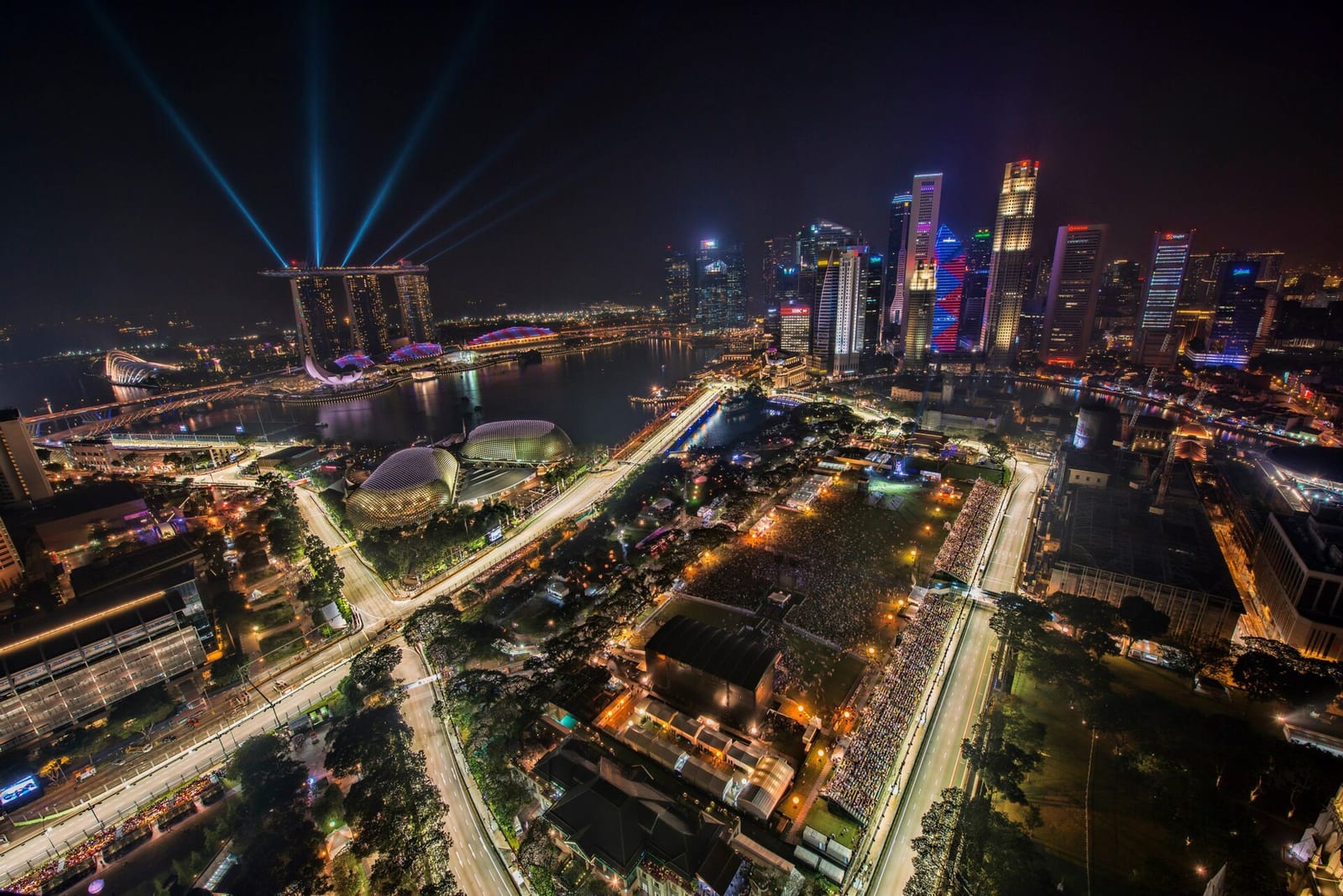
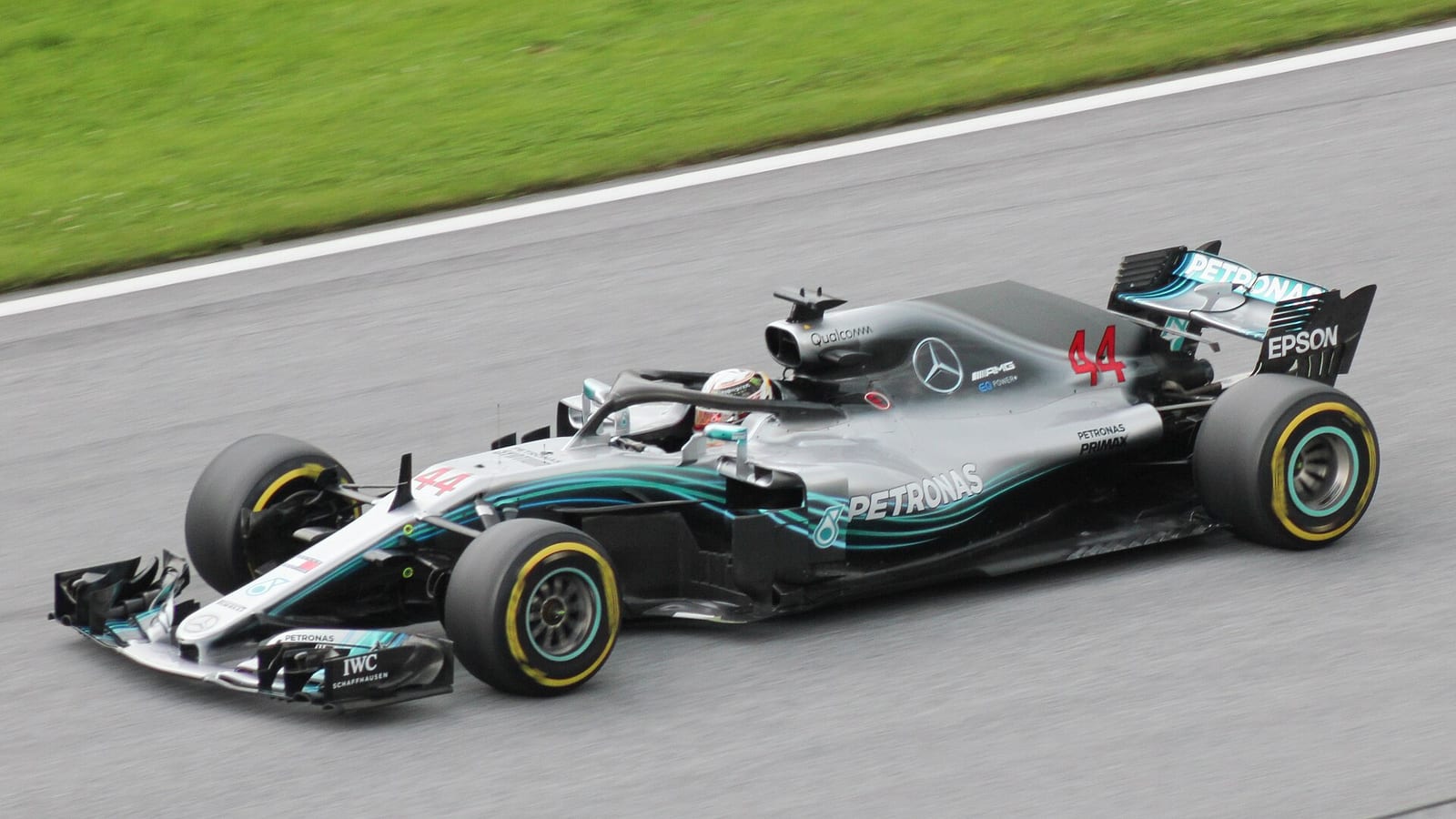
The 2018 Singapore Grand Prix was round 15 of the season, on 16 September. Lewis Hamilton took pole position for Mercedes with a 1:36.015 and won the race over 61 laps. Max Verstappen finished second for Red Bull and Sebastian Vettel was third for Ferrari. Kevin Magnussen set the fastest lap for Haas, a 1:41.905.
More F1 2018 setups
Singapore is round 15 of the 2018 calendar. The Monza setup before it is the low downforce end of the game, and the Russia setup comes after it. The other street tracks are the Monaco setup and the Baku setup, which runs wings 1 and 4. Every track is listed on the F1 2018 setups page.
If you play a later game, see my F1 2019 Singapore setup and my F1 25 Singapore setup. The layout changed in 2023, so the current lap has 19 corners.
FAQ
What is the best F1 2018 setup for Singapore?
Front wing 8, rear wing 11, differential 65% on throttle and 100% off, suspension 3 and 3, anti-roll bars 11 and 7, ride height 3 and 4, brake pressure 80% with 54% front bias, and tyres at 23.4 and 21.1 psi.
What wing levels should I run in Singapore in F1 2018?
8 at the front and 11 at the rear. If the car pushes in the slow corners, go to 9 at the front. Do not lower the rear.
Can I use this Singapore setup in a race?
Yes, with a few changes. It is saved with 10 kg of fuel. Lower the on throttle differential to 55% or 60% to protect the rear tyres and take the brake pressure down to about 76%.
Does this setup work with a controller?
It does. Lower the front anti-roll bar to 8 and the off throttle differential to 85%, so the car reacts more gently to the stick.
Why is the off throttle differential at 100%?
A locked differential off throttle keeps the rear stable when you lift and brake into a corner. At a track with walls on every exit and entry, that stability is worth the small amount of understeer it adds.
Why is the front anti-roll bar at 11?
It makes the front react at once in the quick sequences of corners, and it balances the understeer from the locked differential off throttle. Soften it if the rear snaps.
Where do I lose the most time in Singapore?
Usually on the exits of turn 5 and turn 13, by going to the throttle before the car is straight, and in the last sector by overdriving the slow corners.