
Sochi looks easy on the map. One long left hander, two long flat out sections and a lot of 90 degree corners that all look the same. The lap time is in how early you get back on the throttle out of each one, twelve or thirteen times a lap.
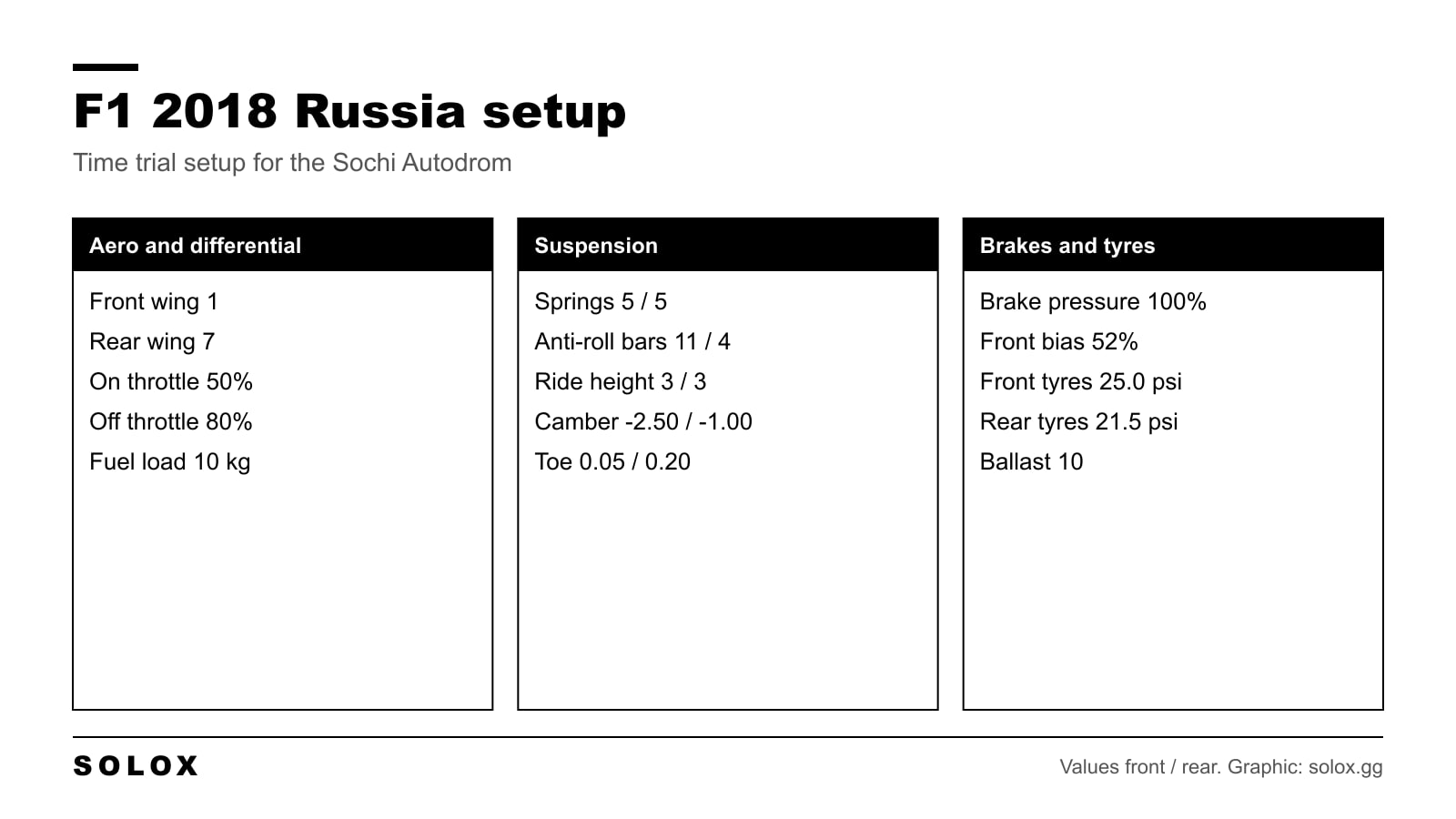
This F1 2018 Russia setup is built for that: a low front wing, a rear wing at 7, a very stiff front anti-roll bar and an open differential. It is a time trial setup, saved with 10 kg of fuel.
F1 2018 Russia setup
| Setting | Front | Rear |
|---|---|---|
| Wing | 1 | 7 |
| Camber | -2.50 | -1.00 |
| Toe | 0.05 | 0.20 |
| Suspension | 5 | 5 |
| Anti-roll bar | 11 | 4 |
| Ride height | 3 | 3 |
| Tyre pressure | 25.0 psi | 21.5 psi |
| Setting | Value |
|---|---|
| Fuel load | 10 kg |
| Differential on throttle | 50% |
| Differential off throttle | 80% |
| Brake pressure | 100% |
| Front brake bias | 52% |
| Ballast | 10 |

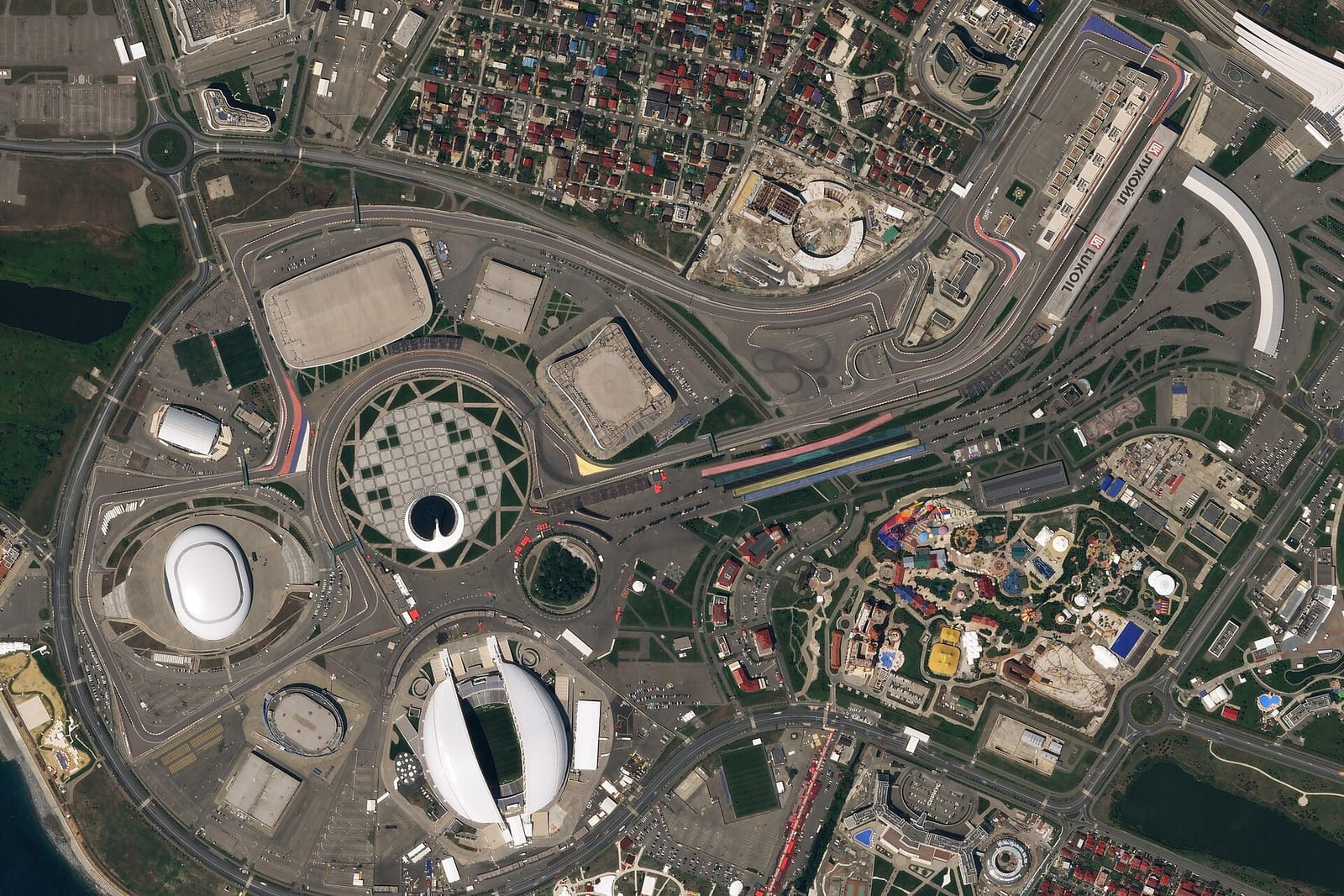
Here is the lap the setup comes from:
Why this setup works at Sochi
The lap is 5.848 km with 18 corners. The run from the last corner down to Turn 2 is very long, and so is the back section before Turn 13. In between, almost every corner is slow or medium speed and ends with a traction zone.
The wings. Front 1, rear 7. That is a big gap. The low front keeps the drag down for the two long flat out sections. The rear at 7 gives the rear tyres load on every corner exit and keeps the car stable in the long Turn 3. With six clicks between the two, the aero balance is towards understeer. The rest of the setup is there to get the front back.
The differential. 50% on throttle, 80% off. 50% is the minimum. An open differential lets the rear wheels turn at different speeds, so the car keeps rotating when you go to the power and the inside wheel does not push the car wide. In a lap made of 90 degree corners, that is worth a lot. Off throttle, 80% keeps the rear steady into the two big stops.
The geometry. Camber -2.50 and -1.00, toe 0.05 and 0.20. The least angle the menu allows, for braking and traction.
A stiff front bar and hard front tyres
This is how the setup gets the front end back with a front wing at 1.
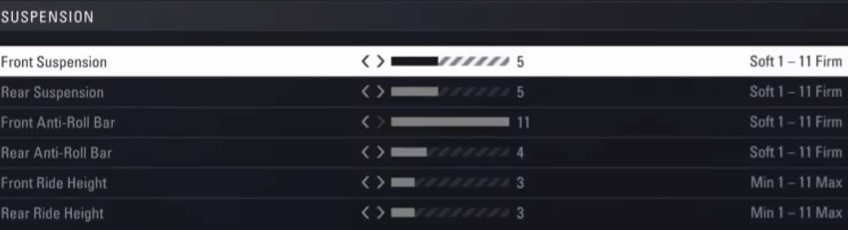
The front anti-roll bar is at 11, the maximum. The rear is at 4. A stiff front bar makes the car answer the steering at once, and in a 90 degree corner you want the car pointed at the exit early. The soft rear bar lets the rear tyres grip when you pick up the throttle.
The front tyres are at 25.0 psi, the top of the range. A hard front tyre responds faster, which goes in the same direction as the bar. It also runs hotter and has a smaller contact patch, so this is a one lap choice. The rears are at 21.5 psi, low, for traction.
Springs are at 5 and 5, the middle of the range, and ride height is 3 and 3. Sochi is flat and smooth with low kerbs, so there is no reason to go to an extreme with either.
For a very different idea on a low front wing track, look at my F1 2018 Monza setup: softest springs with both bars at 11.
Brakes
Brake pressure is 100% with 52% at the front. Full pressure gives the shortest stop into Turn 2 and Turn 13, the two places where you brake from top speed in a straight line.
The price comes in all the other corners. With 100% and a front wing at 1, a front wheel locks easily when you brake from lower speed, where there is less downforce pushing the tyre into the road. The 52% bias helps, because it takes work off the front. You still have to come off the pedal as the car slows down.
If you lock up more than once a lap, do not fight it. Go to 92%.
What to change
One change at a time, three laps, then decide.
| Problem | Change | Why |
|---|---|---|
| The car pushes wide in Turn 3 | Front wing 1 to 3 | More front downforce in the long corner |
| Front tyres lock in the slow corners | Brake pressure 100% to 92% | Less peak pressure, easier to hold at the limit |
| The rear steps out under braking | Front brake bias 52% to 54% | Less braking on the rear axle |
| The car is nervous on turn in | Front anti-roll bar 11 to 8 | A softer front bar makes the front less sharp |
| Wheelspin out of the last sector | Rear anti-roll bar 4 to 2 | A softer rear bar gives the rear tyres more grip |
| The front tyres overheat after a few laps | Front tyre pressure 25.0 to 23.8 psi | A softer tyre runs cooler with a bigger contact patch |
| Too slow before Turn 2 | Rear wing 7 to 6 | Less drag, with less traction out of the slow corners |
For a race
With fuel the front tyres take a beating in Turn 3 and under braking. Before a 25% or 50% race I would change this:
- Front tyre pressure 25.0 to 23.8 psi. The maximum is too hot over a stint.
- Brake pressure 100% to 90%. One flat spot and the stint is gone.
- Front wing 1 to 3. Less understeer means less sliding and less front tyre wear.
- Front anti-roll bar 11 to 8. Easier on the front tyres.
- Fuel. The 10 kg is a time trial number. In a race the game sets the load for the distance.
On a pad, I would run 90% brake pressure and a front bar at 8. The differential at 50% is already the friendliest setting.
In F1 2018 you manage the ERS yourself. Use the battery from the last corner to Turn 2, which is the main passing place, and again on the run to Turn 13. Recover through the 90 degree corners in the middle of the lap.
Where the lap time is at Sochi
- Turn 2. The first real corner, after a very long run through the flat Turn 1 kink. Brake hard in a straight line, turn in late and get the car pointed down the short straight to Turn 3.
- Turn 3. The long left around the Medals Plaza. With low fuel it is close to flat. Hold a tight line early and let the car drift out only at the end, because Turn 4 comes straight after.
- Turns 4 to 7. Four right handers. Same method each time: brake in a straight line, one clean turn of the wheel, early throttle. If you are sliding on the way in, you are late on the power on the way out.
- Turns 8 to 10. Turn 10 is the one that counts. It leads onto the long back section, so give up some entry speed and get the exit right.
- Turn 13. The second big stop, at the end of the fast kinks. It is easy to brake too late and miss the apex. Brake a little early and turn the car.
- Turns 14 to 16. The slowest part of the lap. Be patient. The open differential helps you here, so use it and feed the throttle in early instead of waiting and stamping on it.
- Turns 17 and 18. Two 90 degree rights. The exit of 18 decides your speed all the way to Turn 2. Use all of the exit.
Sochi in 2018
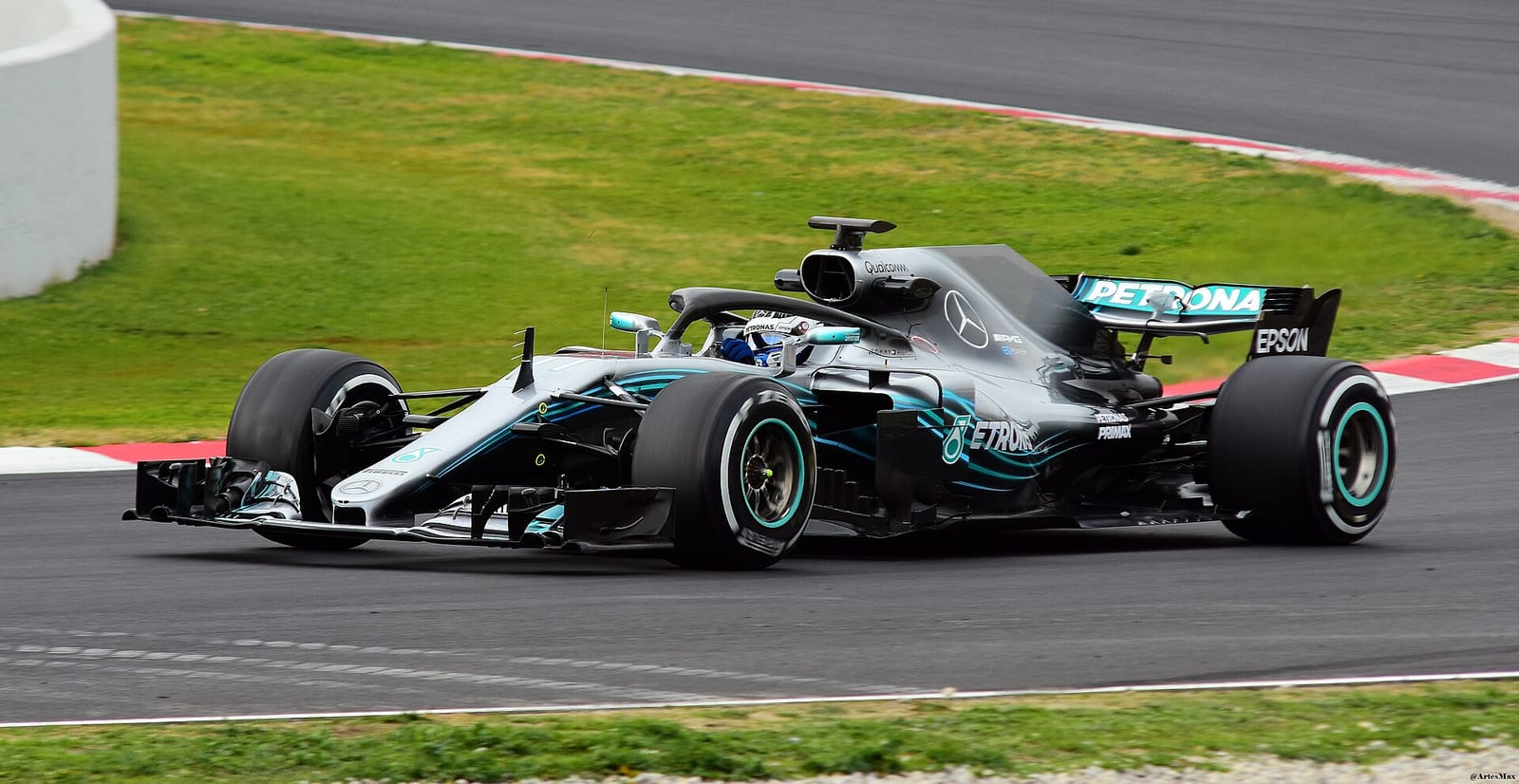
The 2018 Russian Grand Prix was round 16 of 21, on 30 September. Valtteri Bottas took pole position for Mercedes with a 1:31.387. Lewis Hamilton won the race over 53 laps after Mercedes used team orders to swap its two cars, with Bottas second and Sebastian Vettel third for Ferrari. Bottas also set the fastest lap, a 1:35.861 on lap 50.
The Grand Prix layout held the race from 2014 to 2021 and has since been taken apart. Only a short 2.313 km circuit is left, so the game is now one of the ways to drive the full lap.
More F1 2018 setups
All the tracks are on the F1 2018 setups page. The round before Russia is the F1 2018 Singapore setup and the round after it is the F1 2018 Japan setup.
For the same track in other games, here are my F1 2017 Russia setup, my F1 2019 Russia setup and my F1 2020 Sochi setup. The values do not carry over from one game to the next.
FAQ
What is the best F1 2018 setup for Russia?
For time trial: front wing 1, rear wing 7, differential 50% on throttle and 80% off, suspension 5 and 5, anti-roll bars 11 and 4, ride height 3 and 3, brake pressure 100% with 52% front bias, tyres at 25.0 and 21.5 psi, ballast 10.
What wing levels should I run at Sochi in F1 2018?
1 at the front and 7 at the rear for one lap. For a race, 3 and 7 take away some understeer and save the front tyres.
Can I use this Sochi setup in a race?
Yes, with changes. Front tyre pressure down to 23.8 psi, brake pressure to 90%, front wing to 3 and front anti-roll bar to 8.
Does this setup work with a controller?
It does. Lower the brake pressure to 90% and the front anti-roll bar to 8 so the car is less sharp on turn in.
Why is the brake pressure at 100%?
For the two big straight line stops, Turn 2 and Turn 13. If you lock the fronts in the slower corners, 92% is the better choice.
How long is Sochi in F1 2018?
5.848 km with 18 corners. The real 2018 race was 53 laps, and the pole lap was a 1:31.387.