
Montreal is straights, chicanes and one hairpin. There is not a single long corner on the lap. You brake hard, you jump over a kerb, you go flat again.
So the setup is built around three things: low drag, a car that rides kerbs, and brakes you can trust. This one runs wings 3 and 5 with the softest springs in the menu. It is a time trial setup, saved with 10 kg of fuel.
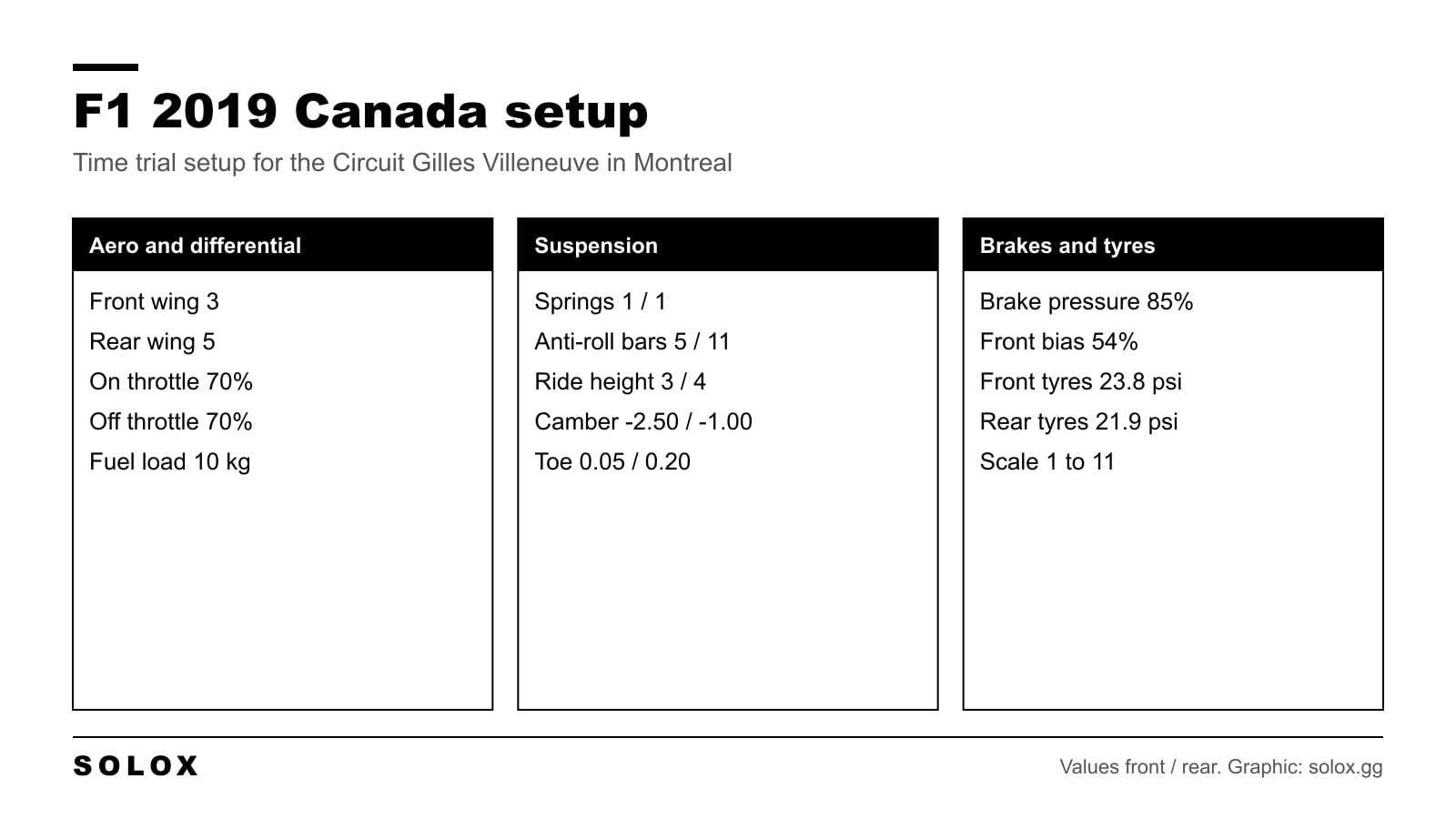
F1 2019 Canada setup
| Setting | Front | Rear |
|---|---|---|
| Wing | 3 | 5 |
| Camber | -2.50 | -1.00 |
| Toe | 0.05 | 0.20 |
| Suspension | 1 | 1 |
| Anti-roll bar | 5 | 11 |
| Ride height | 3 | 4 |
| Tyre pressure | 23.8 psi | 21.9 psi |
| Setting | Value |
|---|---|
| Fuel load | 10 kg |
| Differential on throttle | 70% |
| Differential off throttle | 70% |
| Brake pressure | 85% |
| Front brake bias | 54% |
In F1 2019 the wings, suspension, anti-roll bars and ride height all use a scale from 1 to 11.
This setup was collected for the site in 2022 from a fast time trial lap, like the rest of my F1 2019 setups. Use it as a base and adjust it with the table further down.

The lap on board
Why this setup works in Montreal
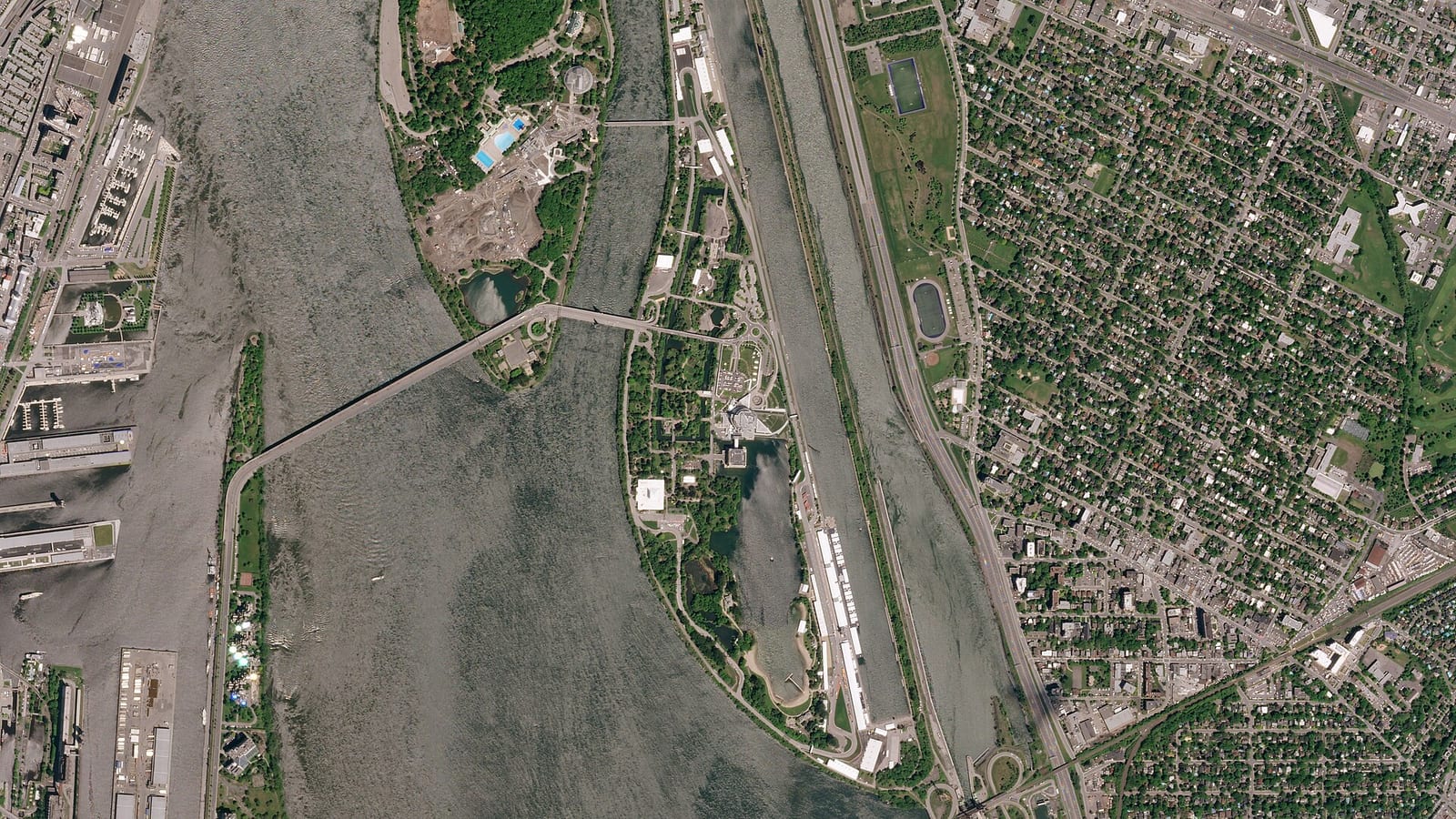
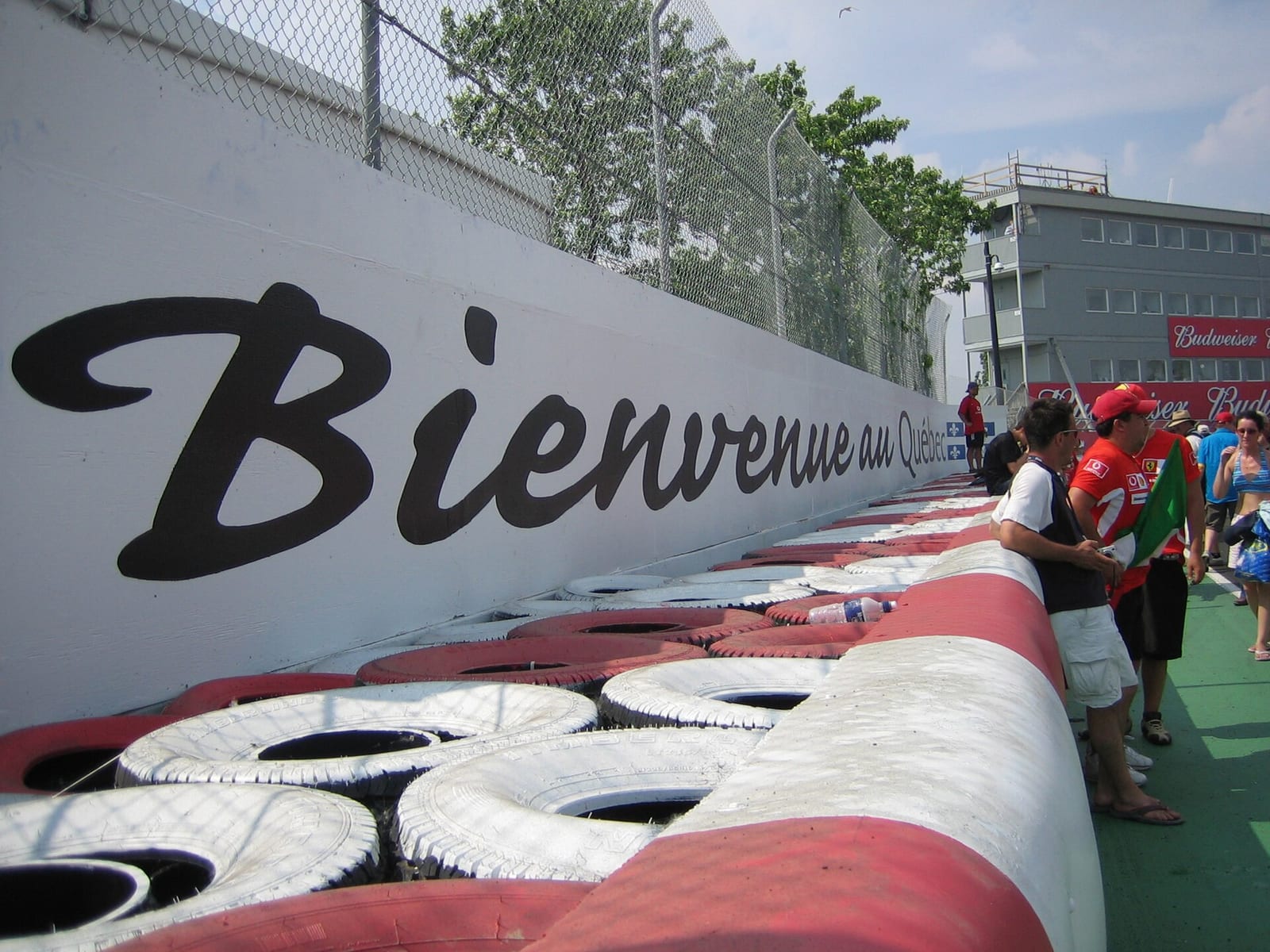
The Circuit Gilles Villeneuve is 4.361 km long with 14 corners. It sits on an island in the St Lawrence river and it is half street circuit, half permanent track. The walls are close and the run off is short.
The wings. 3 and 5. The back straight from the hairpin to the last chicane is long, and there are two more flat out sections before it. With no fast corners on the lap, the wing only helps you on the brakes and in traction. Two clicks more at the rear than at the front keeps the rear planted when you brake from top speed for the last chicane.
The differential. 70% on throttle and 70% off. Most of my setups for this game run the on throttle side at 50% to 55%, so this is more locked than usual. Out of the hairpin and the chicanes you are in a straight line very early, and a locked differential drives both rear wheels together. Off throttle, 70% keeps the rear stable in the big stops.
The price is more wheelspin if you are greedy with the throttle, and more rear tyre wear. In time trial that does not matter. In a race it does.
The brakes. 85% pressure and 54% front bias. Middle values. Montreal has six heavy braking zones, so the brakes matter more than anything else on the car. If you do not trust them, lower the pressure before you touch anything else.
The geometry and tyres. Camber -2.50 and -1.00, toe 0.05 and 0.20, the least angle the menu allows. A flat tyre is what you want for braking and traction. Pressures are 23.8 and 21.9 psi, in the middle of the range.
Soft springs, stiff rear bar
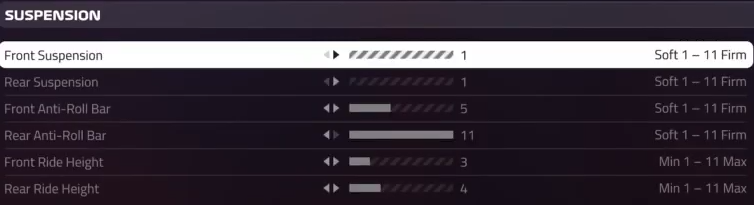
Springs at 1 and 1. The softest setting at both ends. Spain and Monza are the only other tracks in my list with that.
The reason is the kerbs. In every chicane in Montreal the fast line goes over them. A stiff car bounces and loses a wheel in the air. A soft car takes the hit and keeps its tyres on the ground, so you can go to the throttle sooner.
A car this soft would be lazy in a change of direction. The rear anti-roll bar at 11, the maximum, fixes that. It stops the rear from rolling, so the car turns from right to left as one piece. The front bar is at 5.
Ride height is 3 and 4. Low enough for the straights, with room left for the kerbs.
What to change
One change at a time, three laps, then decide.
| Problem | Change | Why |
|---|---|---|
| Front tyres lock into the hairpin or the last chicane | Brake pressure 85% to 81% | Less peak pressure, easier to hold at the limit |
| Wheelspin out of the hairpin | On throttle differential 70% to 60% | A more open differential is gentler on the inside rear tyre |
| The rear moves when you brake for the last chicane | Rear wing 5 to 6 | More rear downforce keeps the rear in line at high speed |
| The rear snaps over the kerbs | Rear anti-roll bar 11 to 9 | A softer rear bar lets the rear follow the kerb |
| Understeer in turn 2 | Off throttle differential 70% to 60% | Less lock off the throttle helps the car rotate |
| Too slow on the back straight | Rear wing 5 to 4 | Less drag. Only if you are happy on the brakes |
| The car hits the ground on the kerbs | Ride height 3 and 4 to 4 and 5 | More clearance |
For a race
Montreal is hard on brakes and on rear tyres. You are also close to walls for 70 laps. Before a 25% or 50% race I would change this:
- On throttle differential 70% to 60%. The rear tyres last longer and the car is easier out of the hairpin when they are worn.
- Brake pressure 85% to 82%. A flat spot here costs you in every braking zone after it.
- Rear wing 5 to 6. More stability on the brakes with a heavy car. You are in the tow on the straight anyway.
- Fuel. The 10 kg is a time trial number. In a race the game sets the load for the distance.
On a pad, I would go to brake pressure around 80%, the on throttle differential at 60% and the rear anti-roll bar at 9.
F1 2019 has manual ERS modes. Save through the chicanes in the first half of the lap. Spend it out of the hairpin and all the way down the back straight. That straight, with DRS, is where you pass and where you defend.
Where the lap time is in Montreal
- Turn 1 and turn 2. A quick left that leads straight into a long, slow right. Brake for the first part and stay patient in the second. Do not go to full throttle until the car points at the exit.
- Turn 3 and turn 4. The first chicane, right then left, with a wall on the exit. Take the inside kerb on the right and leave a margin on the way out.
- Turn 6 and turn 7. Left then right. A hard stop and a lot of kerb. This is where the soft springs pay.
- Turn 8 and turn 9. Right then left, faster than the one before. Go over the kerbs and keep the car straight when you land.
- Turn 10, the hairpin. The slowest corner of the lap and the start of the longest straight. Brake in a straight line, turn late and get the car pointing down the straight before you ask for full power.
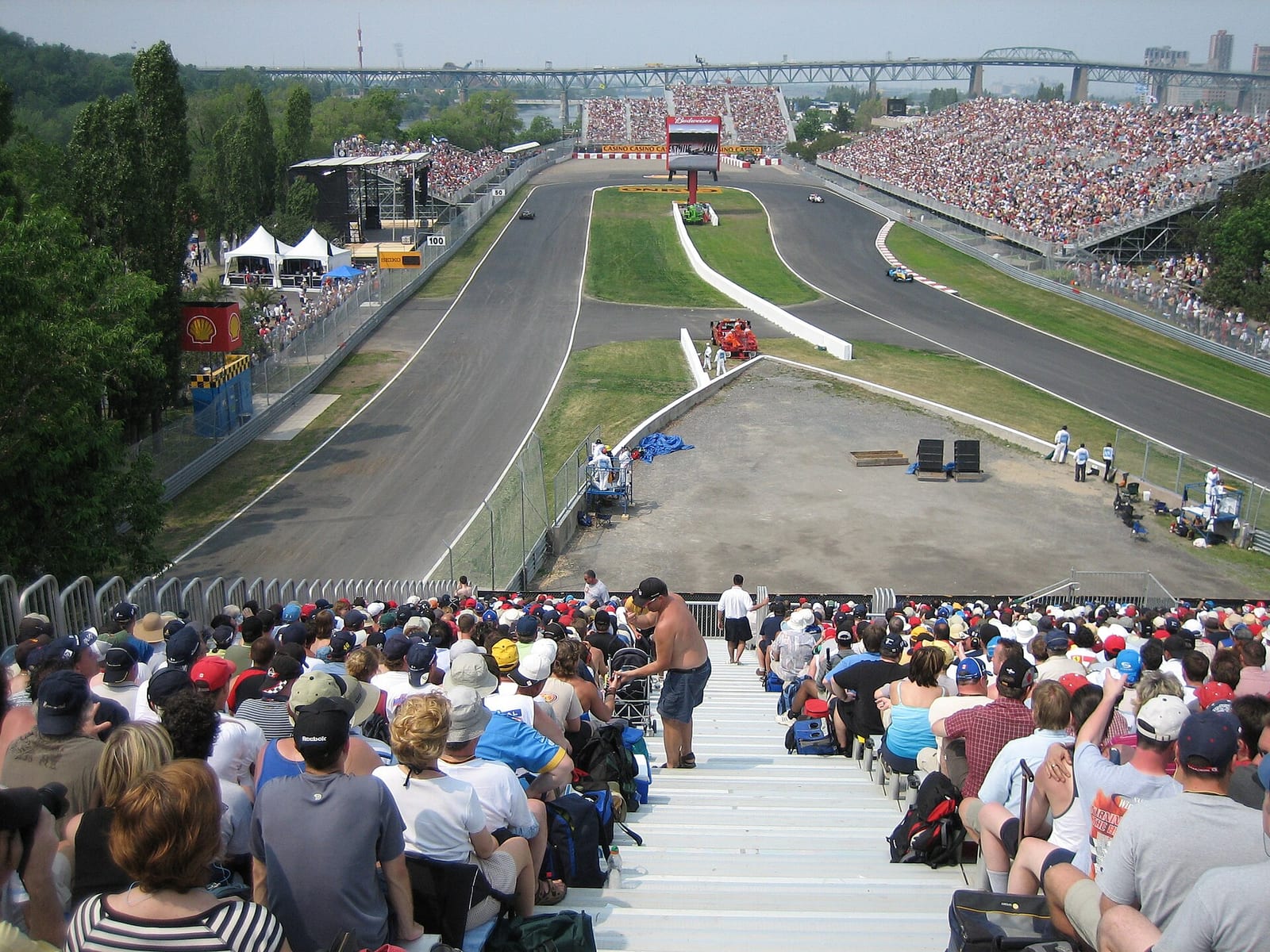
- Turn 13 and turn 14, the last chicane. You arrive at top speed. Right, left, over both kerbs. Too much kerb on the second part throws the car at the Wall of Champions.
If you take one thing from this page: the lap is made on the brakes. Six times a lap you can gain or lose a tenth in the last 50 metres before a corner. Find a braking marker for each one and move it forward a little at a time.
Canada in 2019
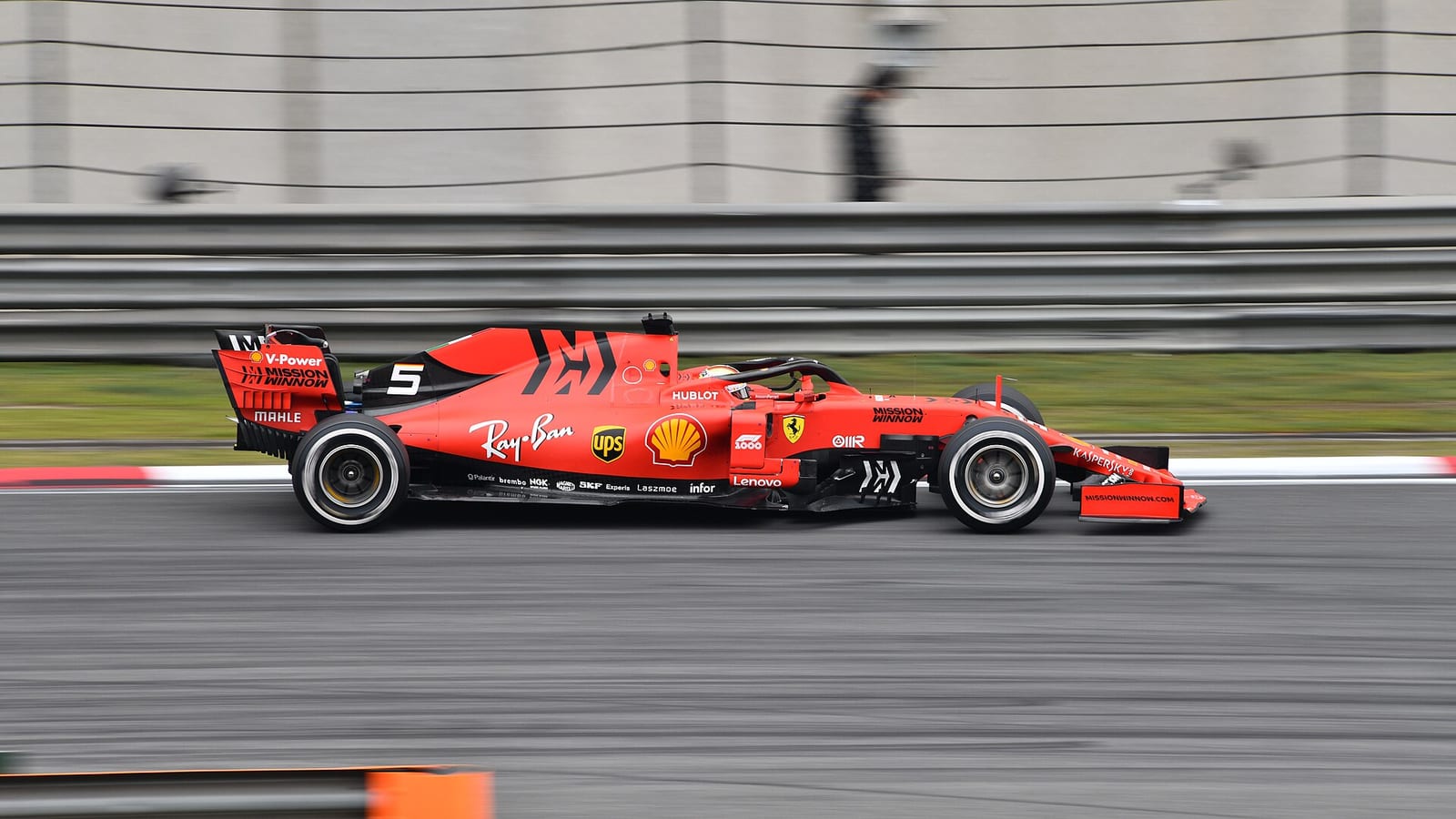
The 2019 Canadian Grand Prix was round 7 of 21, on 9 June, over 70 laps. Sebastian Vettel took pole position in 1:10.240, ahead of Lewis Hamilton and Charles Leclerc.
Vettel led most of the race with Hamilton close behind. On lap 48 he went straight on over the grass at turn 3, and as he came back onto the track he squeezed Hamilton towards the wall. The stewards gave Vettel a five second penalty for rejoining unsafely. He crossed the line first, 1.3 seconds ahead, so the win went to Hamilton. After the race Vettel moved the number 1 board from in front of Hamilton's car to the empty space where his own car should have been. Leclerc was third and Valtteri Bottas set the fastest lap, a 1:13.078 on lap 69.
More F1 2019 setups
All the tracks are on the F1 2019 setups page. Canada is round 7. The round before it is the F1 2019 Monaco setup and the next one is the F1 2019 France setup.
For the same track in other games, here are my F1 2018 Canada setup, my F1 2020 Canada setup and my F1 25 Canada setup. The values do not carry over from one game to the next.
FAQ
What is the best F1 2019 setup for Canada?
Front wing 3, rear wing 5, differential 70% on throttle and 70% off, suspension 1 and 1, anti-roll bars 5 and 11, ride height 3 and 4, brake pressure 85% with 54% front bias, and tyres at 23.8 and 21.9 psi.
What wing levels should I run in Montreal in F1 2019?
3 at the front and 5 at the rear for time trial. For a race I would run 6 at the rear, for stability on the brakes.
Can I use this Canada setup in a race?
Yes, with small changes. Open the on throttle differential to 60%, lower the brake pressure to 82% and add one click of rear wing.
Does this setup work with a controller?
Yes. I would lower the brake pressure to around 80%, open the on throttle differential to 60% and soften the rear anti-roll bar to 9.
Why are the springs so soft in this setup?
Because the fast line in every chicane goes over the kerbs. A soft car keeps its tyres on the ground when it hits them.
Where can I overtake in Montreal in F1 2019?
Into the last chicane with DRS, at the end of the back straight. The hairpin and turn 1 are the other two places.
How long is the Circuit Gilles Villeneuve in F1 2019?
4.361 km with 14 corners. The real race is 70 laps.