
Barcelona is the track every Formula 1 team knows by heart. It is where they test in winter, and it finds every weak point of a car. Long fast corners in the first two sectors, slow ones in the last. A setup that works here works almost anywhere.
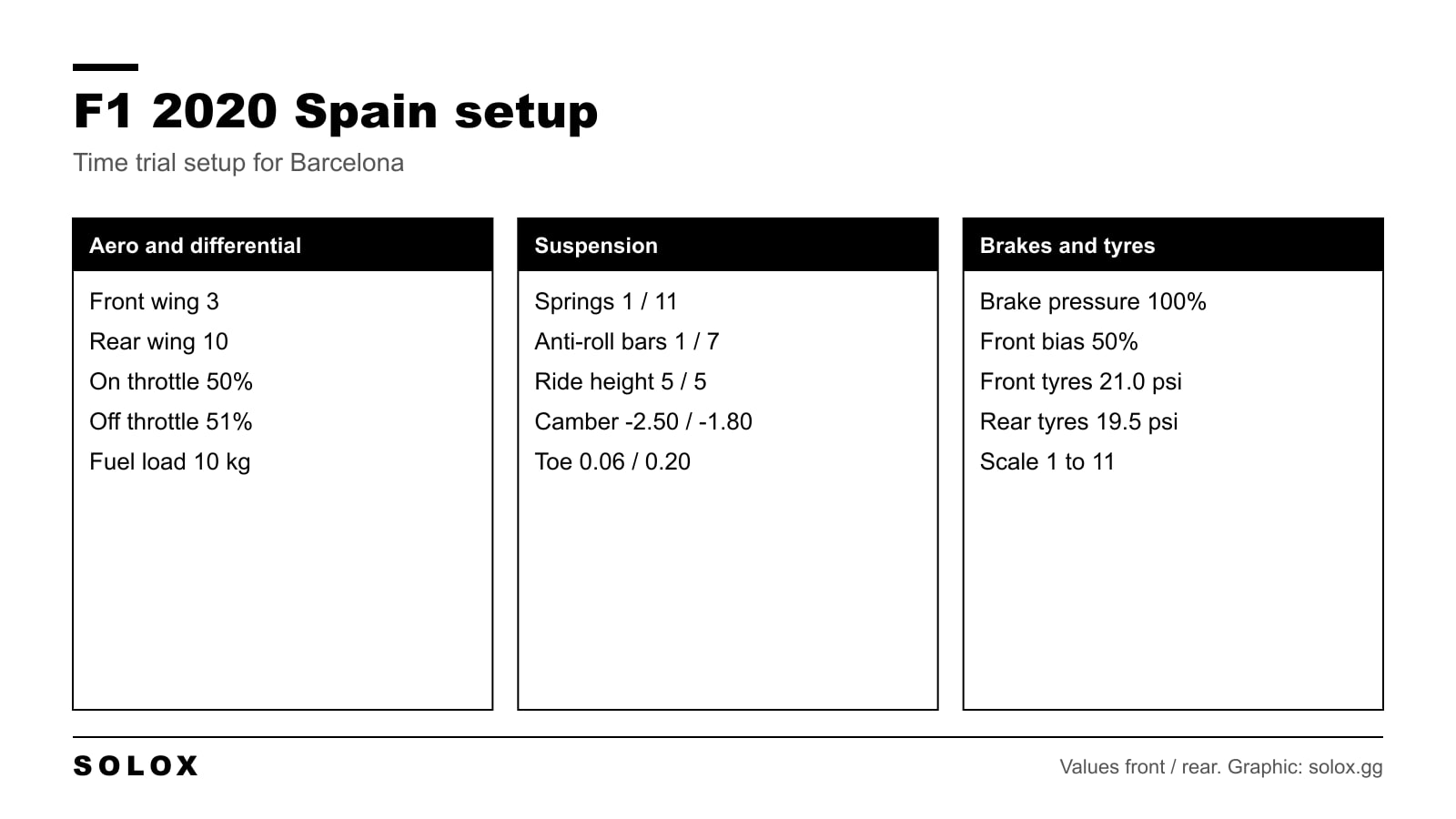
This F1 2020 Spain setup goes for a big rear wing and a high ride height. It is a time trial setup, saved with 10 kg of fuel.
F1 2020 Spain setup
| Setting | Front | Rear |
|---|---|---|
| Wing | 3 | 10 |
| Camber | -2.50 | -1.80 |
| Toe | 0.06 | 0.20 |
| Suspension | 1 | 11 |
| Anti-roll bar | 1 | 7 |
| Ride height | 5 | 5 |
| Tyre pressure | 21.0 psi | 19.5 psi |
| Setting | Value |
|---|---|
| Fuel load | 10 kg |
| Differential on throttle | 50% |
| Differential off throttle | 51% |
| Brake pressure | 100% |
| Front brake bias | 50% |
In F1 2020 the wings, suspension, anti-roll bars and ride height all use a scale from 1 to 11. The differential goes from 50%, fully open, to 100%, locked.
This setup was collected for the site in 2022 from a fast time trial lap, like the rest of my F1 2020 setups. Use it as a base and adjust it with the table further down.

The lap on board
Why this setup works in Barcelona
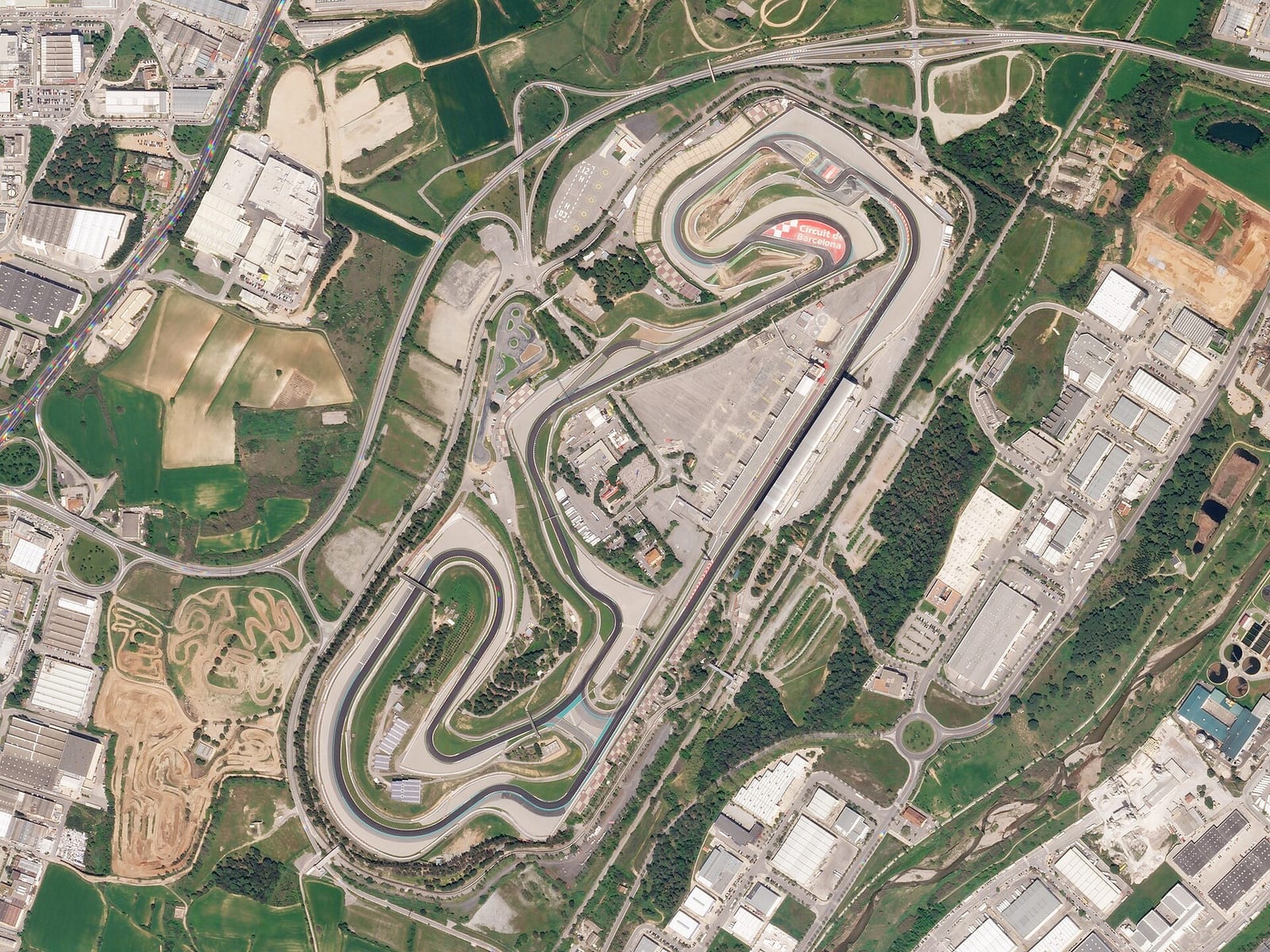
The Circuit de Barcelona-Catalunya is 4.655 km long. In 2020 the lap still had the slow chicane before the last corner, so it has 16 corners in the game.
The wings. 3 and 10. The rear wing is seven clicks above the front. Only my USA and Mexico setups have a bigger gap. This is a rear wing setup. Turn 3 and turn 9 are long and fast, and if the rear moves there you lift, and the lap is gone. With 10 at the rear you can commit. The front wing stays low at 3 because the soft front end already gives you the turn in, and a low front wing costs less on the main straight.
The differential. 50% on throttle and 51% off. Almost fully open. In long corners an open differential helps the car keep turning while you are on a steady throttle. The price is traction out of the slow corners in the last sector. Be progressive with your right foot there.
The tyre pressures. 21.0 psi front and 19.5 psi rear, the lowest the menu allows. Barcelona puts a lot of heat into the front left tyre, and low pressures keep it under control.
The camber. -2.50 front, the least the game allows, and -1.80 rear. Front toe is 0.06, one step above the minimum, for a slightly sharper turn in.
Ride height 5 and 5
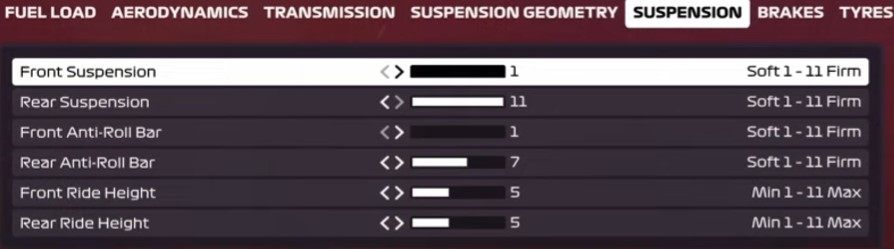
This is the number that makes the setup different. Most of my F1 2020 setups run the front ride height at 1, 2 or 3. Here it is 5, with 5 at the rear too. No other setup in my list has 5 at both ends.
A high car loses a little downforce from the floor. What you get back is kerbs. In Barcelona the fast line uses the kerb at turn 1 and turn 2, at turn 7 and turn 8, and in the chicane. With the car this high you can drive straight over them and nothing happens. The big rear wing covers the downforce you gave away.
The springs are 1 at the front and 11 at the rear. That is the softest front and the stiffest rear the menu allows. The soft front gives grip on turn in. The stiff rear makes the car rotate and keeps the rear wing at a steady height in the fast corners.
The anti-roll bars are 1 and 7. A front bar at 1 means the front rolls a lot and grips a lot. That is what fights the understeer you always get in turn 3 and turn 4.
The brakes
Brake pressure 100%, front bias 50%. Every setup in my F1 2020 database runs 100% pressure.
There are two big stops, turn 1 and turn 10. The one that catches people is turn 5. It goes downhill, the inside front wheel gets light and it locks. Brake a touch earlier there and release the pedal as you turn.
What to change
One change at a time, three laps, then decide.
| Problem | Change | Why |
|---|---|---|
| Understeer in turn 3 and turn 4 | Front wing 3 to 4 | More front downforce in the long corners |
| Slow on the main straight | Rear wing 10 to 9 | Less drag |
| Wheelspin in the last sector | On throttle differential 50% to 60% | A little lock makes both rear wheels push |
| The rear steps out over the kerbs | Rear suspension 11 to 9 | A softer rear takes the kerb better |
| The rear slides when you lift into turn 9 | Off throttle differential 51% to 55% | A little lock steadies the rear on entry |
| The car feels lazy in the fast corners | Ride height 5 and 5 to 4 and 4 | A lower car has more grip from the floor |
| Front tyres lock into turn 5 or turn 10 | Brake pressure 100% to 95% | Less peak pressure, easier to hold at the limit |
For a race
Barcelona is hard on the front left tyre, and passing is difficult. Before a 25% or 50% race I would change this:
- On throttle differential 50% to 60%. Less wheelspin out of turn 10 and the chicane, so the rear tyres last.
- Front wing 3 to 4. As the front left wears, the understeer grows. A click of wing puts that off.
- Brake pressure 100% to 95%. A heavy car locks its fronts more easily.
- Fuel. The 10 kg is a time trial number. In a race the game sets the load for the distance.
On a pad, I would go to 60% on throttle and take the brake pressure down to around 90%. The stiff rear can snap over the chicane kerbs with a stick, so I would also try the rear suspension at 9.
F1 2020 manages the ERS for you and gives you an overtake button. The main straight is long, so use it out of the last corner and try the pass into turn 1.
Where the lap time is in Barcelona
- Turn 1 and turn 2. A right and a left that you drive as one corner. Give up a little into turn 1 so you are flat early out of turn 2. With this ride height, take the kerbs.
- Turn 3. The long right. With the rear wing at 10 it is flat or very close. One steering input, held. Every correction scrubs the front left.
- Turn 4. Another long right with a late apex. If you go in too fast, you run out of road on the exit.
- Turn 5. The downhill left. Brake early, the inside front locks.
- Turn 7 and turn 8. Uphill left and right. Straight over the kerbs.
- Turn 9. Fast, uphill and blind. A small lift, then full throttle. It leads onto the back straight, so the exit counts double.
- Turn 10. The hairpin after the back straight. Turn in late and get the car straight before you go to the throttle.
- Turn 12 and turn 13. A long right that tightens. Wait for the throttle.
- Turn 14 and turn 15. The slow chicane. Use the kerbs and think only about the exit.
- Turn 16. Flat out. What you carry out of the chicane stays with you all the way down the main straight.
If you take one thing from this page: do not overdrive the first two sectors. The tyres you cook in turn 3 and turn 9 are the ones you need in the chicane.
Spain in 2020
The Spanish Grand Prix was planned for 10 May 2020. It was moved, and in the end it was run on 16 August, as the sixth race of a 17 race season, with no spectators.
It was hot. The track was between 42 and 50 degrees during the race, and the qualifying laps were slower than in 2019 because of the August heat.
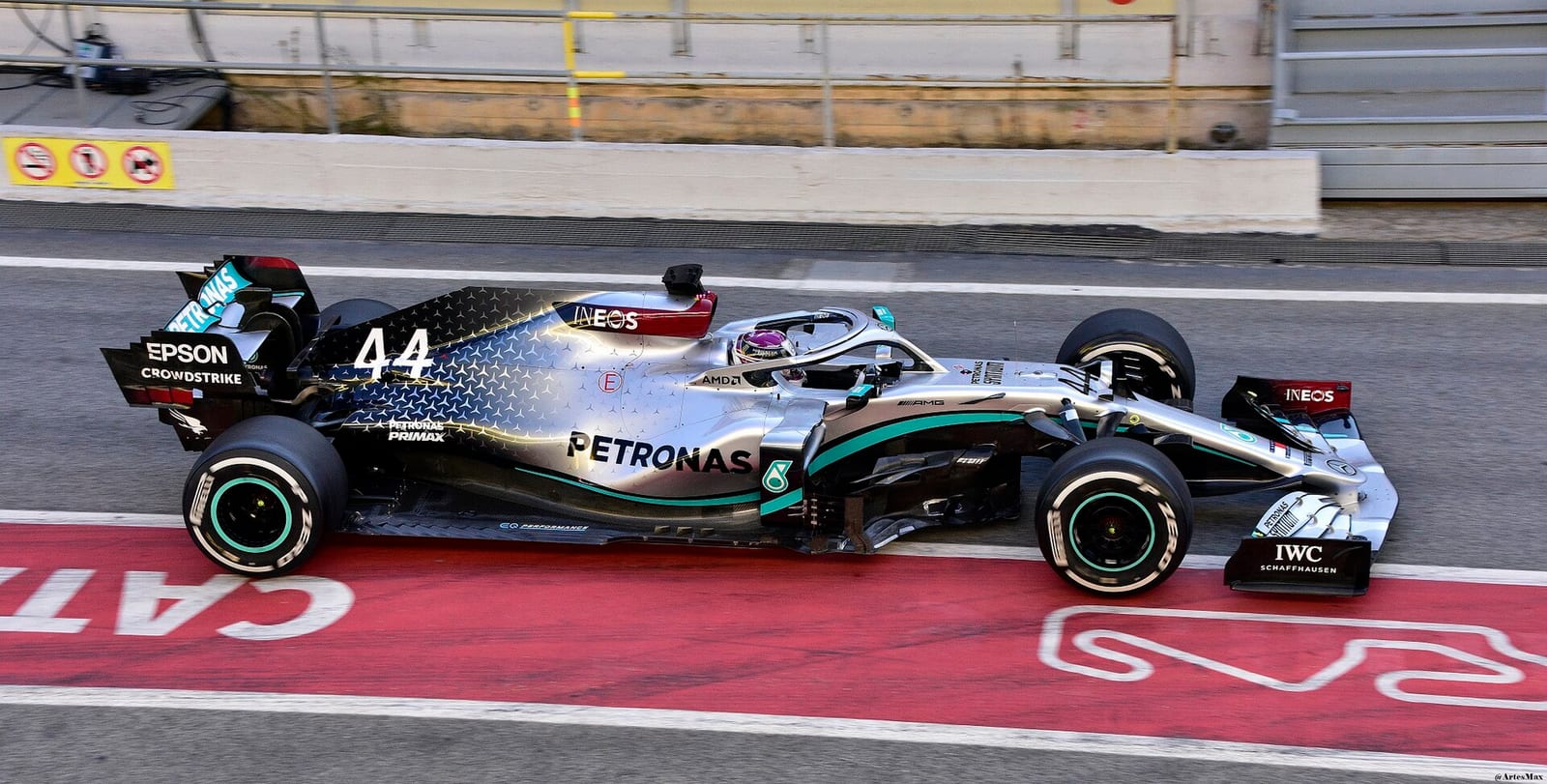
Lewis Hamilton took pole for Mercedes with a 1:15.584, less than a tenth ahead of his teammate Valtteri Bottas. It was the eighth year in a row with a Mercedes on pole in Spain. Hamilton then won by 24 seconds and lapped everyone except Max Verstappen, second for Red Bull, and Bottas, third. Bottas set the fastest lap, a 1:18.183 on the last lap.
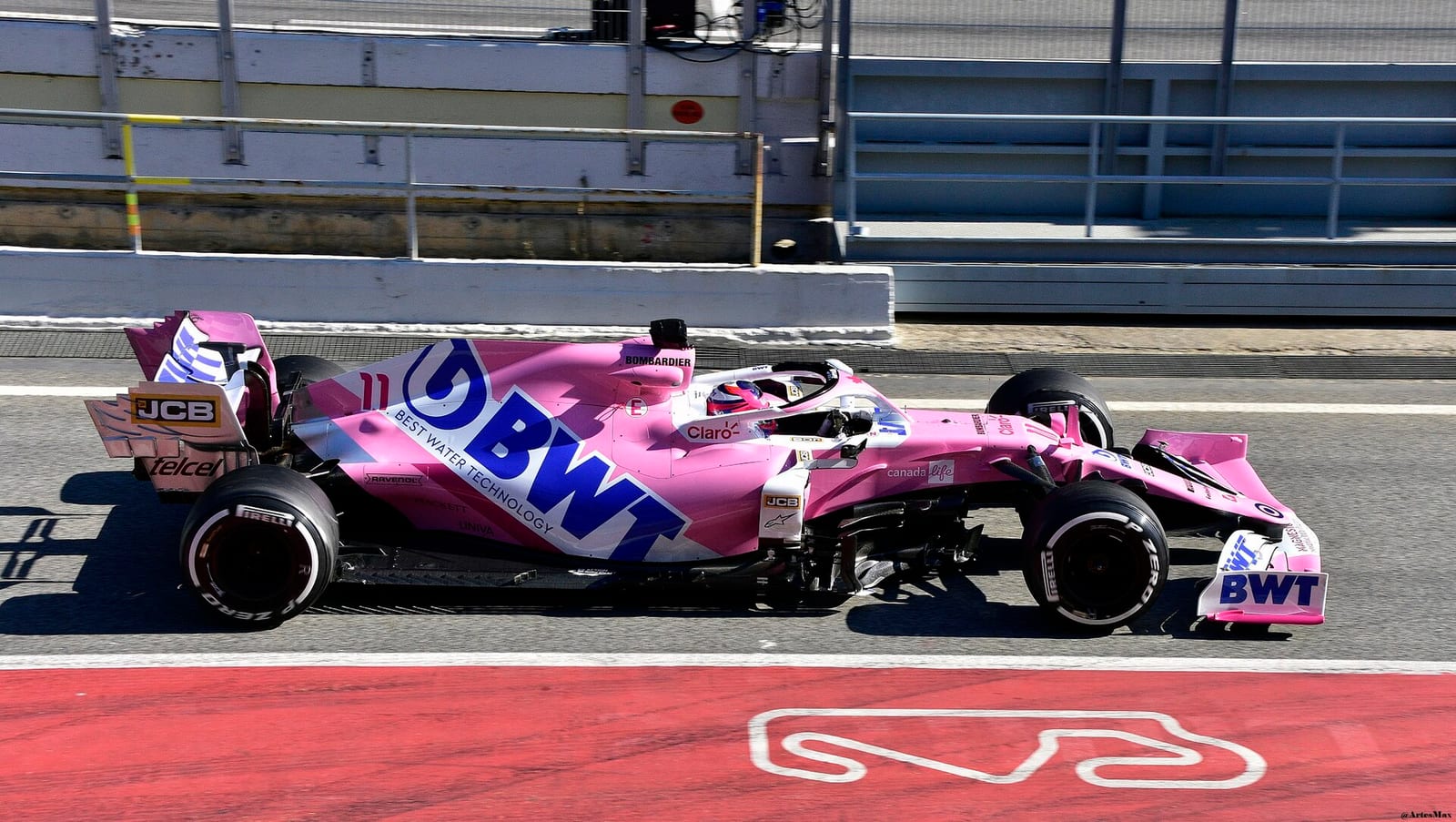
Behind them, the two Racing Points of Sergio Perez and Lance Stroll had qualified fourth and fifth.
More F1 2020 setups
All 22 tracks are on the F1 2020 setups page. The track before Barcelona in the game's calendar is Zandvoort, with my F1 2020 Zandvoort setup, and the next one is Monaco, with my F1 2020 Monaco setup.
For the same track in other games, here are my F1 2019 Spain setup, my F1 2021 Barcelona setup, my F1 23 Spain setup and my F1 25 Spain setup. The values do not carry over from one game to the next.
FAQ
What is the best F1 2020 setup for Spain?
Front wing 3, rear wing 10, differential 50% on throttle and 51% off, suspension 1 and 11, anti-roll bars 1 and 7, ride height 5 and 5, brake pressure 100% with 50% front bias, and tyres at 21.0 and 19.5 psi.
What wing levels should I run in Barcelona in F1 2020?
3 at the front and 10 at the rear for time trial. If the car understeers in turn 3, go to 4 at the front.
Why is the ride height so high?
So you can use the kerbs at turn 1, turn 2, turn 7, turn 8 and the chicane without unsettling the car. The rear wing at 10 covers the downforce you lose.
Can I use this Spain setup in a race?
Yes. I would raise the on throttle differential to 60%, add a click of front wing and lower the brake pressure to 95%.
Does this setup work with a controller?
Yes. I would run 60% on throttle, around 90% brake pressure and try the rear suspension at 9.
Who won the 2020 Spanish Grand Prix?
Lewis Hamilton for Mercedes, from pole, 24 seconds ahead of Max Verstappen. Valtteri Bottas was third.
How long is the Barcelona circuit in F1 2020?
4.655 km. The 2020 layout has 16 corners, with the slow chicane before the last corner.