
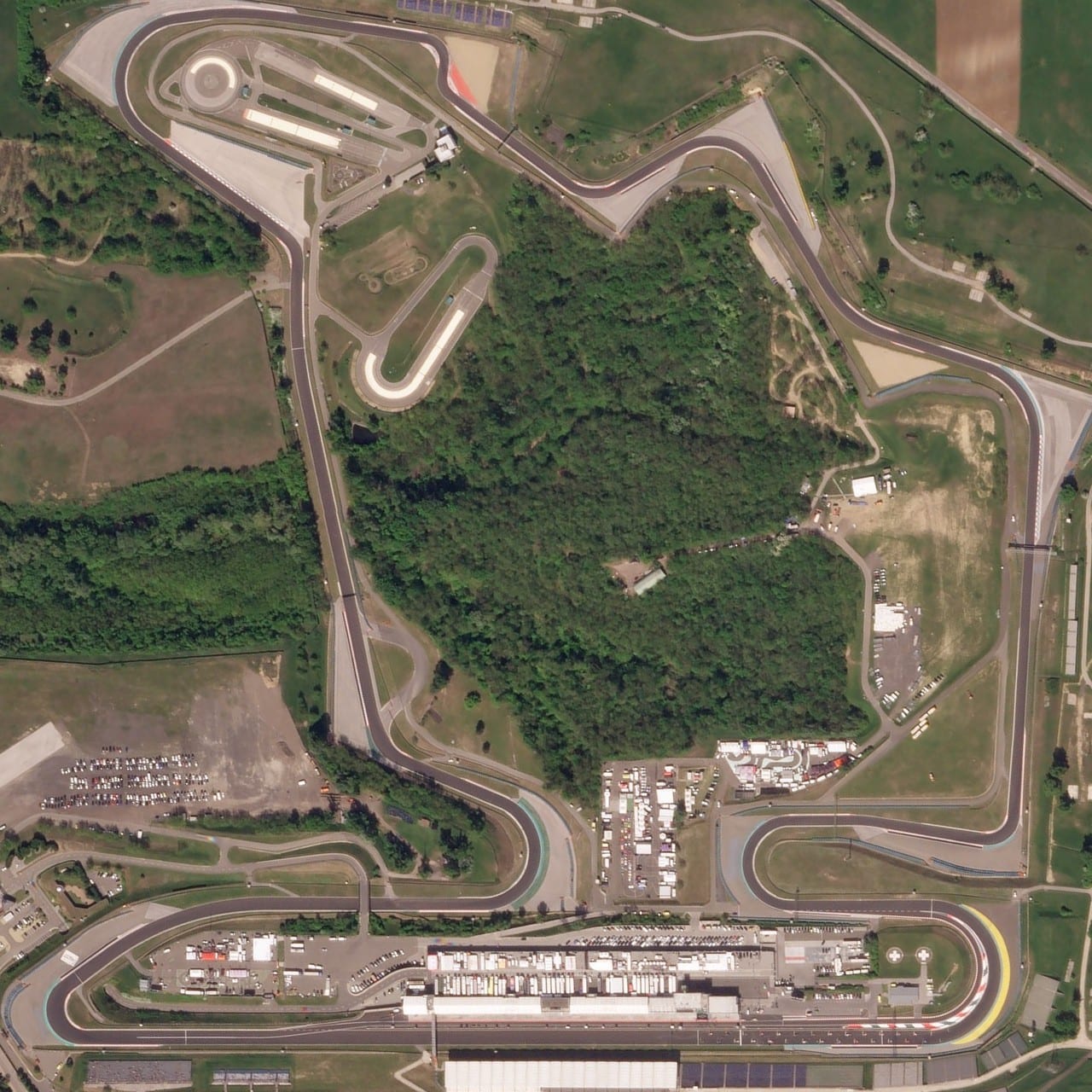
The Hungaroring is the closest thing to a kart track on the F1 calendar. One straight, then corner after corner with no time to rest. If the car is wrong in one corner, it is wrong in the next three, because they all lead into each other.
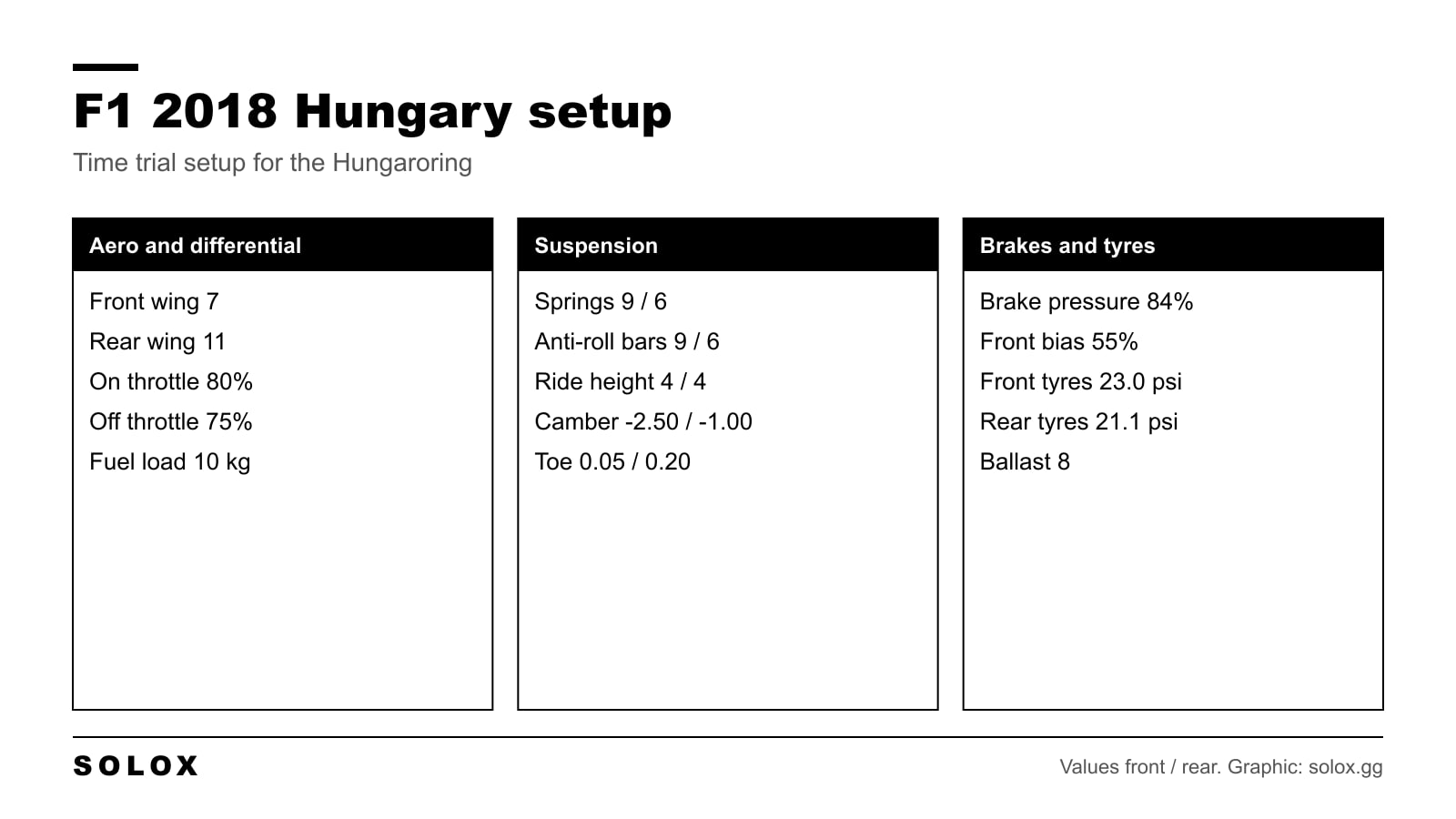
So this F1 2018 Hungary setup goes all in on downforce: front wing 7, rear wing at the maximum of 11. It is a time trial setup, saved with 10 kg of fuel.
F1 2018 Hungary setup
| Setting | Front | Rear |
|---|---|---|
| Wing | 7 | 11 |
| Camber | -2.50 | -1.00 |
| Toe | 0.05 | 0.20 |
| Suspension | 9 | 6 |
| Anti-roll bar | 9 | 6 |
| Ride height | 4 | 4 |
| Tyre pressure | 23.0 psi | 21.1 psi |
| Setting | Value |
|---|---|
| Fuel load | 10 kg |
| Differential on throttle | 80% |
| Differential off throttle | 75% |
| Brake pressure | 84% |
| Front brake bias | 55% |
| Ballast | 8 |

Here is the lap the setup comes from:
Why this setup works at the Hungaroring
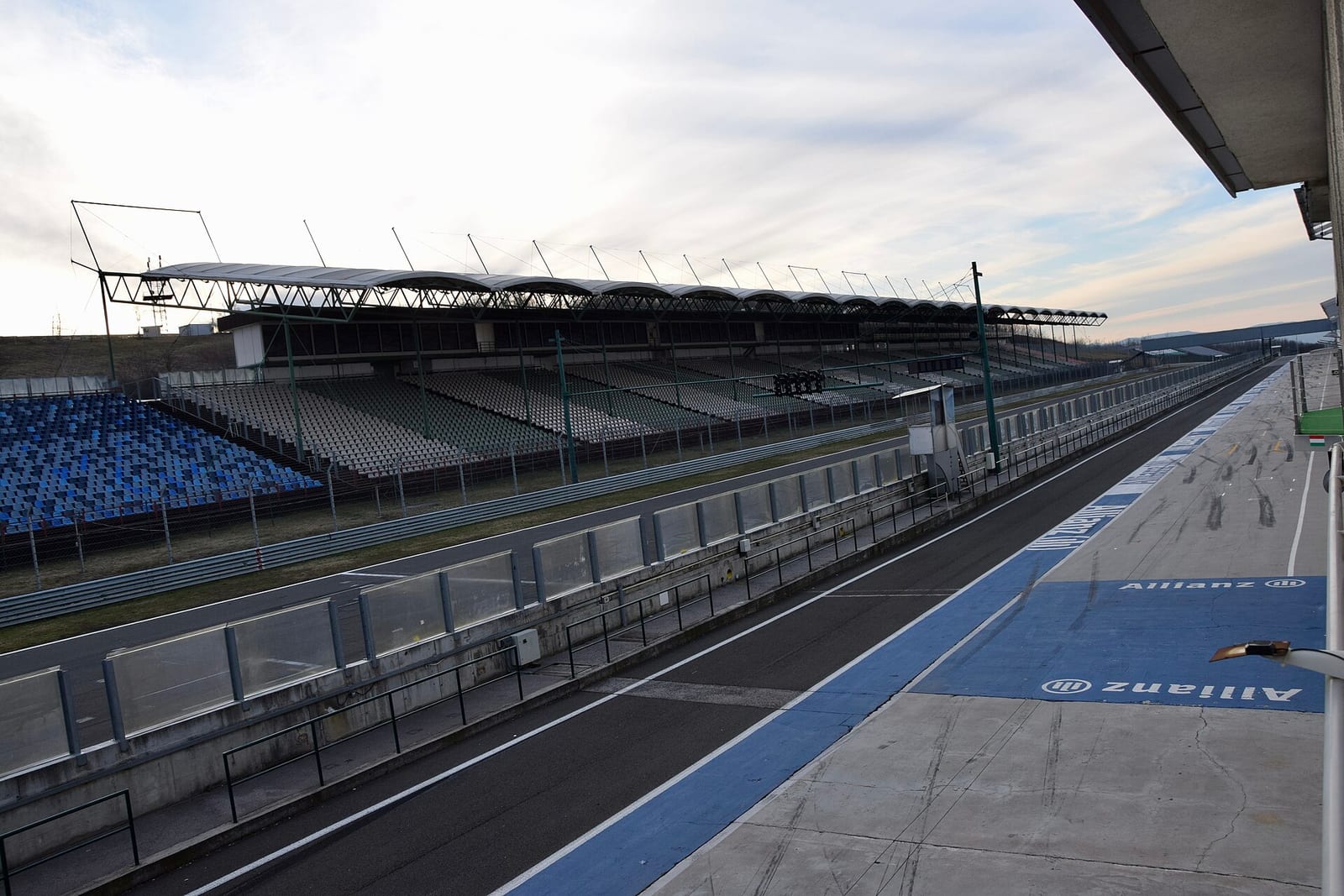
The lap is 4.381 km with 14 corners. The only place where drag costs you is the pit straight. Everywhere else, more grip is more lap time.
The wings. Front 7, rear 11. The rear is at the top of the range. That gives you a planted rear in the long corners, Turn 2 and the last two, and traction out of all the slow ones. The front at 7 is high too, so the car still turns. You lose some speed before Turn 1. You gain it back many times over in the middle sector.
The differential. 80% on throttle, 75% off. Both quite locked. The car is stable when you lift and stable when you go to the power, which is what you want in the fast changes of direction in the middle of the lap. In the slow corners a locked differential pushes the front wide if you are early on the throttle, so wait for the car to point at the exit.
The geometry. Camber -2.50 and -1.00, toe 0.05 and 0.20. The least angle the menu allows, for braking and traction.
Stiff at the front, softer at the rear
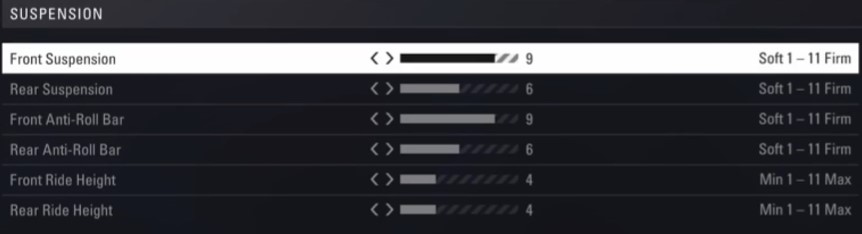
The springs are at 9 at the front and 6 at the rear. The anti-roll bars follow the same idea, 9 and 6. That is a stiff front end for a slow track, and it is a choice for one lap.
A stiff front answers the steering at once. In the middle sector, from Turn 5 to Turn 11, you go left, right, left, right with almost no straight in between, and a car that reacts quickly is worth more there than a car that rides the kerbs well. The softer rear keeps the traction.
The price is the kerbs. With the front at 9 the car does not like the chicane at Turns 6 and 7 if you take too much of it. Stay off the high part.
Ride height is 4 and 4. Flat, with no rake. The wings already give the front enough.
For the opposite approach, look at my F1 2018 Germany setup: front spring at 1 and front wing at 1.
Brakes
Brake pressure is 84% with 55% at the front. 84% is low. At the Hungaroring you often brake with some steering on, into Turn 2, Turn 5, Turn 12 and Turn 13, and that is where an inside front wheel locks. Lower pressure gives you more room on the pedal.
Turn 1 is the only big stop in a straight line. If you feel you are losing time there, try 88%.
What to change
One change at a time, three laps, then decide.
| Problem | Change | Why |
|---|---|---|
| The car pushes wide in the long corners | Front wing 7 to 9 | More front downforce in the middle of the corner |
| Understeer on the exit of slow corners | On throttle differential 80% to 65% | An open differential lets the car turn under power |
| The car does not rotate when you lift | Off throttle differential 75% to 65% | Less locking on entry helps the front bite |
| The car jumps on the kerbs at the chicane | Front suspension 9 to 6 | A softer front takes the kerb without throwing the car |
| The rear slides in the last corner | Rear anti-roll bar 6 to 4 | A softer rear bar gives the rear tyres more grip |
| Front tyres lock when you brake and turn | Front brake bias 55% to 53% | Less load on the front brakes |
| Too slow at the end of the pit straight | Rear wing 11 to 9 | Less drag, at the cost of grip everywhere else |
For a race
In a race the tyres are the problem. The rears never get a rest here, and it is very hard to pass, so track position and tyre life decide everything. Before a 25% or 50% race I would change this:
- On throttle differential 80% to 65%. The biggest help for the rear tyres.
- Front suspension 9 to 6. A softer front is easier on the front tyres and on you over the kerbs.
- Rear wing 11 to 10. A little more speed on the pit straight to defend into Turn 1.
- Brake pressure 84% to 82%. Locking a wheel with a full tank costs you the tyre.
- Fuel. The 10 kg is a time trial number. In a race the game sets the load for the distance.
On a pad, I would go to 60% on throttle and 5 on the front springs. The car becomes slower to react but much easier to keep on line.
In F1 2018 you manage the ERS yourself. Use the battery out of the last corner and along the pit straight, the only real passing place, and a little out of Turn 3. Recover it in the middle sector.
Where the lap time is at the Hungaroring
- Turn 1. A long downhill right hairpin. Brake a little early, turn in late and get the car to the inside kerb in the second half. The exit matters more than the entry.
- Turn 2. A long downhill left. The front wants to push. Be patient, hold a tight line and let the car run out only at the end. Turn 3 is flat.
- Turn 4. Fast, uphill and blind on entry. A short brake or a lift and one gear down. Trust the wing, it is the reason you carry 11 at the rear.
- Turn 5. A long right. Late apex, because you want to be on the left side of the road for the chicane.
- The chicane, Turns 6 and 7. Take some kerb, not all of it. A clean, straight exit is worth more than a brave entry.
- Turns 8 to 11. One rhythm. Every corner sets up the next, so if you run wide in Turn 8 you pay until Turn 11. Give up a bit of entry speed and keep the car on line.
- Turns 12 and 13. Two slow corners, a right and a long left. Do not go to full throttle too early in 13 or the front washes out and you lose the last corner too.
- Turn 14. A long right onto the straight. Late apex, early throttle, all the exit kerb.
The Hungaroring in 2018
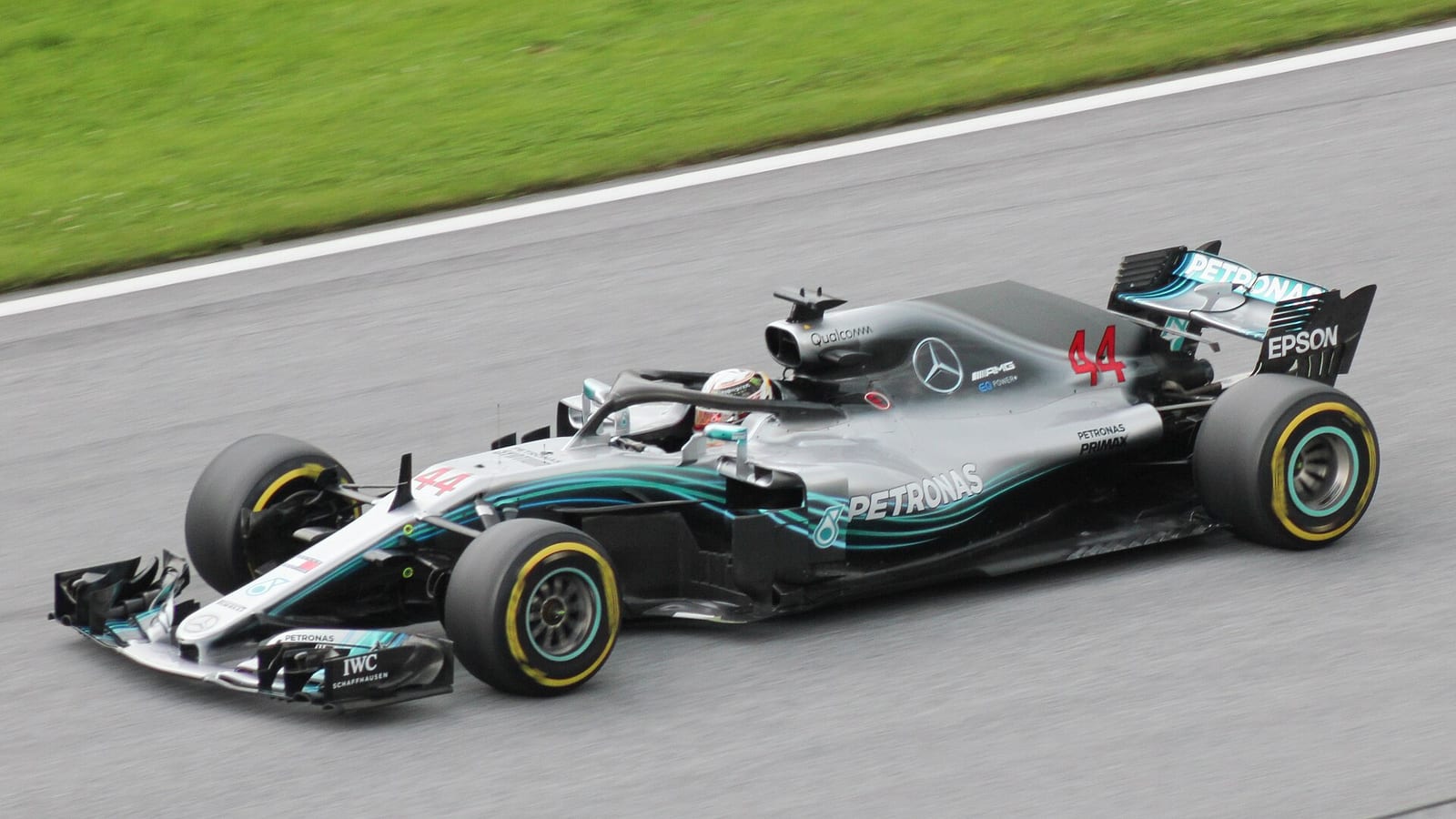
The 2018 Hungarian Grand Prix was round 12 of 21, on 29 July, one week after Germany and the last race before the summer break. Lewis Hamilton took pole position for Mercedes in a wet qualifying with a 1:35.658 and won the race over 70 laps. Sebastian Vettel was second and Kimi Räikkönen third, both for Ferrari. Daniel Ricciardo set the fastest lap for Red Bull, a 1:20.012 on lap 46.
More F1 2018 setups
All the tracks are on the F1 2018 setups page. The round before Hungary is the F1 2018 Germany setup and the round after it is the F1 2018 Spa setup.
For the same track in other games, here are my F1 2017 Hungary setup, my F1 2019 Hungary setup and my F1 25 Hungary setup. The values do not carry over from one game to the next.
FAQ
What is the best F1 2018 setup for Hungary?
For time trial: front wing 7, rear wing 11, differential 80% on throttle and 75% off, suspension 9 and 6, anti-roll bars 9 and 6, ride height 4 and 4, brake pressure 84% with 55% front bias, tyres at 23.0 and 21.1 psi, ballast 8.
What wing levels should I run at the Hungaroring in F1 2018?
7 at the front and 11 at the rear for one lap. For a race, 7 and 10 give you a bit more speed to defend into Turn 1.
Can I use this Hungary setup in a race?
Yes, with changes. Open the on throttle differential to 65% and soften the front suspension to 6 to look after the tyres.
Does this setup work with a controller?
It does. Lower the on throttle differential to 60% and the front suspension to 5 so the car is calmer in the changes of direction.
Why is the rear wing at the maximum?
Because the Hungaroring has one straight and 14 corners. The grip you gain in the corners is worth more than the top speed you lose.
How long is the Hungaroring in F1 2018?
4.381 km with 14 corners. The real 2018 race was 70 laps, and the fastest lap in it was a 1:20.012.