
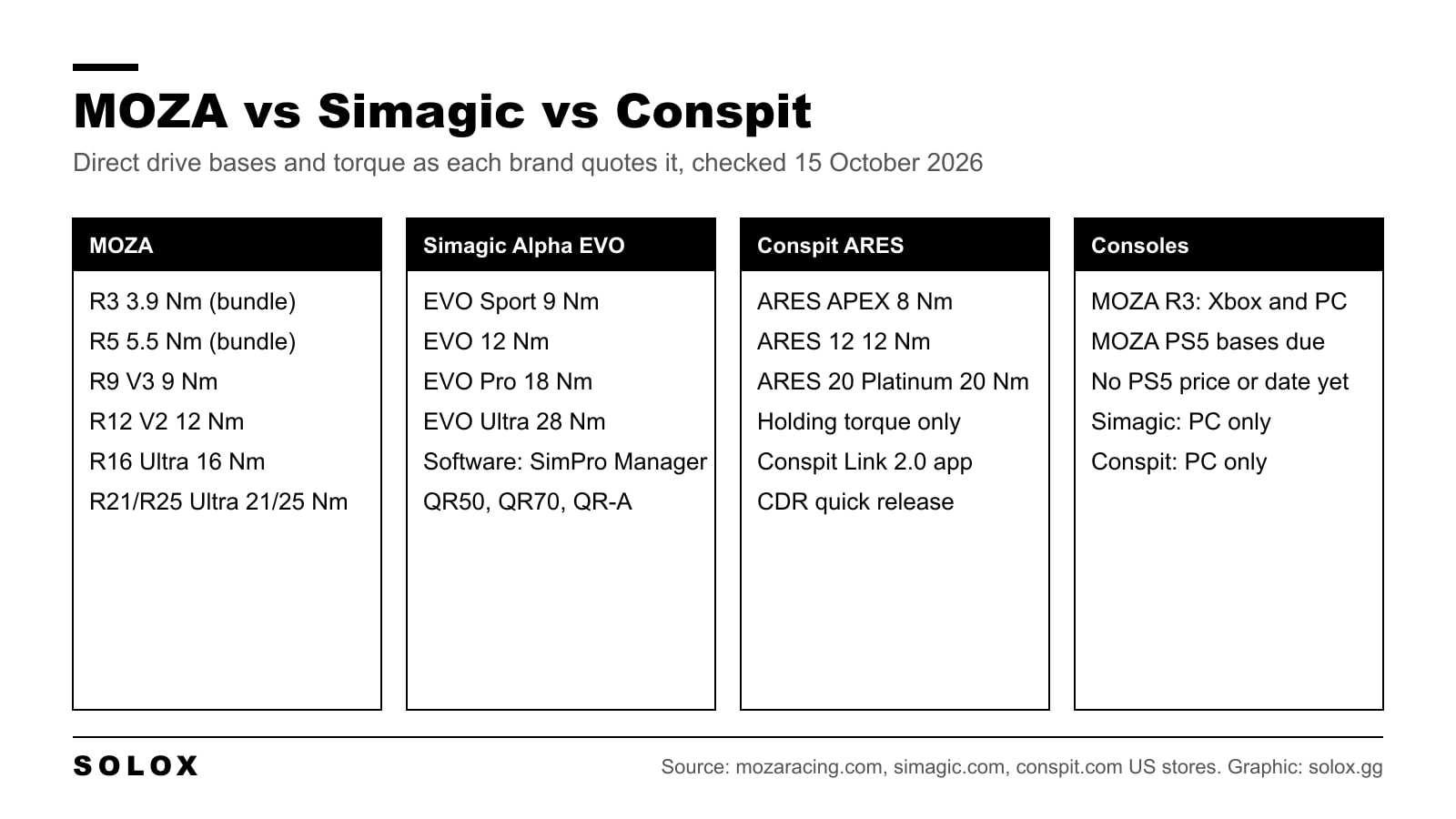
If you race on PC, MOZA is the default pick at almost every budget because it is the cheapest per newton metre and has the widest range. Simagic is the one to look at from about $500 up if you want an open, rim-agnostic ecosystem. Conspit is a credible third option with a small range and the least information published. On console, none of the three solves PlayStation today, and only one MOZA bundle works on Xbox.
Checked on 15 October 2026 against the official US stores: mozaracing.com (wheel bases, racing bundles, R5 Pro bundle page, and the MOZA TGS 2026 release of 17 September 2026), simagic.com (wheel base and bundle collections, Alpha EVO page, Alpha EVO Ultra page) and conspit.com (wheel bases, pedals, bundles, ARES APEX, ARES 12 CDR and ARES 20 Platinum CDR pages). Prices are USD and change often. I have not owned or tested any of these bases, so this is a spec and ecosystem comparison read through a racer's eyes.
This is the hardware question that keeps coming up on r/simracing this month. Somebody has $500, a desk or a first rig, and three Chinese direct drive brands that all look the same in photos. Logitech's RS50 and Fanatec usually turn up in the replies too, so I cover where they fit at the end.
The three line-ups side by side
Here is every base each brand sells on its own US store right now.
| Brand | Base | Torque (as the brand quotes it) | US price | Platforms |
|---|---|---|---|---|
| MOZA | R3 (bundle only) | 3.9 Nm peak | $279 PC bundle, $339 Xbox and PC bundle | PC, Xbox (Xbox bundle) |
| MOZA | R5 (bundle only) | 5.5 Nm peak | $379 bundle (reg. $599) | PC |
| MOZA | R5 Pro (bundle only) | 6 Nm peak | $399 bundle | PC |
| MOZA | R9 V3 | 9 Nm peak | $299 (reg. $349) | PC |
| MOZA | R12 V2 | 12 Nm peak | $399 (reg. $469) | PC |
| MOZA | R16 Ultra | 16 Nm peak | $529 | PC |
| MOZA | R21 Ultra | 21 Nm sustained | $699 | PC |
| MOZA | R25 Ultra | 25 Nm sustained | $899 | PC |
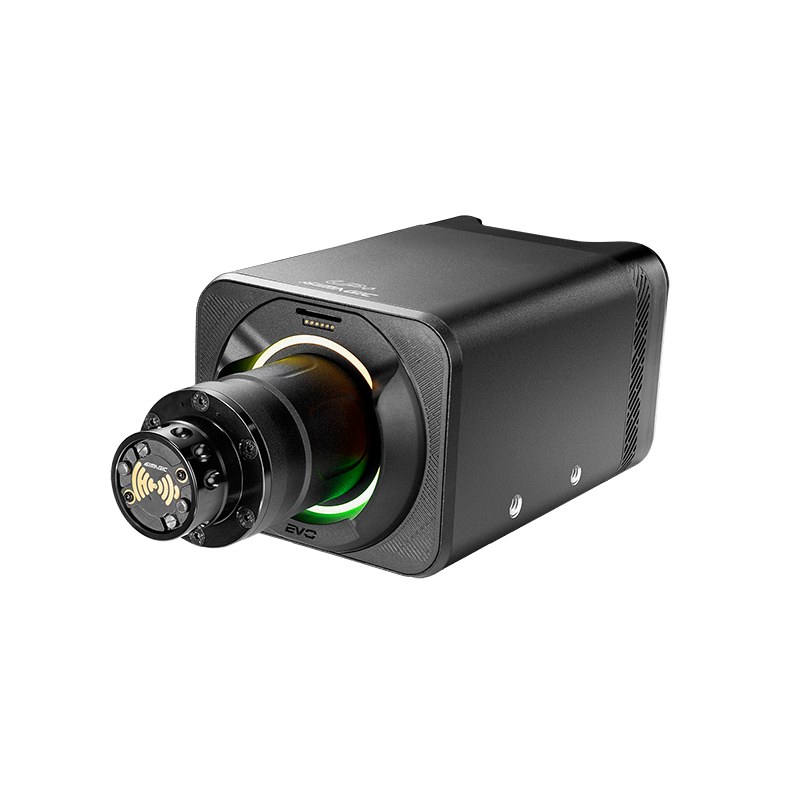
| Simagic | Alpha EVO Sport | 9 Nm max | $399 | PC |
| Simagic | Alpha EVO | 12 Nm max | $519 (reg. $549) | PC |
| Simagic | Alpha EVO Pro | 18 Nm max | $699 | PC |
| Simagic | Alpha EVO Ultra | 28 Nm peak | $969 | PC |
| Conspit | ARES APEX | 8 Nm holding | $419 | PC (Windows) |
| Conspit | ARES 12 / ARES 12 CDR | 12 Nm holding | $539 | PC (Windows) |
| Conspit | ARES 20 Platinum / CDR ver | 20 Nm holding | $749 | PC (Windows) |
A few notes on that table:
- Simagic still lists the older Alpha Mini (10 Nm, $399), Alpha (15 Nm, $649) and Alpha Ultimate (23 Nm, $899). The EVO range replaces them, so I would only buy one of those at a clear discount.
- MOZA's R5 Pro bundle page says the bundle "is designed for Windows PC" and does not mention Xbox or PlayStation.
- Conspit's prices are shown excluding tax. MOZA and Simagic show US prices before tax too, so the three are comparable on that point.
- Conspit lists each ARES base twice, a standard and a CDR version, at the same price. The CDR spec sheets name the CDR quick release. The standard versions' pages would not load for me, so I could not confirm what quick release they ship with.
Why the torque numbers do not compare cleanly
Each brand measures differently, and it matters more than the headline figure.
MOZA quotes peak torque up to the R16 Ultra and sustained torque on the R21 and R25 Ultra. Sustained is the figure a base can hold over a stint without backing off. Simagic's EVO table calls it "Max Torque", and the EVO Ultra page says "peak torque output". Conspit's spec sheets say holding torque and give no peak figure at all.
So a 20 Nm Conspit, a 21 Nm sustained MOZA and an 18 Nm max Simagic are three different measurements. Nobody publishes a torque curve or a thermal derating graph for these bases. Treat the numbers as classes, not as a ranking.
From the cockpit side, here is what I care about. In a GT3 car the wheel loads up through a fast corner and goes light the moment the front tyres let go. That change in weight is the information. You want enough headroom that the base never clips at the peak, so you can still feel the drop. On a desk clamp that ends around 9 Nm, because past that the clamp and the desk move before the motor runs out. Bolted to a rig, 12 to 20 Nm gives you headroom, and you will rarely run any of these near full output for an hour of racing. More torque buys cleaner detail at low settings more than it buys raw force.
I go deeper on that in direct drive wheels explained.
Software, quick release and pedals
This is where the brands differ more than on torque.
| MOZA | Simagic | Conspit | |
|---|---|---|---|
| Software | Pit House | SimPro Manager (the EVO Ultra page shows V3.0.0) | Conspit Link 2.0 |
| Quick release | MOZA quick release | QR50, QR70 and QR-A adapter supported on all EVO bases | CDR quick release (auto locking, spring contacts) |
| Third-party wheels | Not covered on the pages I checked | QR-A adapter passes data and power to third-party wheels | Optional USB-A adapter spacer passes USB through the slip ring |
| Pedals on sale | SRP Lite2, SRP2, CRP2 (in the bundles) | P700, P1000 family, P2000, P-ACTIVE | CPP APEX, CPP LITE 2 and 3, CPP EVO 2 and 3 (hydraulic brake on all) |
| Console | R3 Xbox bundle only; PS5 bases announced | None stated; EVO Ultra FAQ says PC titles | PC Windows only on every spec sheet |
MOZA Pit House is where every MOZA base is set up, and my Pit House settings guide has the values I would start from. MOZA also lists 28 racing bundles on its US store, so there is a rim and pedal combination for almost any budget. That catalogue is the real lock-in argument.
Simagic is the open one. The EVO page says the QR-A adapter gives data and power to third-party wheels, and the bases have 11 connection sockets and a magnetic dash mount. One caveat: the same EVO page still marks that third-party feature "Currently in Development", while the EVO Ultra page lists the QR-A as a compatible accessory. Check the QR-A product page before you buy a Simagic base for a rim from another brand. On pedals, Simagic also sells an active brake pedal, which I covered in my Simagic P-ACTIVE piece.
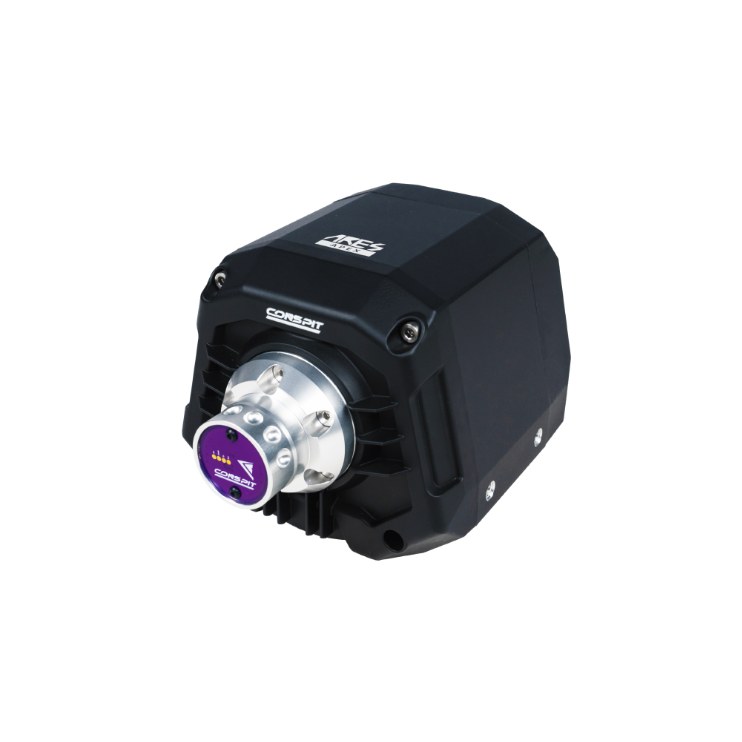
Conspit puts a hydraulic brake in every pedal set it sells, down to the CPP APEX. Its USB-A adapter spacer runs a third-party USB wheel through the base's slip ring, so the cable turns with the shaft instead of wrapping round it. Software is Conspit Link 2.0, with official presets the site says were developed with pro drivers.
For pedals in general, a better brake does more for your lap times than a bigger base. My best sim racing pedals list covers the options across brands.
My pick for each budget
Under $400, complete kit, PC
MOZA R5 bundle at $379. Base, rim and pedals in one box at 5.5 Nm. Neither Simagic nor Conspit sells anything complete at this price. My MOZA R5 settings page has the numbers once it is on your desk.
If you can stretch, the R5 Pro bundle is $399 for 6 Nm. A 0.5 Nm step is small, so buy whichever is cheaper on the day.
Under $400, Xbox
MOZA R3 Xbox and PC bundle at $339. It is the only base of the three brands that works on Xbox. 3.9 Nm is modest, but it is direct drive. Fanatec's CSL DD is the other Xbox route; see below.
Around $550 to $700, complete kit, PC
Three real options:
- MOZA R9 V3 with CS V2P rim and SRP2 pedals: $559
- Simagic Green Flag bundle, Alpha EVO Sport 9 Nm with GT NEO rim and P700 pedals: $599 (listed down from $858)
- Conspit APEX bundle, ARES APEX 8 Nm with 310 APEX rim, CPP APEX 2 pedals and CDR quick release: $699
My pick is the MOZA R9 V3 bundle, on price. All three are about 8 to 9 Nm, which is the right amount for a desk. The difference between them is mostly the pedals and the rim, so read the pedal specs before you choose. The Conspit costs the most of the three for the lowest quoted torque.
If you already own pedals, buy the bare R9 V3 at $299. It is $100 less than an EVO Sport and $120 less than an ARES APEX for similar torque.
$400 to $550, base only, first rig
- MOZA R12 V2: 12 Nm peak, $399
- Simagic Alpha EVO: 12 Nm max, $519
- Conspit ARES 12: 12 Nm holding, $539
MOZA R12 V2. Same headline torque for $120 to $140 less. Pay the Simagic premium only if you want the QR-A route for a rim you already own. If you race iRacing on one, my MOZA R12 iRacing settings are a start.
Around $700, serious rig
- MOZA R21 Ultra: 21 Nm sustained, $699
- Simagic Alpha EVO Pro: 18 Nm max, $699
- Conspit ARES 20 Platinum: 20 Nm holding, $749
MOZA R21 Ultra on paper, because it quotes sustained torque at the same price as Simagic's max figure. In practice this is the closest bracket. The EVO Pro is a strong choice if you are building around Simagic rims or want a third-party wheel on it. The ARES 20 Platinum is $50 more with the least published detail.
$900 and up
- MOZA R25 Ultra: 25 Nm sustained, $899
- Simagic Alpha EVO Ultra: 28 Nm peak, $969
Either is far more torque than anyone needs to drive fast. If you are spending this much, pick the ecosystem you want to live in, then buy that brand's top base. Conspit has nothing in this bracket.
Who each brand suits
MOZA suits most PC racers on a budget, and anyone who wants one brand for base, rim, pedals and extras. It is the only one of the three with an Xbox option, and the only one with PlayStation hardware on the way. My MOZA R9 FFB settings and R16 Ultra review cover two of its bases in more depth.
Simagic suits the PC racer with a rig who cares about the ecosystem around the base: third-party rim support through QR-A, a magnetic dash and, at the top, an active brake pedal. You pay $120 or so more than MOZA at 12 Nm for that.
Conspit suits someone who wants a hydraulic brake at every price and likes the USB passthrough idea. But it has the smallest range, the highest price per newton metre in this comparison and the thinnest official information. The spec sheets give holding torque, encoder, size and platform. They give no peak torque, no thermal data and no console plans. The store also loaded slowly when I checked it, and some product pages did not load at all. If you are spending $700 on a base, I would want more than that before I bought.
Where Logitech RS50 and Fanatec fit
They come up in every one of these threads, and the reason is consoles.
- PlayStation: none of the three brands works today. MOZA announced the R5S Pro, R16S Ultra and R16S Ultra base for PS5 on 17 September 2026, "subject to Sony Interactive Entertainment's final product approval", with no price, date or torque yet. Until then your choices are Fanatec's Gran Turismo DD Pro or the PlayStation version of the RS50. See my RS50 review and best PS5 wheels.
- Xbox: MOZA's R3 bundle, or Fanatec's CSL DD, which I cover in my CSL DD review.
- PC: the RS50 is worth a look if you want TrueForce. Otherwise the three brands here beat it on torque per dollar.
For the bigger four-way picture, read MOZA vs Fanatec vs Thrustmaster vs Logitech. For the cheapest end, read my best budget sim racing wheels.
FAQ
Is MOZA better than Simagic?
On price per newton metre, yes, at every torque level on 15 October 2026. Simagic's advantage is its open ecosystem, with the QR-A adapter for third-party rims. Neither is "better" for force feedback on paper, and nobody publishes data that settles it.
Is Conspit a good brand?
The specs are competitive and every pedal set has a hydraulic brake. But Conspit publishes the least: holding torque only, no peak figure and PC only. It is also the most expensive per newton metre in this comparison.
Which direct drive base works on PS5?
None from MOZA, Simagic or Conspit today. MOZA has announced PS5 bases with no price or date. For PS5 now, look at Fanatec's Gran Turismo DD Pro or the PlayStation version of the Logitech RS50.
Does Simagic work on Xbox?
Simagic's pages for the Alpha EVO line do not list Xbox support, and the EVO Ultra FAQ says it supports PC titles. Treat Simagic as PC only.
How much torque do I need?
On a desk, around 8 to 9 Nm is the useful limit before the clamp moves. On a rig, 12 Nm is plenty for most people. More torque mostly buys headroom and cleaner detail, not more speed.
What is the cheapest direct drive in this comparison?
The MOZA R3 Racing Bundle for PC at $279 with wheel and pedals, 3.9 Nm. The cheapest bare base is the MOZA R9 V3 at $299.
Are the prices the same in Europe?
No. All prices here are from the US stores on 15 October 2026, before tax. EU and UK prices differ and include VAT, so check your local store.