
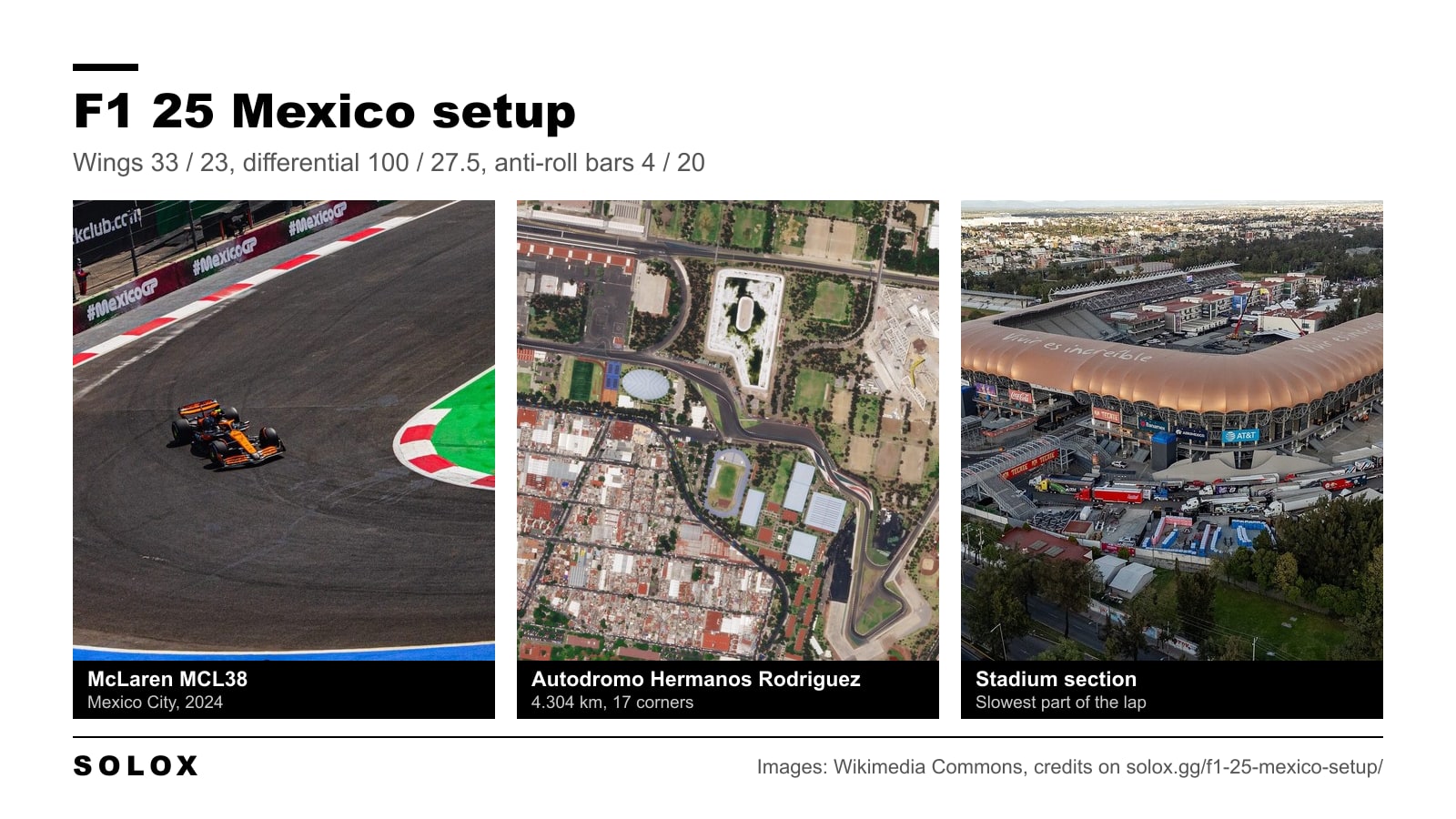
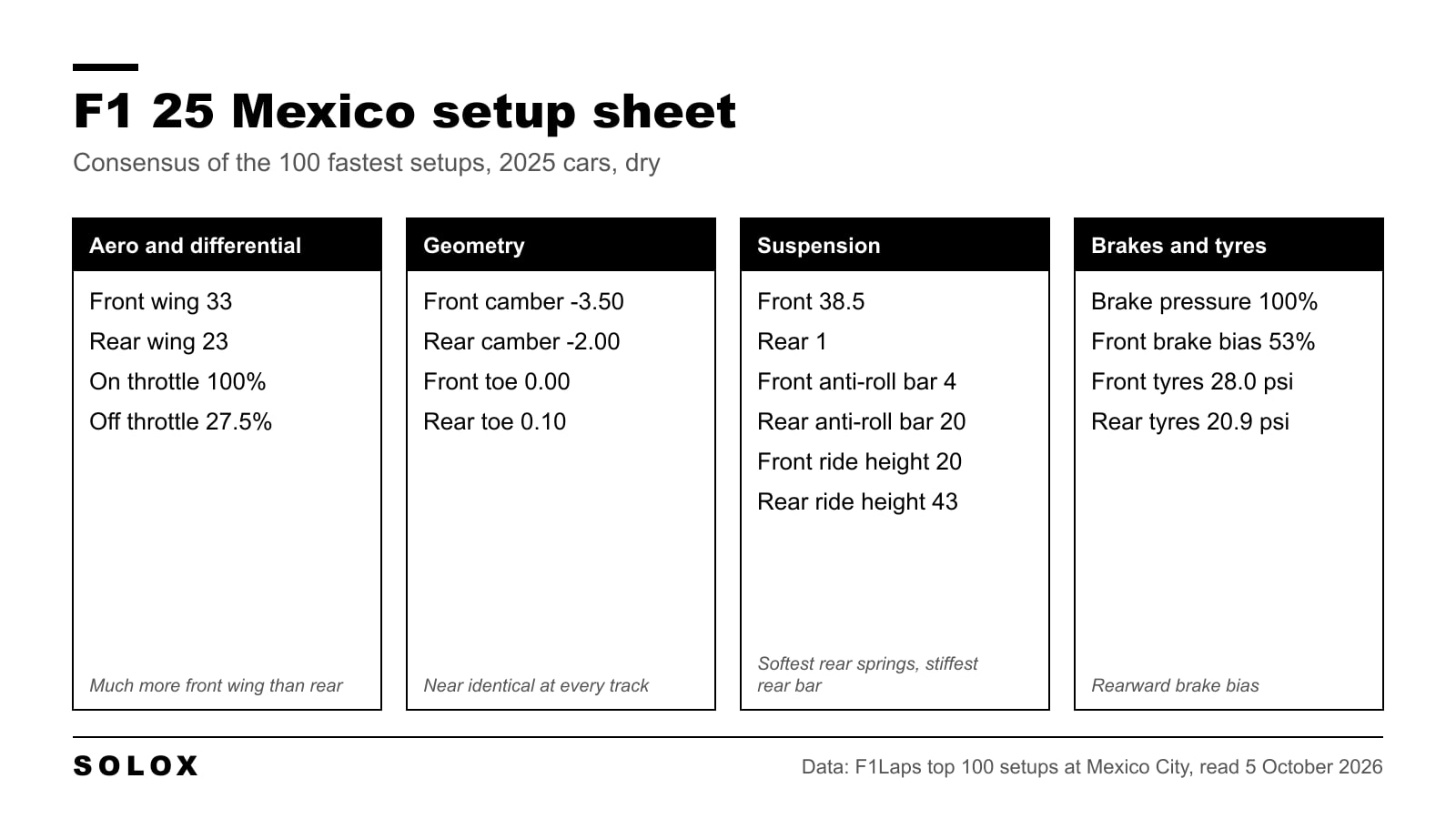
The best F1 25 Mexico setup runs wings at 33 and 23, the differential at 100% on throttle and 27.5% off, suspension at 38.5 and 1, anti-roll bars at 4 and 20, ride height at 20 and 43 and front brake bias at 53%. It is a setup built around rotation: a lot of front wing, a soft front bar and the stiffest rear bar in the game.
The numbers come from F1Laps, which reports what the 100 fastest setups at this track have in common. I read them on 5 October 2026. I have not tested this exact setup in the game, so take it as community data. The reading of it is mine.
F1 25 Mexico setup: dry and wet
These values are for the 2025 cars in the base game.
| Setting | Dry | Wet |
|---|---|---|
| Front wing | 33 | 36 |
| Rear wing | 23 | 36 |
| Differential on throttle | 100% | 72.5% |
| Differential off throttle | 27.5% | 40% |
| Front camber | -3.50 | -3.50 |
| Rear camber | -2.00 | -2.00 |
| Front toe | 0.00 | 0.00 |
| Rear toe | 0.10 | 0.10 |
| Front suspension | 38.5 | 37 |
| Rear suspension | 1 | 6 |
| Front anti-roll bar | 4 | 14.5 |
| Rear anti-roll bar | 20 | 12 |
| Front ride height | 20 | 23 |
| Rear ride height | 43 | 49 |
| Brake pressure | 100% | 100% |
| Front brake bias | 53% | 56% |
| Front tyre pressures | 28 psi | 24.2 psi |
| Rear tyre pressures | 20.9 psi | 21.15 psi |
Why this setup works at Mexico City
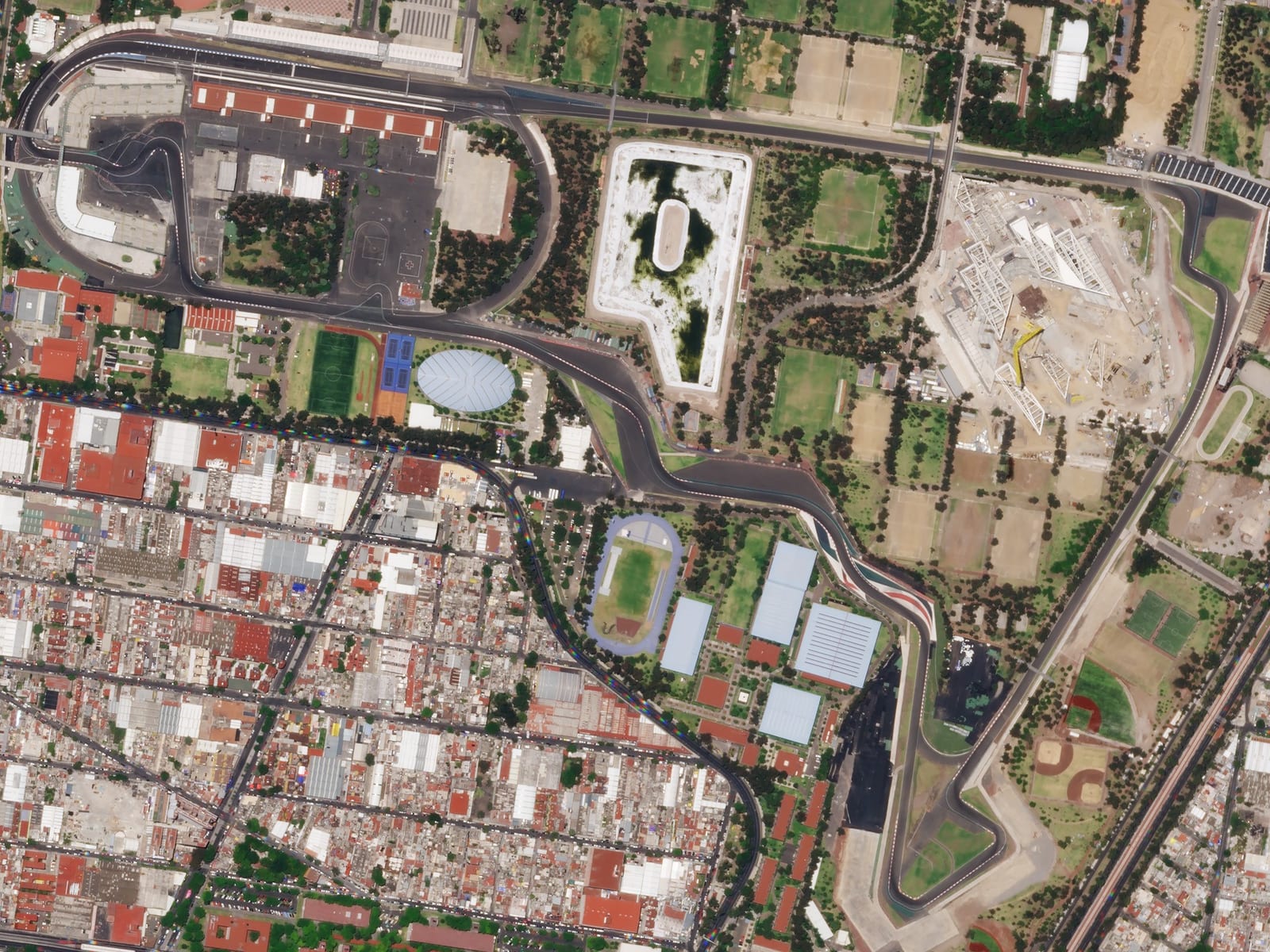
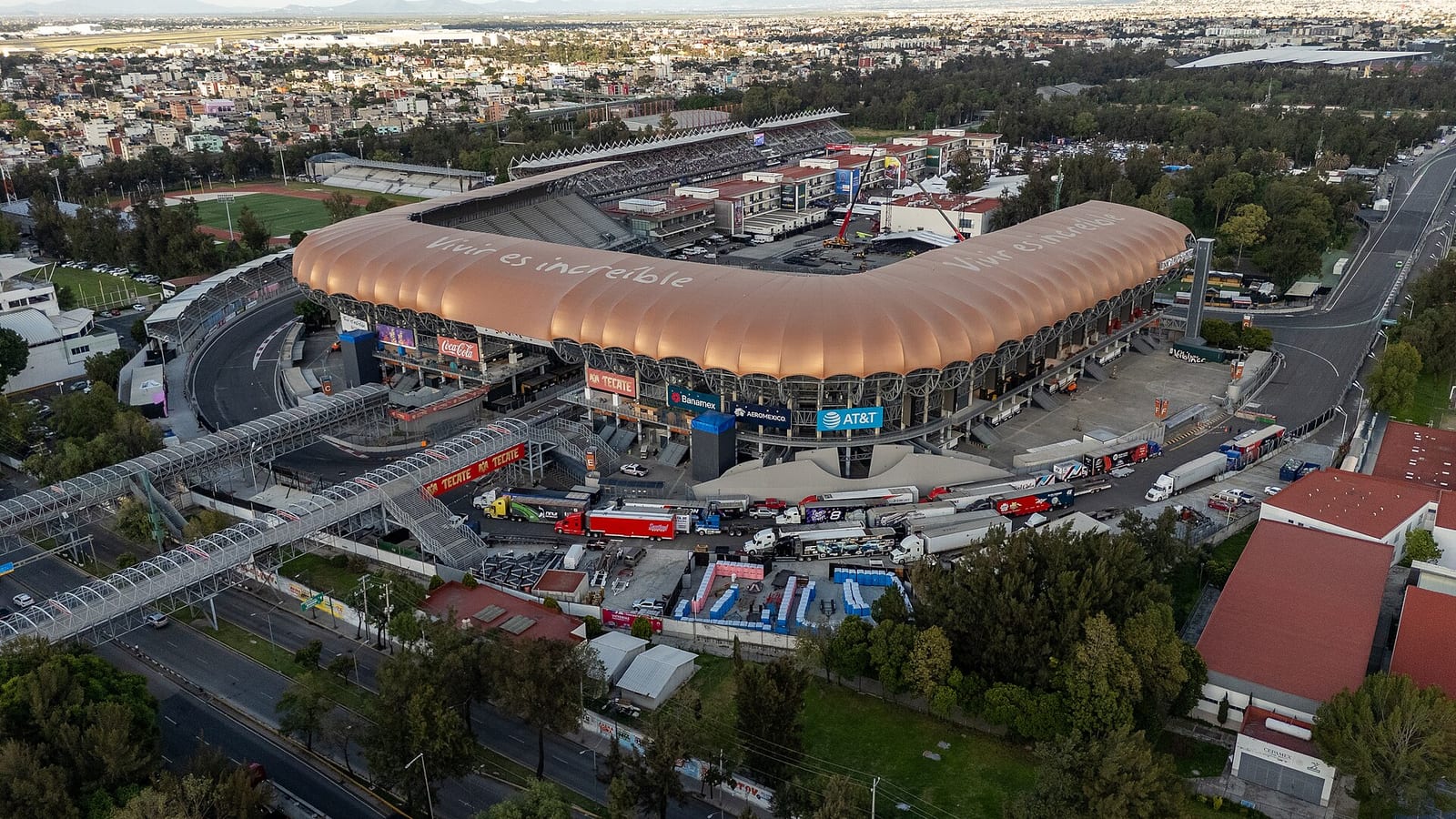
The Autodromo Hermanos Rodriguez is 4.304 km long and has 17 corners. It sits about 2,240 metres above sea level, the highest track on the calendar. The lap is three different things: a very long main straight into a tight three corner chicane, a run of fast esses in the middle, and a slow stadium section at the end.
That mix is why the setup looks odd on paper. You need the car to turn in the slow corners and change direction in the esses, but you cannot afford a big rear wing on that straight.
Wings at 33 and 23. The front wing is high. Fifteen tracks run less and eight run more. The rear is mid range: twelve tracks run less, eight run more, and Abu Dhabi, Bahrain and Shanghai use the same 23. The ten click gap between front and rear is the point. It gives a strong front end without the drag of a big rear wing. You can compare it with every other track in my F1 25 setups for every track.
Differential at 100% and 27.5%. Fully locked on throttle, like 19 of the 24 tracks. Off throttle, 27.5% is a value no other track uses. Ten tracks run less and thirteen run more.
Suspension at 38.5 and 1. The front is soft. Fourteen tracks use 41, and only Montreal, Shanghai and Las Vegas go softer than 38.5. The rear at 1 is the softest setting in the game, shared with Shanghai, Suzuka, Zandvoort, Singapore and Spa.
Anti-roll bars at 4 and 20. This is the most extreme part of the setup. The front bar is very soft, and only Interlagos, Shanghai and Suzuka run a softer one. The rear bar at 20 is the stiffest any track uses, shared with Zandvoort and Spa. A soft front and a stiff rear make the car rotate, and that is what the stadium and the esses need.
Ride height at 20 and 43. The front is at the lowest value any track uses. The rear is low too. Only Interlagos, Suzuka, Zandvoort and Spa run less. A low car means less drag on the straight.
Brake bias at 53%. Further back than most. Only Interlagos and Zandvoort run less, and Lusail matches it. Brake pressure is 100%.
Tyres at 28 and 20.9 psi. The fronts are in the lower half of the range, eight tracks run less. The rears are low. Only Monaco runs less, and Barcelona, Zandvoort, Singapore and Austin use the same 20.9.
How to drive it
Turn 1 is the lap. You arrive at the highest speed of the lap and brake for a tight right. Brake in a straight line and do not try to carry speed in. Turn 1, 2 and 3 are one sequence, and the only thing that matters is the exit of Turn 3, because another straight follows.
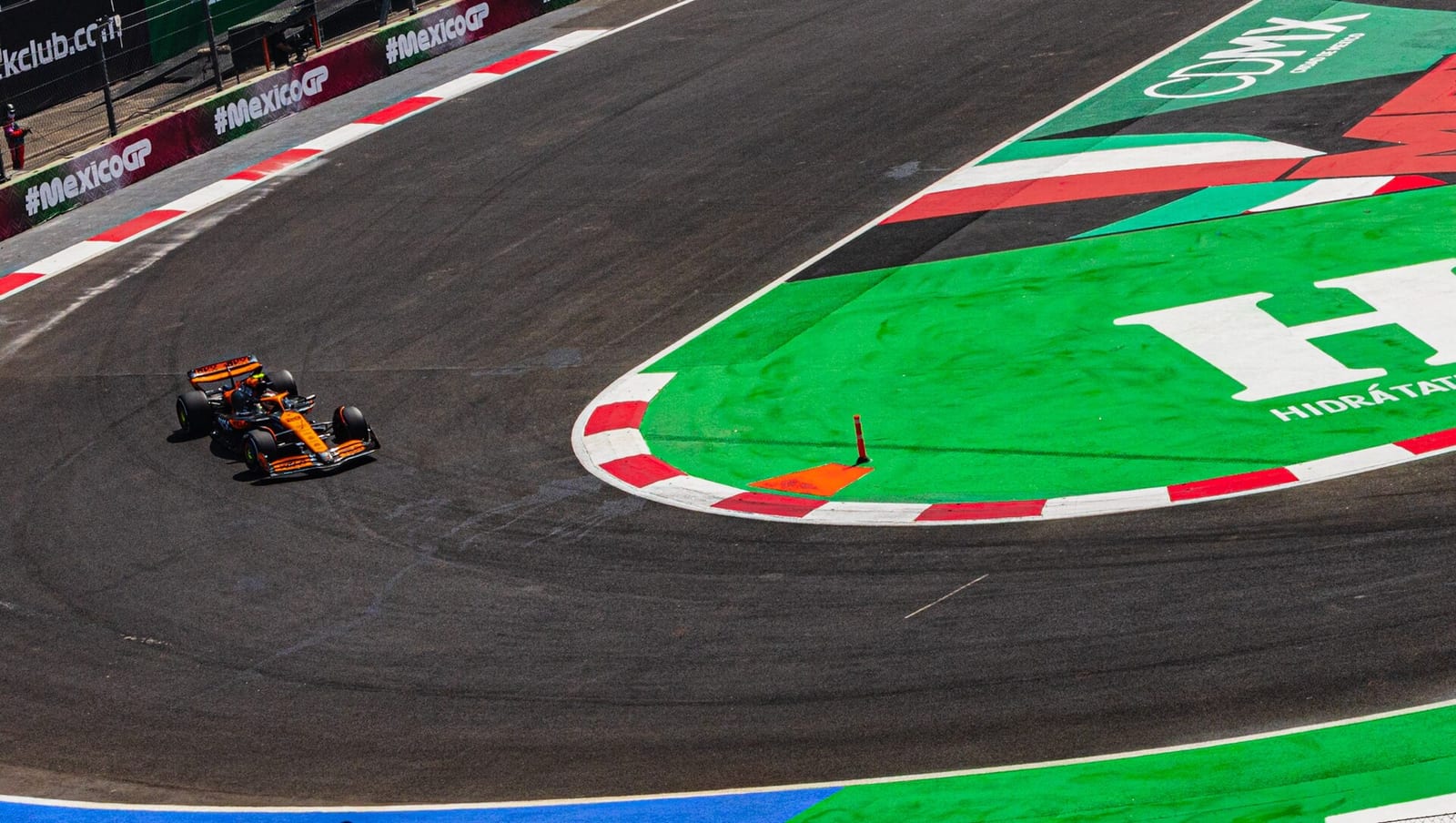
Give up Turn 2 for Turn 3. Stay tight through the left of Turn 2 so the car is straight early for Turn 3. Use the kerbs gently. With the rear bar at 20, a big kerb hit makes the rear jump.
Turns 4 and 5 want a late apex. Brake hard for the left of Turn 4, stay wide and cut back for Turn 5. The 53% brake bias makes the rear light here, so release the brake smoothly as you turn.
Find a rhythm in the esses. From Turn 7 to Turn 11 the car changes direction five times. This is where the setup earns its time. Use one clean line, small steering inputs and partial throttle. One mistake in the first corner costs you all five.
Brake straight into the stadium. Turn 12 is a fast right that leads into the stadium. Get the car slowed before the tight left hairpin that follows. It is the slowest corner of the lap and it is easy to lock a front wheel.
Be patient on the way out. The corners after the hairpin are slow and it is tempting to go to full throttle early. With the differential fully locked, the rear slides first. Wait until the car is straight.
The last corner sets up the straight. The final banked right is taken on the throttle. Open the steering as early as you can, because any lost speed here is lost all the way down to Turn 1.
How to adjust it to your driving
Change one thing at a time and drive three clean laps before you judge it.
- The rear steps out in the esses. Soften the rear anti-roll bar from 20 to 16. This is the first change I would make if the car feels nervous.
- The rear slides under braking into Turn 1 or Turn 4. Move the brake bias forward from 53% to 55%.
- You get wheelspin out of the stadium. Lower the on throttle differential from 100% to 85%. The wet set goes down to 72.5%.
- The car still understeers in the slow corners. Add two clicks of front wing before you touch anything else.
- The rear feels loose in the last corner. Add two or three clicks of rear wing. You lose a little on the straight and gain confidence everywhere else.
- The car bounces over the kerbs in the chicane. Raise the rear ride height from 43 to 45.
- You are on a controller. Start with the rear anti-roll bar at 14, the on throttle differential at 80% and brake bias at 55%. My F1 25 controller settings cover the calibration side.
For a race, I would take the calmer version from the start. A rear bar at 20 is fast for one lap, but it works the rear tyres hard over a stint.
Wet setup for Mexico City
The wet setup is almost a different car. Compared with the dry setup:
- The wings go up and level out, from 33 and 23 to 36 and 36.
- The differential changes at both ends, from 100% and 27.5% to 72.5% and 40%.
- The suspension changes from 38.5 and 1 to 37 and 6.
- The anti-roll bars swap character, from 4 and 20 to 14.5 and 12.
- The ride height goes up from 20 and 43 to 23 and 49.
- The brake bias moves forward from 53% to 56%.
- Tyre pressures change. The fronts drop from 28 to 24.2 psi and the rears go up from 20.9 to 21.15.
Camber, toe and brake pressure do not change.
Everything that made the dry car rotate is taken away. Thirteen more clicks of rear wing, a softer rear bar, a stiffer front bar and brake bias further forward all make the rear more stable. In the rain here, you want a car that understeers a little and never surprises you.
Mexico City setup for the 2026 Season Pack car
The 2026 cars arrived in F1 25 with the 2026 Season Pack. They have their own setups, and a 2025 setup does not carry over. F1Laps files these cars under F1 26. These are the sets for Mexico City as I read them on 5 October 2026.
| Setting | 2026 car, dry | 2026 car, wet |
|---|---|---|
| Front wing | 47 | 44 |
| Rear wing | 34 | 34 |
| Differential on throttle | 92.5% | 100% |
| Differential off throttle | 40% | 30% |
| Engine braking | 50% | 50% |
| Front camber | -3.50 | -3.50 |
| Rear camber | -2.00 | -2.00 |
| Front toe | 0.00 | 0.00 |
| Rear toe | 0.10 | 0.10 |
| Front suspension | 37 | 37 |
| Rear suspension | 17 | 14 |
| Front anti-roll bar | 11 | 11 |
| Rear anti-roll bar | 8 | 9 |
| Front ride height | 23 | 23 |
| Rear ride height | 46 | 48 |
| Brake pressure | 100% | 100% |
| Front brake bias | 56% | 56% |
| Front tyre pressures | 24.2 psi | 25 psi |
| Rear tyre pressures | 20.9 psi | 21.9 psi |
The 2026 car runs far more wing, 47 and 34. The differential is 92.5% on throttle and 40% off. The anti-roll bars are the other way round from the 2025 car, 11 at the front and 8 at the rear, and the rear suspension goes from 1 to 17. Ride height is 23 and 46, brake bias is 56% and the front tyres run 24.2 psi.
The 2026 data on F1Laps still moves from one day to the next. Treat it as a starting point and check the source before a league race.
Other tracks and older games
For another high downforce track with a very different balance, see my F1 25 Spain setup. For a track that uses the same rear springs and an even softer front bar through fast esses, see my F1 25 Japan setup. For the track with the same front anti-roll bar and brake bias, see my F1 25 Qatar setup. If you are on an older game, I have a Mexico setup for F1 23.
FAQ
What is the best setup for Mexico in F1 25?
Wings 33 and 23, differential 100% on throttle and 27.5% off, camber -3.50 and -2.00, toe 0.00 and 0.10, suspension 38.5 and 1, anti-roll bars 4 and 20, ride height 20 and 43, brake pressure 100%, front brake bias 53%, front tyres 28 psi and rear tyres 20.9 psi.
What wing level should I run at Mexico City in F1 25?
33 at the front and 23 at the rear in the dry. If the rear is loose in the esses or the last corner, go up to 25 or 26 at the rear. In the wet, run 36 and 36.
Why is the rear anti-roll bar so stiff in the Mexico setup?
A stiff rear bar with a soft front bar makes the car rotate in slow corners and change direction quickly in the esses. At 20 it is the stiffest any track uses. If the car is too nervous for you, drop it to 16 or 14.
What is the best wet setup for Mexico in F1 25?
Wings 36 and 36, differential 72.5% and 40%, suspension 37 and 6, anti-roll bars 14.5 and 12, ride height 23 and 49 and brake bias 56%. Front tyres run 24.2 psi and rear tyres 21.15.
Does the F1 25 Mexico setup work on the 2026 cars?
No. The 2026 Season Pack car runs wings at 47 and 34, the differential at 92.5% and 40%, suspension at 37 and 17, anti-roll bars at 11 and 8, ride height at 23 and 46 and brake bias at 56%. Use the 2026 table on this page.
Where does this setup come from?
From F1Laps, which analyses the 100 fastest setups its users have driven at Mexico City. I read the numbers on 5 October 2026. They can move when the game is patched.