
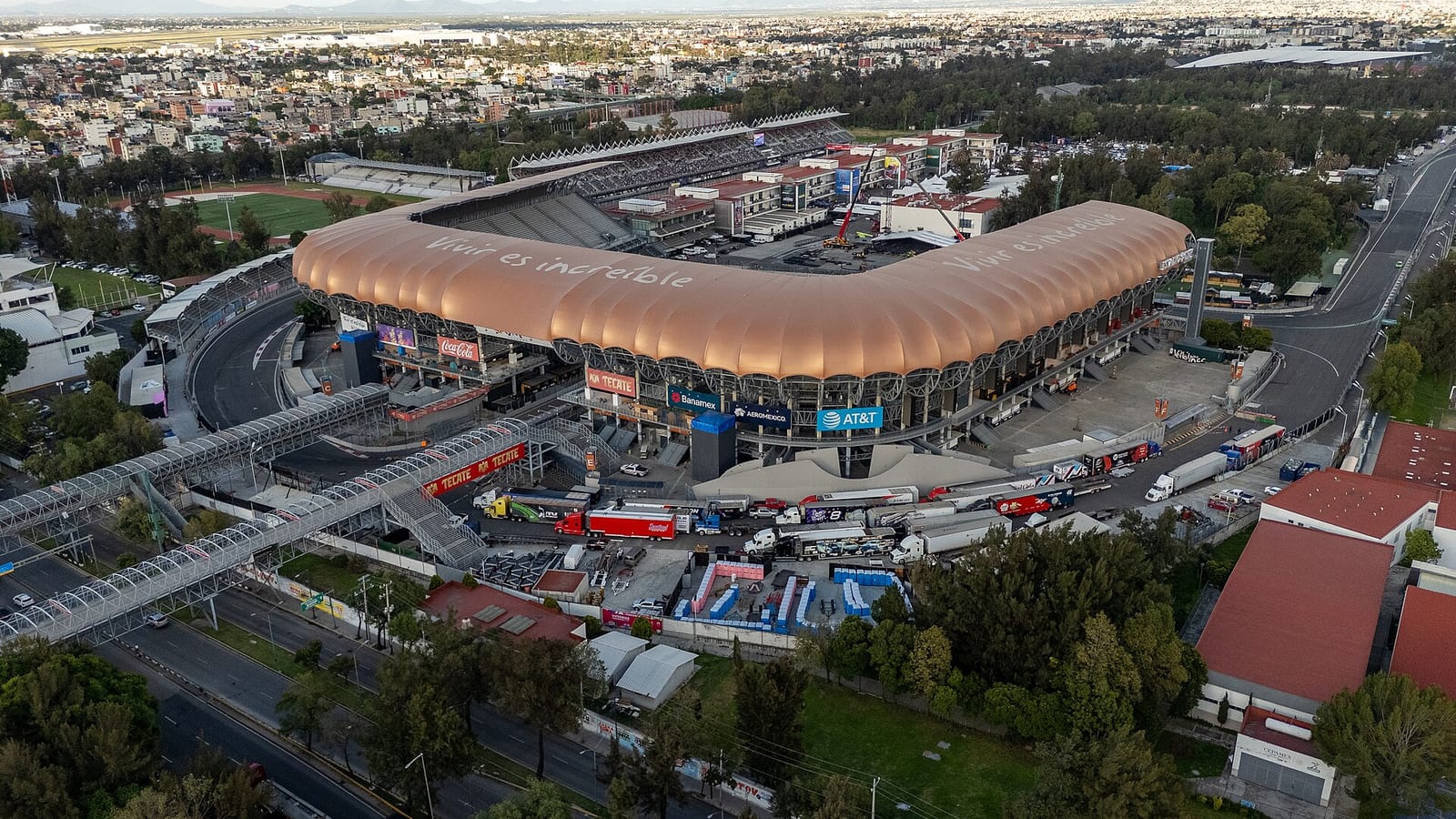
Mexico City is a track of two halves. A front straight of about 1.2 km, then a second half that is slow, tight and ends inside a baseball stadium.
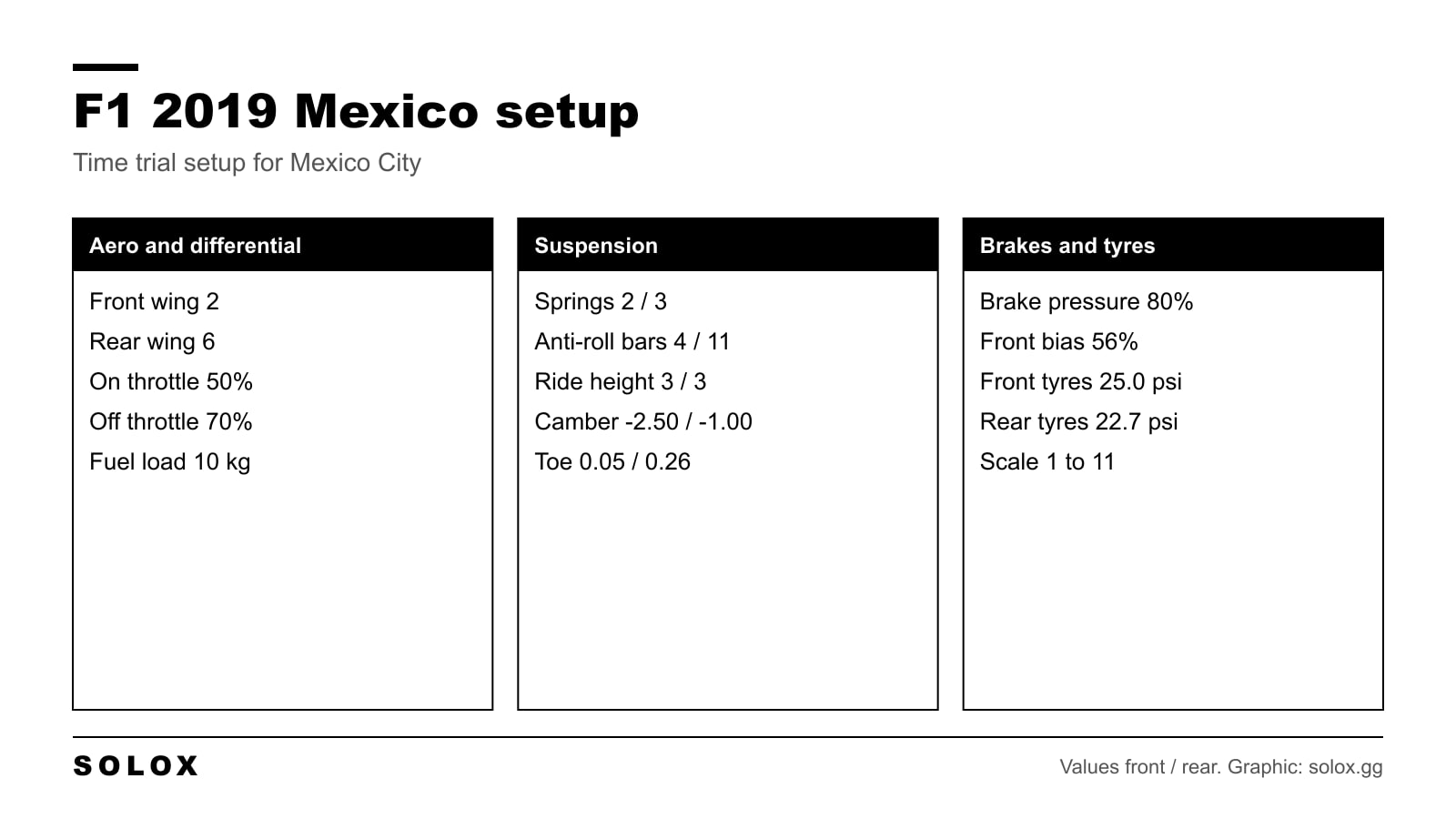
The setup picks the straight. Low front wing, a medium rear, and a stiff rear bar to get the car through the slow part. It is a time trial setup, saved with 10 kg of fuel.
F1 2019 Mexico setup
| Setting | Front | Rear |
|---|---|---|
| Wing | 2 | 6 |
| Camber | -2.50 | -1.00 |
| Toe | 0.05 | 0.26 |
| Suspension | 2 | 3 |
| Anti-roll bar | 4 | 11 |
| Ride height | 3 | 3 |
| Tyre pressure | 25.0 psi | 22.7 psi |
| Setting | Value |
|---|---|
| Fuel load | 10 kg |
| Differential on throttle | 50% |
| Differential off throttle | 70% |
| Brake pressure | 80% |
| Front brake bias | 56% |
In F1 2019 the wings, suspension, anti-roll bars and ride height all use a scale from 1 to 11.
This setup was collected for the site in 2022 from a fast time trial lap, like the rest of my F1 2019 setups. Use it as a base and adjust it with the table further down.

The lap on board
Why this setup works in Mexico
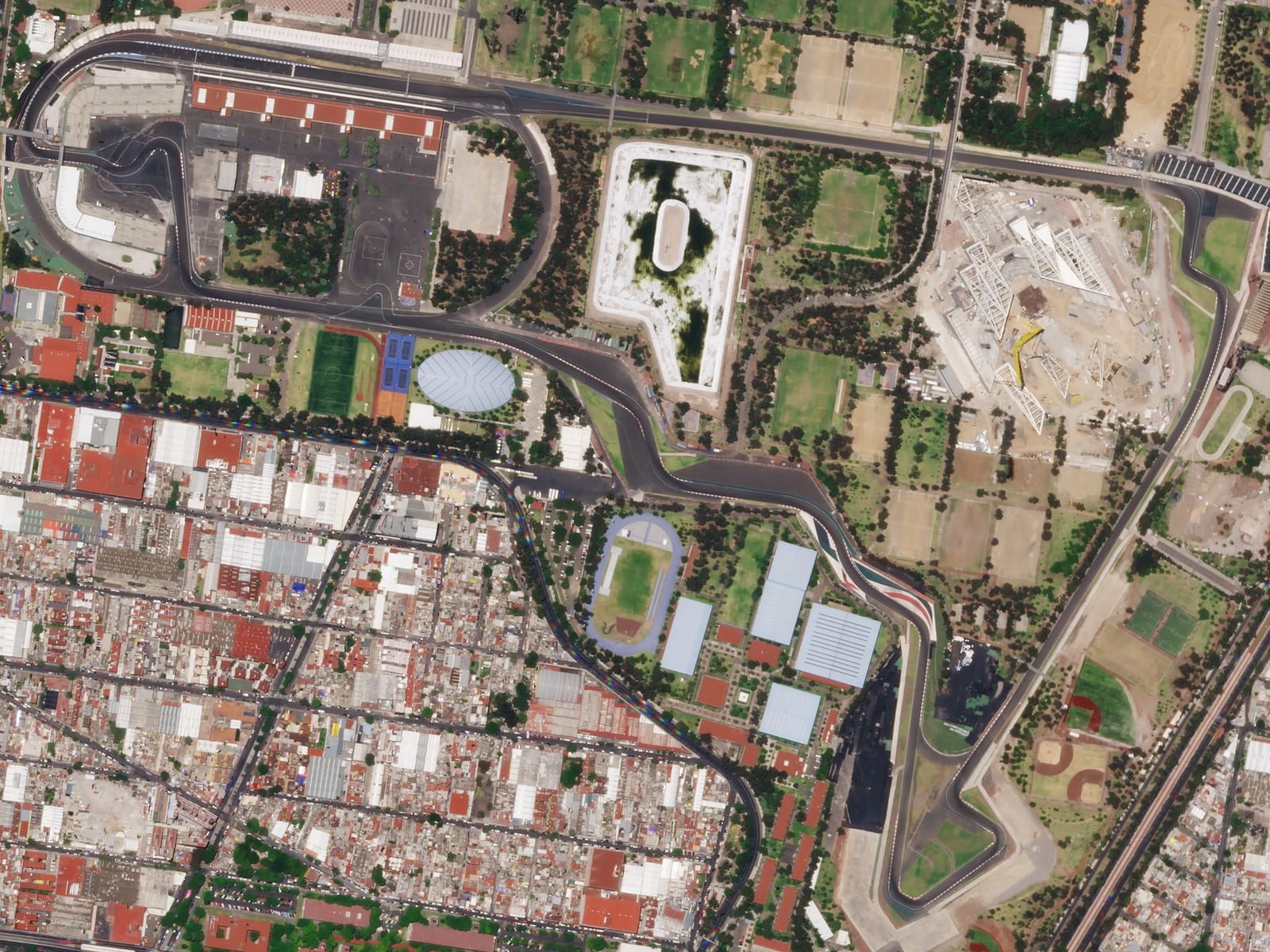
The lap is 4.304 km with 17 corners. The front straight is about 1.2 km, and there are two more flat out runs after turn 3 and after turn 11. Then come the esses and the stadium, where the car is slow and you wait a lot.
The wings. 2 and 6. I run the same pair at Spa. The front at 2 is for the straights. The rear at 6 is there for the esses, the only fast corners of the lap, and for traction out of the slow ones. A gap of four clicks between front and rear gives understeer, and the rear anti-roll bar is what takes it away again.
The differential. 50% on throttle, fully open. Turn 3, turn 6, the stadium and the last corner are all slow exits onto a straight. An open differential puts the power down without a snap. Off throttle it is 70%, for a stable rear in the stop for turn 1.
The brakes. 80% pressure and 56% front bias. Only my Spa setup has less pressure. The bias is as far forward as I go in this game, the same as in Austria, Monza and the USA. With a low wing car, the rear has little load when you brake from top speed. You give the work to the front and keep the peak pressure down so the fronts do not lock.
The geometry and tyres. Camber -2.50 and -1.00, the least angle the menu allows. Front toe 0.05, rear toe 0.26, two clicks above the minimum for a bit more stability at the rear. Pressures are 25.0 and 22.7 psi, the same as at Spa. No setup in my list has a higher front pressure. A hard tyre rolls with less resistance on the straights and answers fast in the esses. It also overheats sooner, and that matters in a race.
A stiff rear bar for the slow half
The anti-roll bars are 4 and 11. The rear is at the top of the scale.
A stiff rear bar makes the rear rotate. In the stadium the corners are slow and close together, and a car that will not turn costs you time in every one of them. With the bar at 11 the rear helps the front, and you can get back to the throttle with the car already pointing the right way.
Springs are 2 and 3. Soft, for the kerbs in turns 1 to 3 and in the stadium.
Ride height is 3 and 3. The same at both ends, and in the middle of what I use in this game. Enough room to take the kerbs at turn 2 without the floor touching.

What to change
One change at a time, three laps, then decide.
| Problem | Change | Why |
|---|---|---|
| The rear steps out in the stadium | Rear anti-roll bar 11 to 9 | A softer rear bar gives the rear more grip |
| Understeer in the esses | Front wing 2 to 3 | More front load at speed |
| The rear slides in the esses | Rear wing 6 to 7 | More rear downforce |
| Wheelspin out of turn 3 | Rear tyre pressure 22.7 to 21.9 psi | A bigger contact patch on the exits |
| Front tyres lock into turn 1 | Brake pressure 80% to 77% | Less peak pressure, easier to hold at the limit |
| The rear moves under braking for turn 1 | Off throttle differential 70% to 80% | More lock holds the rear straight |
| Too slow on the front straight | Rear wing 6 to 5 | Less drag. The esses get harder |
For a race
High pressures and a rear bar at 11 are fast for one lap and hard on the tyres over twenty. Before a 25% or 50% race I would change this:
- Tyre pressures down. Fronts from 25.0 to 23.8 psi, rears from 22.7 to 21.5. This is the big one.
- Rear anti-roll bar 11 to 9. The rear tyres last longer.
- Rear wing 6 to 7. Less sliding in the esses and better traction out of the stadium.
- Fuel. The 10 kg is a time trial number. In a race the game sets the load for the distance.
On a pad, I would go to brake pressure around 75%, the rear anti-roll bar at 8 and the rear wing at 7.
F1 2019 has manual ERS modes. Spend the battery out of the last corner and all the way down the front straight. Save in the esses and the stadium. You pass into turn 1, and if it does not work there, try again into turn 4.
Where the lap time is in Mexico
- Turn 1. A huge stop at the end of the front straight. Turns 1 to 3 are one sequence, right, left, right. The exit of turn 3 is the one that counts, because a straight follows.
- Turns 4 and 5. Left, then right, both slow. Brake in a straight line for turn 4 and use the kerb in turn 5.
- Turn 6. A slow right hairpin. Late apex and an early throttle.
- The esses. The fast part of the lap. Find a rhythm and keep the steering smooth. One apex missed and you are off line for the next three.
- The stadium. The slowest part, built through an old baseball stadium. Be patient. Wait for the rear bar to turn the car, then go.
- The last corner. The second half of the old Peraltada. Go to the throttle early and use all the road on the exit. This is where the lap time on the straight comes from.
If you take one thing from this page: the exit of the last corner is worth more than anything you can find in the stadium. Give up the entry and take the exit.
Mexico in 2019
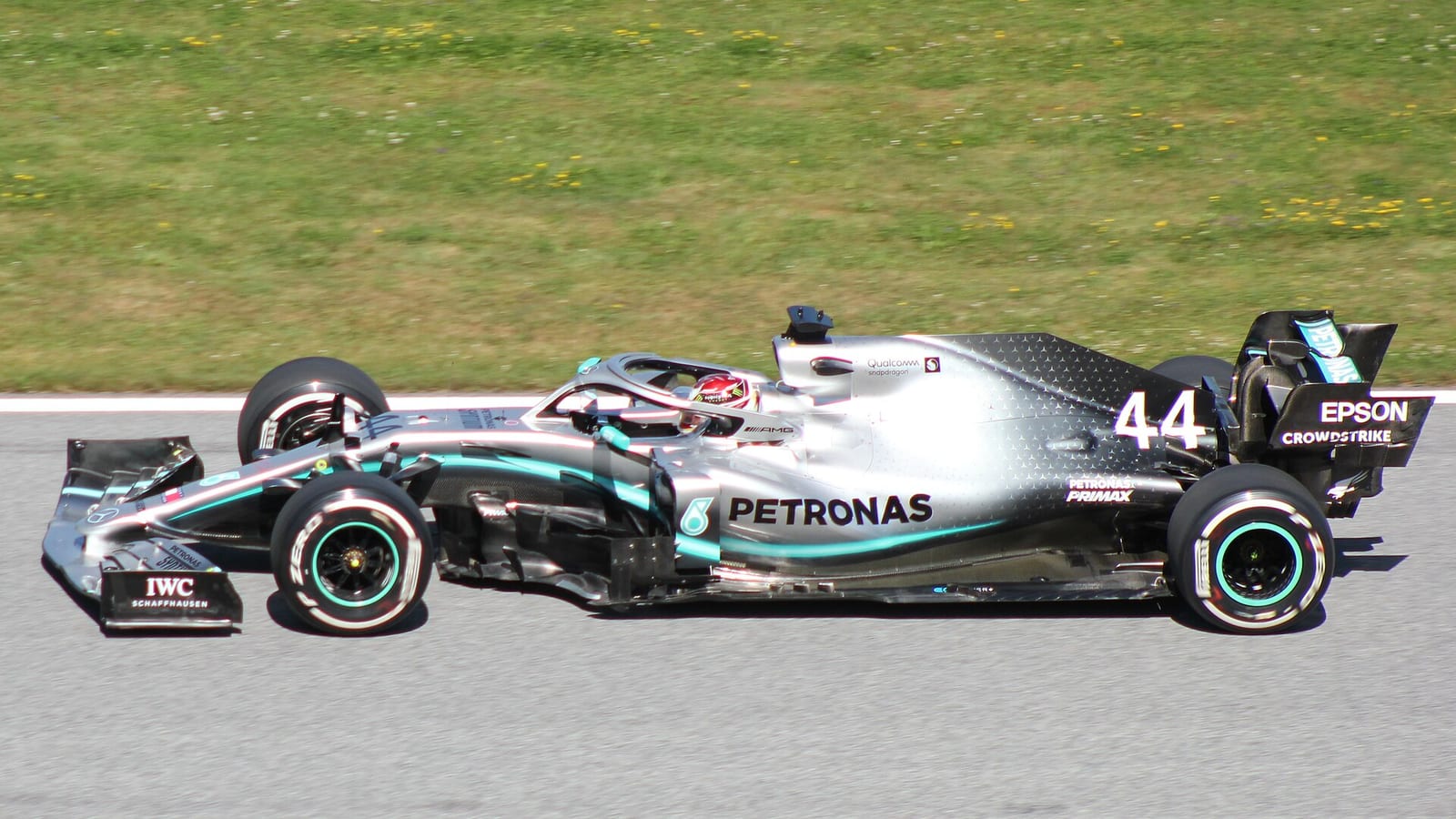
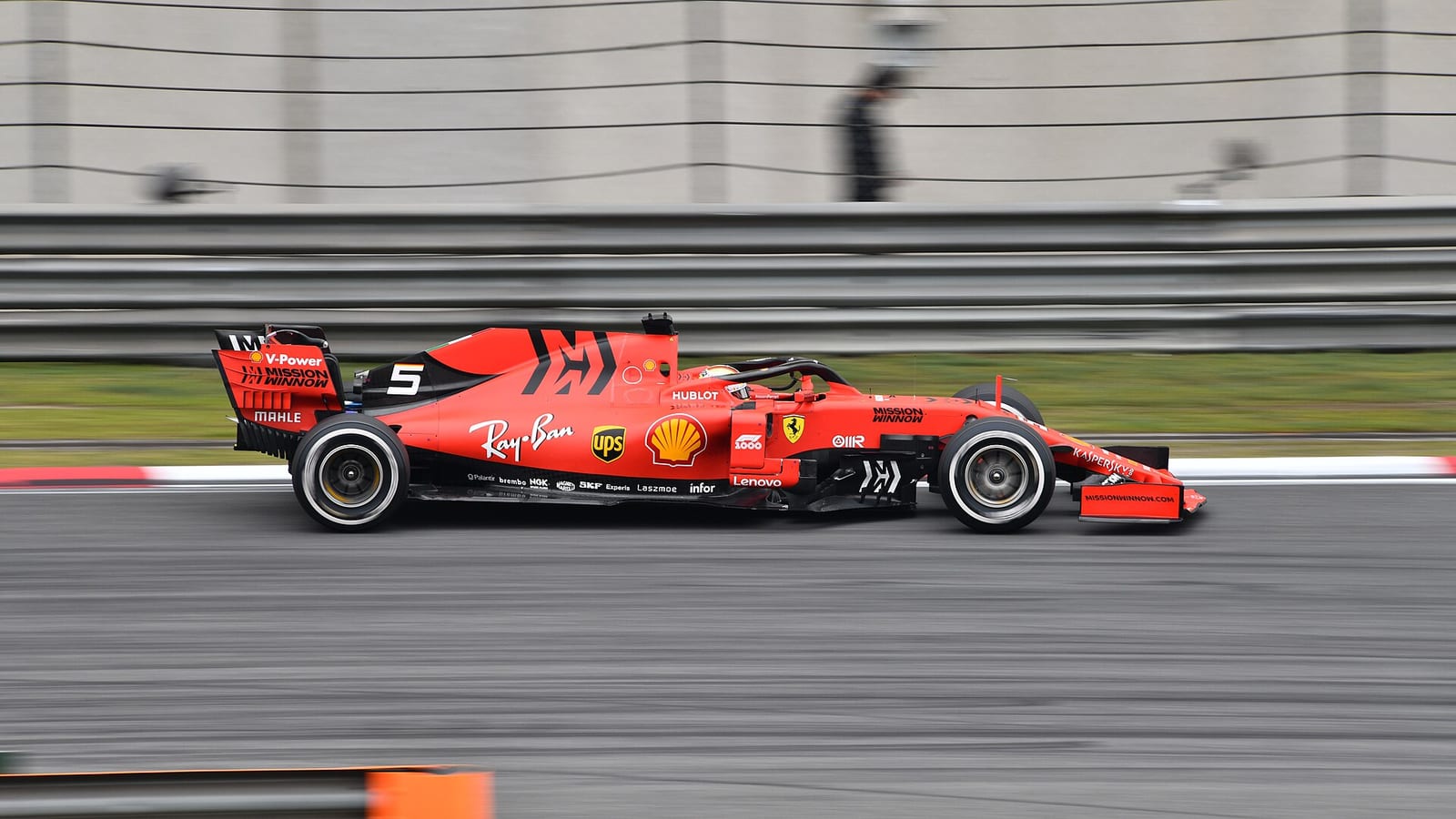
The 2019 Mexican Grand Prix was round 18 of 21, on 27 October, over 71 laps. A third DRS zone was new that year, between turns 11 and 12.
Max Verstappen was fastest in qualifying, but he got a three place grid penalty for not slowing for yellow flags at the last corner. Charles Leclerc started from pole with a 1:15.024, with Sebastian Vettel next to him.
On the first lap Verstappen and Lewis Hamilton touched at turn 2 and both went over the grass. Verstappen later got a puncture while passing Valtteri Bottas and dropped to last. Hamilton won, his tenth win of the season. Vettel was second and Bottas third. Leclerc stopped twice and set the fastest lap, a 1:19.232 on lap 53.
More F1 2019 setups
All the tracks are on the F1 2019 setups page. Mexico is round 18. The round before it is the F1 2019 Japan setup and the next one is the F1 2019 USA setup.
For the same track in other games, here are my F1 2018 Mexico setup, my F1 2020 Mexico setup and my F1 25 Mexico setup. The values do not carry over from one game to the next.
FAQ
What is the best F1 2019 setup for Mexico?
Front wing 2, rear wing 6, differential 50% on throttle and 70% off, suspension 2 and 3, anti-roll bars 4 and 11, ride height 3 and 3, brake pressure 80% with 56% front bias, and tyres at 25.0 and 22.7 psi.
What wing levels should I run in Mexico in F1 2019?
2 at the front and 6 at the rear for time trial. For a race I would run 7 at the rear for the esses and the traction zones.
Can I use this Mexico setup in a race?
Yes, with small changes. Tyre pressures down to 23.8 and 21.5 psi, rear anti-roll bar to 9 and rear wing to 7.
Does this setup work with a controller?
Yes. I would lower the brake pressure to around 75%, soften the rear anti-roll bar to 8 and run the rear wing at 7.
Why are the tyre pressures so high?
For one lap pace. A hard tyre rolls with less resistance on the long straights and reacts quickly in the esses. Over a race stint it overheats, so I would lower the pressures.
Where can I overtake in Mexico in F1 2019?
Into turn 1 at the end of the front straight, with DRS and the slipstream. Turn 4 is the second place.
How long is the Mexico track in F1 2019?
4.304 km with 17 corners. The real race is 71 laps.