
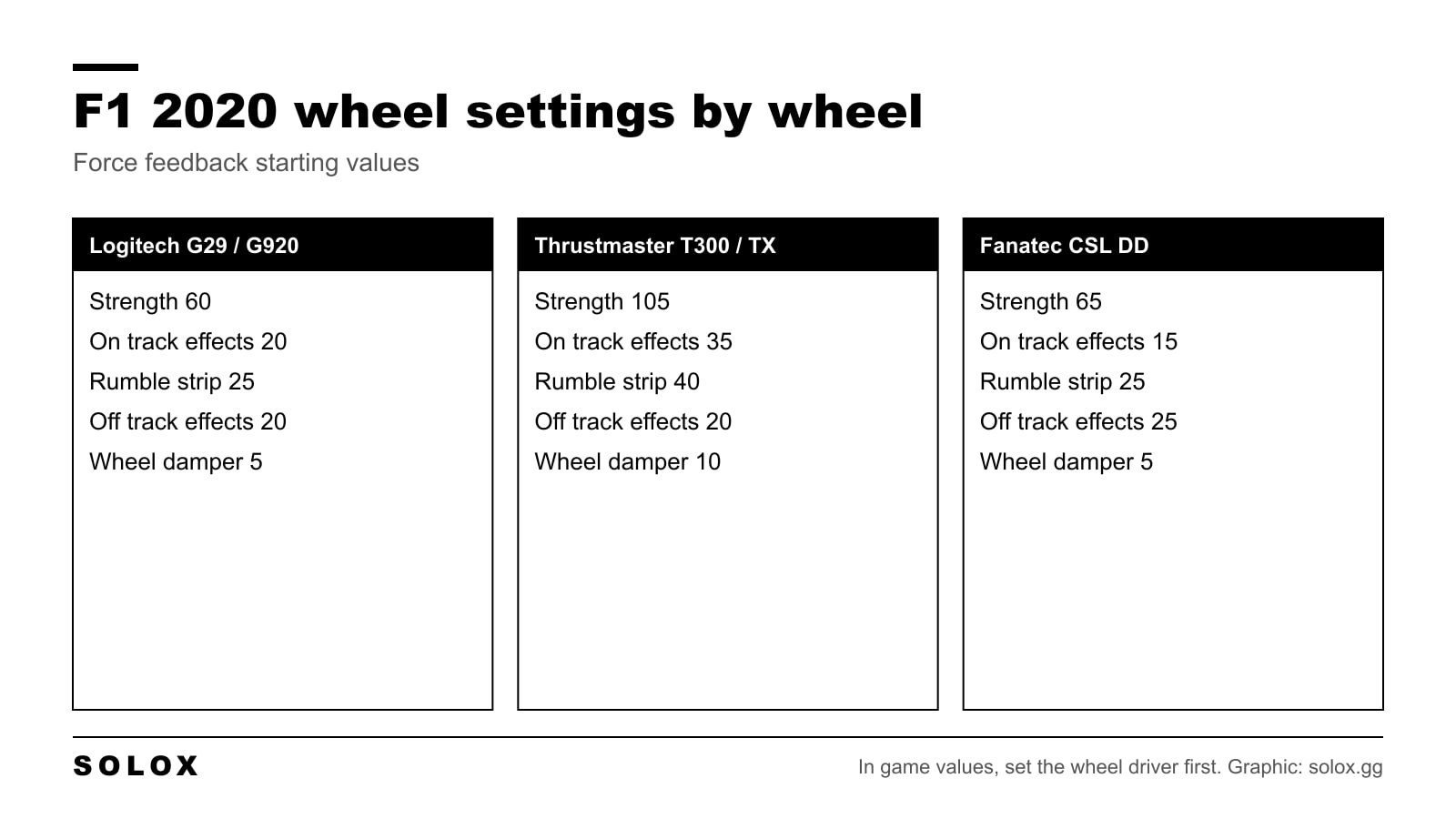
F1 2020 has one force feedback menu and nine sliders in the calibration menu. That is all. The problem is that the default values do not fit any wheel well, and a 2 Nm Logitech needs very different numbers from a 25 Nm Fanatec.
Here is what I would run on each wheel, what every slider does, and what to change when the car does not feel right.
F1 2020 force feedback settings by wheel
You find these in Settings, Controls, Vibration and Force Feedback, then pick your wheel.
| Setting | Logitech G29 / G920 | Thrustmaster T300 / TX / TMX | Fanatec CSL DD | Fanatec Podium DD2 |
|---|---|---|---|---|
| Vibration and force feedback | On | On | On | On |
| Strength | 60 | 105 | 65 | 75 |
| On track effects | 20 | 35 | 15 | 25 |
| Rumble strip effects | 25 | 40 | 25 | 20 |
| Off track effects | 20 | 20 | 25 | 20 |
| Wheel damper | 5 | 10 | 5 | 0 |
| Understeer enhance | Off | On | Off | Off |
| Maximum wheel rotation (F1 and F2) | 300° | 360° | 360° | 360° |
These are starting points. The numbers only work together with the right driver settings, because the game multiplies its own strength by whatever the wheel base is set to. Each wheel has its own page with the full driver setup:
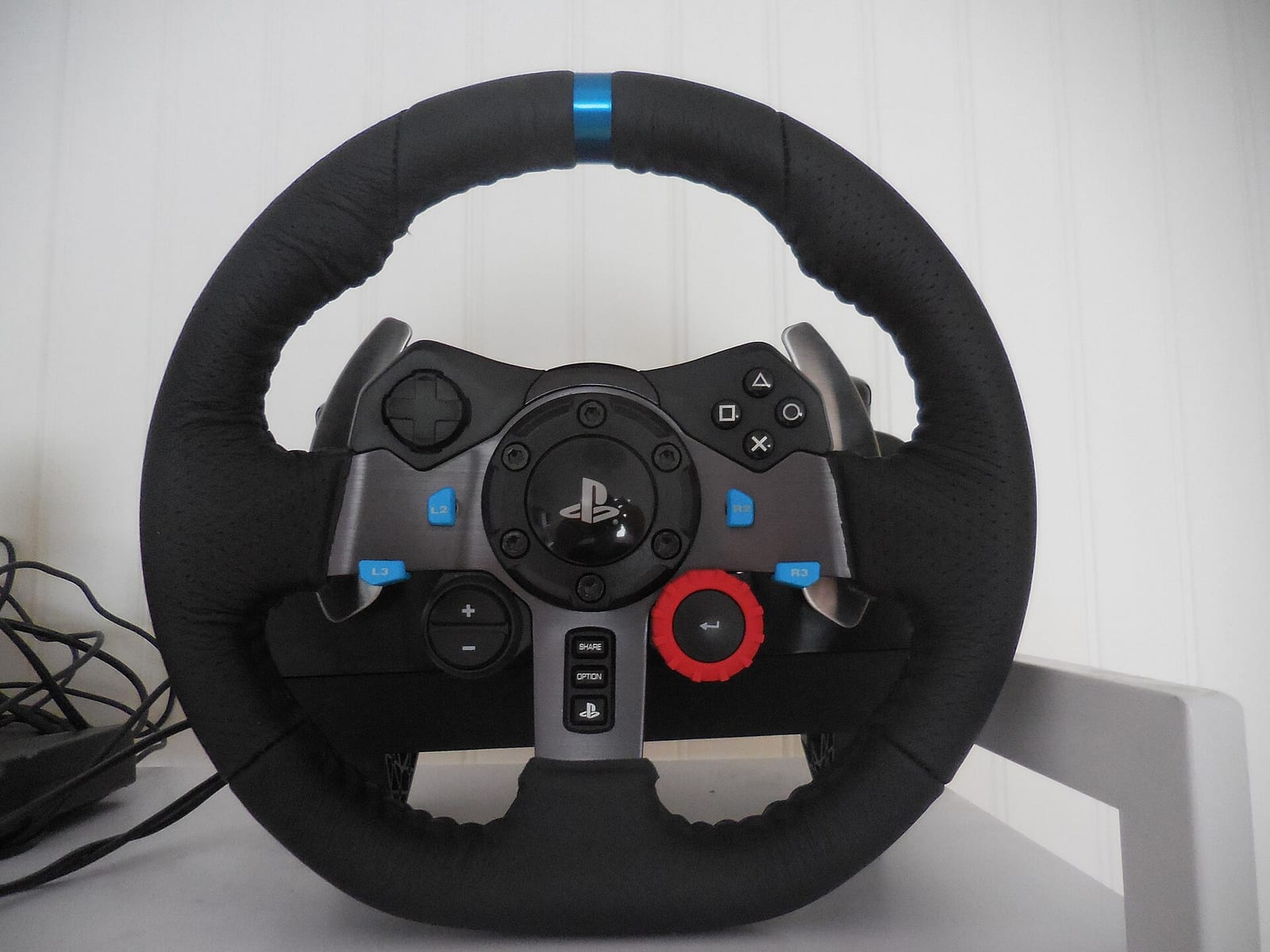
- F1 2020 Logitech G29 and G920 settings
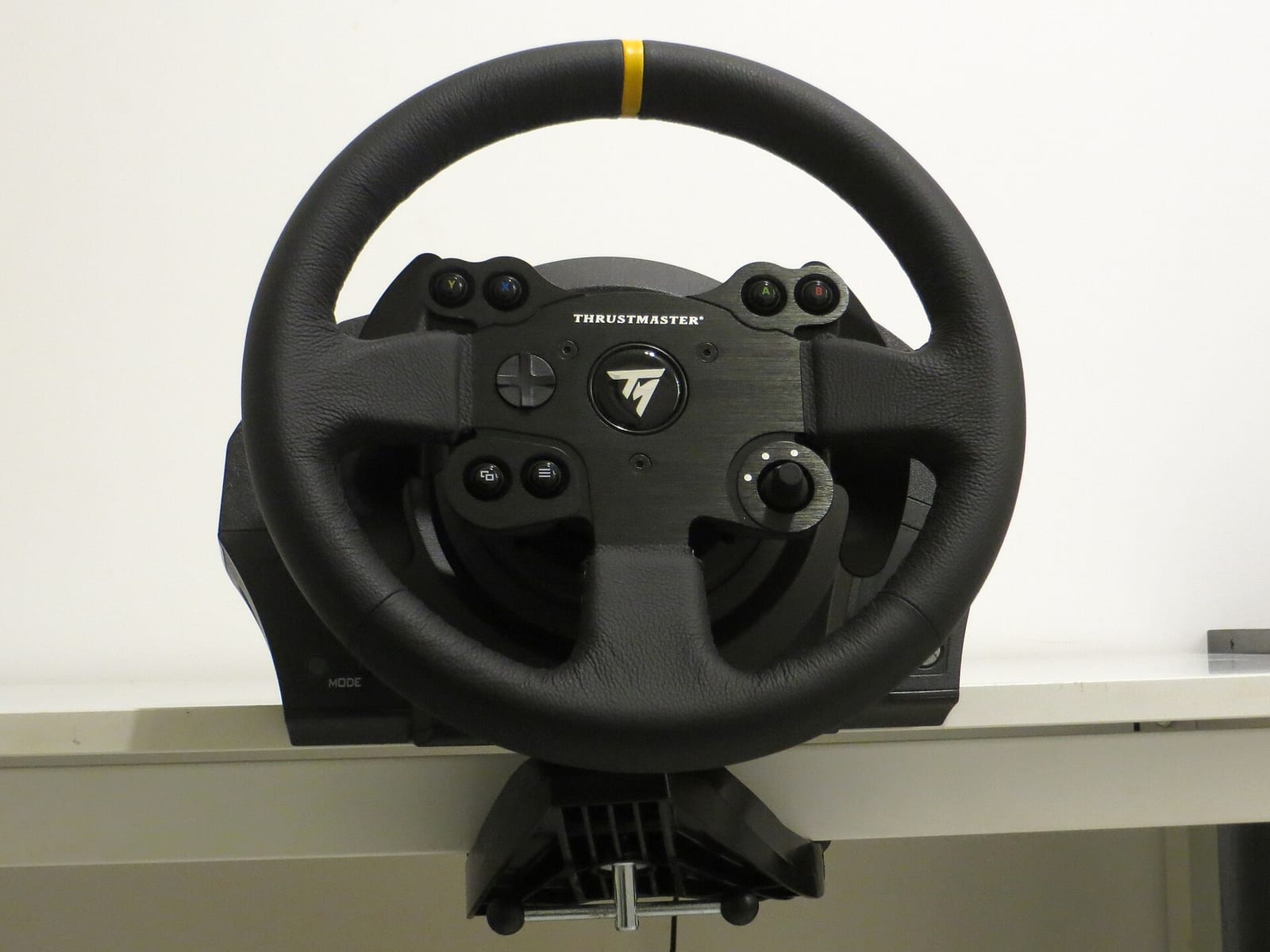
- F1 2020 Thrustmaster T300, TX and TMX settings
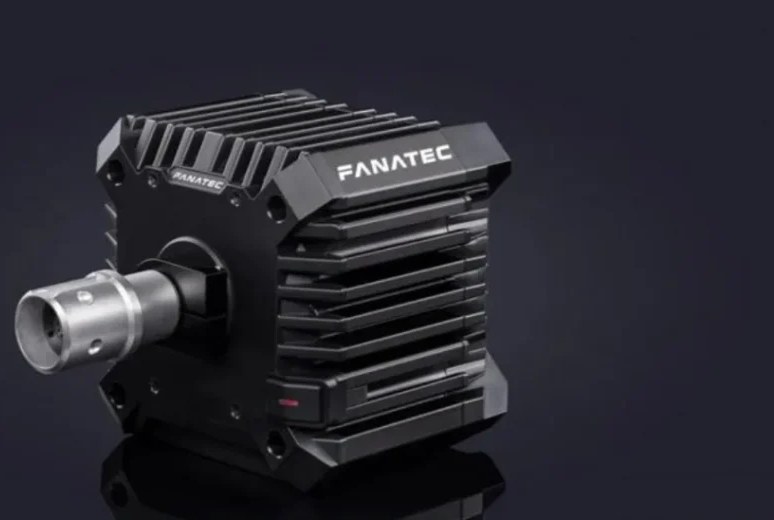
- F1 2020 Fanatec CSL DD and CSL Elite settings
- F1 2020 Fanatec Podium DD2 and ClubSport settings
If you are on a pad, the F1 2020 controller settings page is the one you want.
Driver settings before you open the game
Set the wheel software first. If you change it later, the in game numbers stop making sense.
| Wheel | Driver settings |
|---|---|
| Logitech G29 / G920 (G HUB) | Operating range 900, sensitivity 50, centering spring 20 |
| Thrustmaster T300 / TX / TMX (control panel) | Rotation 900°, constant 100%, periodic 100%, spring 100%, damper 0%, auto center by the game |
| Fanatec CSL DD (tuning menu) | SEN Auto, FF 100, FFS Peak, NDP 25, NFR Off, NIN Off, INT 4, FEI 100, FOR 100, SPR 100, DPR 100 |
| Fanatec Podium DD2 (tuning menu) | SEN Auto, FF 45, FFS Peak, NDP 22, NFR 1, NIN 6, INT 2, FEI 100 |
Look at the DD2 line. FF is at 45 on the base, and that is why the in game strength can sit at 75 without breaking your wrists. On a direct drive wheel you control the total force on the base and use the game slider for fine tuning.
Calibration settings
The calibration tab has nine sliders. With a wheel and pedals, they all stay at 0.
| Setting | Value |
|---|---|
| Steering deadzone | 0 |
| Steering linearity | 0 |
| Steering saturation | 0 |
| Throttle deadzone | 0 |
| Throttle linearity | 0 |
| Throttle saturation | 0 |
| Brake deadzone | 0 |
| Brake linearity | 0 |
| Brake saturation | 0 |
A deadzone is a part of the travel where the game ignores you. Linearity bends the response curve. Saturation makes the game reach 100% before you do. All three put something between your hands and the car, and you do not want that.
There are three honest exceptions:
- Brake saturation. If you cannot reach 100% brake on a stiff pedal, raise it until a full push shows 100% in the calibration screen. The Logitech pedal with the rubber block is the usual case.
- Throttle or brake deadzone. If an old pedal sends a small signal when your foot is off it, 1 or 2 of deadzone fixes it. You see it in the same screen: the bar moves when you are not touching the pedal.
- Steering linearity on Fanatec. On the Fanatec bases I would run steering linearity at 5. It calms the first degrees of steering on a very direct wheel. It is a small change, and 0 works too.
What each force feedback setting does
Vibration and force feedback strength. The total force. Too low and the wheel tells you nothing. Too high and it clips: the wheel is already at its maximum in a medium corner, so a fast corner feels the same. That is why a weak wheel does not get the highest value. You lose the detail before you gain any strength.
On track effects. Bumps and the road surface. A little helps you feel the car is alive. A lot is just shaking.
Rumble strip effects. The vibration on the kerbs. You need enough to know you are on one without looking. More than that and the kerb covers what the tyres are doing right when you need it, at the exit.
Off track effects. Grass and gravel. You will know you are off the track anyway. Keep it low.
Wheel damper. Adds weight and resistance to the wheel, at every speed. It makes a light wheel feel calmer on the straight, but it also slows your hands when you have to catch the rear. I would keep it at 5 or below. On a DD2 the base already has natural damping, so 0.
Understeer enhance. With this on, the wheel goes light when the front tyres start to slide. It is not realistic, but it is a clear signal. On a belt driven Thrustmaster I would leave it on. On the other wheels I would turn it off and read the understeer from the steering weight itself.
Maximum wheel rotation. How far the wheel turns from lock to lock. 360° for F1 and F2 cars is right. You should be able to take a hairpin without moving your hands on the rim.
What to change when it does not feel right
Change one thing at a time and do three laps on the same track. I would use a track you know with slow and fast corners, like Barcelona.
| Problem | Change | Why |
|---|---|---|
| Fast corners all feel the same weight | Strength down 5 to 10 | The wheel is clipping |
| Wheel feels dead in slow corners | Strength up 5 | Not enough force at low load |
| Constant shaking on the straight | On track effects down 10 | Road noise is covering the tyres |
| Kerbs throw the wheel out of your hands | Rumble strip effects down 10 | The effect is stronger than the grip signal |
| Wheel feels slow when you correct a slide | Wheel damper to 0 | The damper is resisting your hands |
| Wheel oscillates on the straight if you let go | Wheel damper up 5 | A little damping calms it |
| You do not feel the front washing out | Understeer enhance On | The wheel goes light when the fronts slide |
| You run out of steering in hairpins | Check rotation is 360° in game and 900° or Auto in the driver | The two values are fighting each other |
One thing from real cars that holds in the sim: heavier is not better. A wheel that is too heavy makes you tense, and tense hands are slow hands. You want just enough force to feel the front tyres load up on the way in and go light when they give up.
After the wheel: the rest of the setup
The wheel settings only tell you what the car is doing. They do not make the car faster. Once the feedback is right:
- Use a proper car setup. All 22 tracks are in my F1 2020 setups hub.
- Fix your seating position with the F1 2020 FOV settings. A wrong field of view makes you misjudge braking points.
- Pick the right help for your level in the F1 2020 assists and AI difficulty guide.
- If you moved to the next game, the menu is almost the same. See my F1 2021 wheel settings.
FAQ
What are the best force feedback settings for F1 2020?
It depends on the wheel. As a start: strength 60 on a Logitech G29 or G920, 105 on a Thrustmaster T300, TX or TMX, 65 on a Fanatec CSL DD and 75 on a Podium DD2. Keep on track, rumble strip and off track effects between 15 and 40, and the wheel damper at 10 or less.
What wheel rotation should I use in F1 2020?
360° for F1 and F2 cars in the game menu. In the wheel driver, leave the rotation at 900° or Auto and let the game limit it. If you limit it in both places, the two values can fight each other.
Should understeer enhance be on or off?
Off on most wheels, on if you struggle to feel the front tyres slide. It makes the wheel go light when you understeer. It is an artificial effect, but it is useful while you are learning the car.
Why does my wheel feel the same in every fast corner?
The force feedback is clipping. The wheel is already giving its maximum force, so there is nothing left for the extra load. Lower the strength by 5 to 10 and the difference between corners comes back.
Do I need to change deadzone or linearity with a wheel?
No. Leave all nine calibration sliders at 0. Only raise brake saturation if you cannot reach 100% on the pedal, or add 1 or 2 of deadzone if a worn pedal sends a signal when you are not touching it.
Do these settings work on PS4, Xbox One and PC?
The in game values are the same on every platform. The difference is the driver: on PC you set the wheel in G HUB, the Thrustmaster control panel or the Fanatec software, and on console you set it on the wheel itself where the wheel allows it.